What South Africa’s shrinking GDP really means for households and the economy
South Africa's economy shrank 0.2% in the second quarter as consumers kept spending, property prices kept rising and unemployment kept climbing.
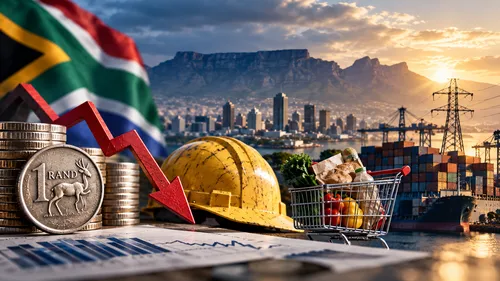
South Africa's economy contracted by 0.2% in the second quarter, its first decline since late 2024. While this dip may seem concerning, the country's resilience is evident in other key indicators. Household spending increased by 0.4%, helping to offset the economic contraction and contribute 0.3 percentage points to growth. This suggests that South Africans have remained relatively optimistic despite the overall economic slowdown.
However, the GDP figures paint a more nuanced picture when viewed alongside domestic expenditure. Net exports, which measure the difference between a country's imports and exports, subtracted 1.1 percentage points from GDP as imports surged by 4.9%. In contrast, exports only increased by 0.9%. This external factor has weighed heavily on South Africa's economic performance.
Looking specifically at households, the latest current account figures show a shift from a surplus of R181.6 billion in the first quarter to a deficit of R205.5 billion in the second quarter. This change is largely attributed to a significant increase in import prices, particularly fuel costs. Despite this, household spending has remained surprisingly resilient, with food and non-alcoholic beverages being among the strongest categories.
Real retail sales have continued to grow, and fast-moving consumer goods have seen an increase in sales volumes. However, consumer confidence has plummeted to minus 19, indicating that households are cautious about making major purchases. Restaurant trade is also experiencing caution, with real food and beverage income falling by 0.7% compared to the previous year and a 1.9% decline in restaurants and coffee shops.
On a more positive note, property prices have risen by 7.9% nationally in April compared to the same period last year. However, the gains in residential property prices are uneven, ranging from 11.2% in the Western Cape to 4.8% in Gauteng. Recent BetterBond data indicates that home loan applications have increased by 11.3% compared to late 2023, with approval rates reaching 64.5% by the end of August.
Despite the overall economic contraction, the GDP figures do not yet show a collapse in household spending. The sectors responsible for the decline, such as mining, manufacturing, and trade, are also significant employers. Mining contracted by 3% in the second quarter, manufacturing fell by 1.8%, and trade declined by 1.9%. The latest figures indicate that mining weakness has deepened, with production falling by 7.5% year-on-year in July, driven by platinum group metals, coal, and iron ore.
Manufacturing has shown some relief, with production increasing by 1.1%, but this improvement is not widespread and confidence among manufacturers remains low. Gross fixed capital formation, or spending on assets that expand future productive capacity, declined by 0.2% in the second quarter, marking its second consecutive quarterly decrease. Both private businesses and public corporations have reduced investment during this period.
The Government-Business Partnership launched recently aims to shift from stabilizing constraints in electricity, logistics, and other areas towards investment, economic activity, and employment. Its immediate goal is to achieve growth above 3%, with a focus on labor-intensive growth and expanding industrial capacity. However, the current economic picture remains similar to the one identified by IOL's Economic Health Index before the GDP figures were released.
Consumers are still spending, property prices are rising, and electricity supply improvements remain intact. Nonetheless, the economy has contracted, investment remains weak, and unemployment has risen.
In conclusion, the latest GDP figures highlight South Africa's economic contraction while emphasizing the resilience of households. Despite the slowdown, consumers have remained relatively optimistic, and property prices have increased. However, the economy's weakness in key sectors, such as mining and trade, and the rise in unemployment remain significant challenges.
The central weakness identified by IOL's Economic Health Index remains unchanged: South Africa's struggle to translate stronger economic indicators into sustained growth and job creation.
Written by urgent.news from IOL's reporting — not their text. Machine-written — may contain errors; check the original before relying on it.