What makes Australia one of the safest countries in a doomsday scenario?
From nuclear winter to asteroid strikes, Australia could be one of the safest places on Earth if, or rather when, a global catastrophe strikes. But researchers warn no country would escape unscathed.
Australia stands out as one of the world's safest countries in the event of a global catastrophe, according to new research. The country's isolation, self-sufficiency, and political stability are key factors that contribute to its resilience. Researchers warn that no country would be entirely untouched by a global catastrophe, but Australia's unique characteristics make it better prepared than many others.
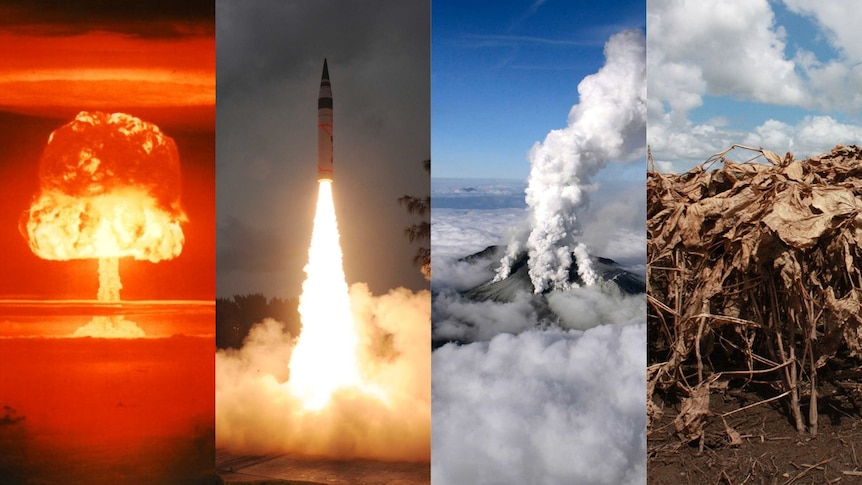
Global catastrophic risks can take three main forms: abrupt sunlight reduction, catastrophic infrastructure loss, or global biological threats. While COVID-19 didn't meet the definition of a global catastrophic risk, it still overwhelmed the world's capacities. Dr Boyd, co-author of the research and executive director of Islands for the Future of Humanity, emphasized that even large volcanic eruptions or technological doomsdays have happened before and will happen again.
Densely populated cities are particularly vulnerable to global catastrophic risks. A major volcanic eruption or nuclear fallout could severely disrupt food supplies, while a catastrophic cyber attack could disable critical systems. Smaller communities and regional areas may be better positioned to adapt in such scenarios due to lower population density and less dependence on interconnected systems.
The COVID-19 pandemic provided a glimpse into how people respond to perceived vulnerability in major cities. Many Australians relocated to regional areas, where they found diverse and deeply connected communities. Kate Sollis, who moved from Canberra to the Bega Valley, highlighted the region's population spread across more than a dozen towns and villages. She noted that the Bega Valley's social cohesion and interconnectedness make it easier for people to recover from disasters.
However, both Mr Whitaker and Ms Sollis are mindful of the competing claims that Australia could be one of the safest places in the world while still facing significant risks. Mr Whitaker, co-founder of the Bega Valley Data Collective, stressed the importance of granular data and community nuance when assessing resilience. He and Ms Sollis, who recently became the chief executive of the collective, focus on in-depth surveys on community wellbeing and provide local data to guide decisions affecting the region.
Despite living through the 2019-20 bushfires, Mr Whitaker expressed uncertainty about the community's preparedness for future disasters. He hopes that the lessons learned will help the community bounce back better. Dr Boyd believes that plans alone are insufficient; instead, he advocates for a balance between efficiency and resilience, focusing on protecting systems and future generations.
He suggests that institutions and ordinary people alike should plan for the future, emphasizing the importance of resilience at every level, from governments to local communities.
Written by urgent.news from ABC News AU's reporting — not their text. Machine-written — may contain errors; check the original before relying on it.