Students’ academic freedom central to Africa’s democratic future – Prof Appiagyei-Atua
Professor of International Law and Human Rights at the University of Ghana School of Law, Prof Kwadwo Appiagyei-Atua, has emphasised the importance of students’ academic freedom in strengthening democratic practices and shaping the future of democracy in Africa.
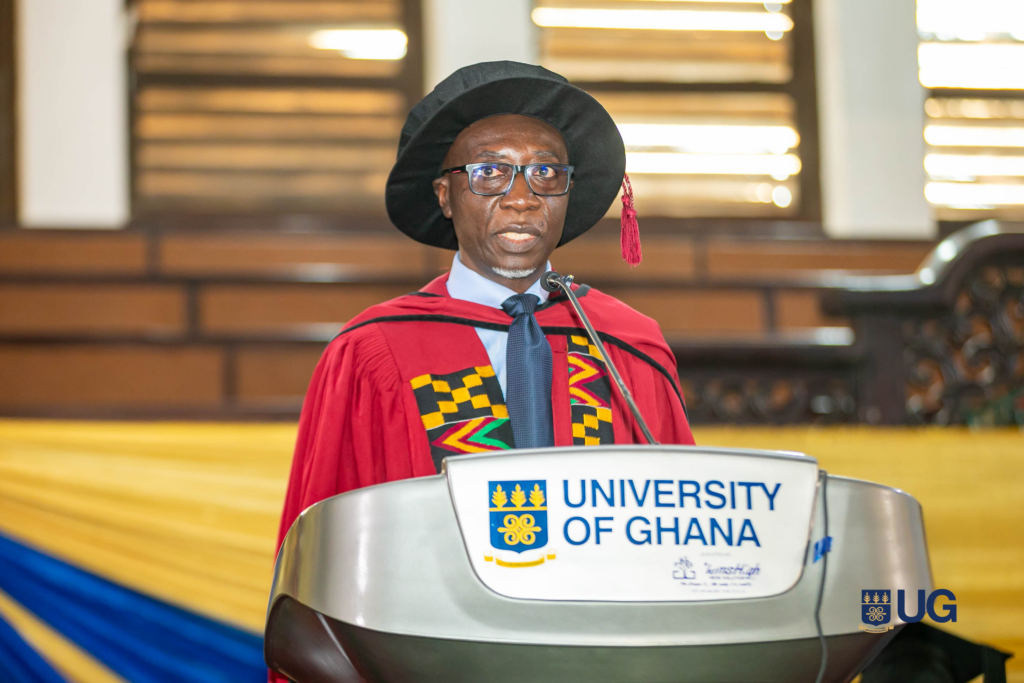
Professor Kwadwo Appiagyei-Atua, a University of Ghana Law School scholar, highlighted the significance of students' academic freedom in fostering democracy across Africa. During the University's ninth Inaugural Lecture of the 2025/2026 academic year, titled "The Student Question: Reclaiming Academic Freedom for Democratic Renewal in Africa," Professor Appiagyei-Atua explored the topic within the broader context of Africa's intellectual history, colonialism, university governance, student involvement, and democratic growth.
He challenged the common belief that the government poses the primary threat to academic freedom, arguing that universities themselves need more scrutiny. Various actors within universities, such as management, academics, and students, can infringe upon academic freedom. Furthermore, internal structures and power dynamics can restrict students' capacity to effectively engage in academic governance and decision-making.
A key aspect of the lecture focused on the role of students within the academic freedom framework. Building upon the 1990 Dar es Salaam Declaration, Prof Appiagyei-Atua outlined students' rights to freedom of study, freedom to dissent, involvement in academic programs, and participation in university governance. He emphasized that students are rights-holders because they are integral members of academic communities and should have a substantial say in decisions impacting their education and the institutions they attend.
Professor Appiagyei-Atua also discussed the marginalization of students within university structures. Universities often have a vertical organizational layout, with students typically occupying a subordinate role, despite being among the primary stakeholders. This vertical structure can foster an environment where students' substantive freedom is curtailed by unequal power relations and institutional designs.
The lecture also scrutinized student politics and the impact of partisan politics on university campuses. Prof Appiagyei-Atua observed that the involvement of political parties in student leadership could weaken independent student activism, create distrust, and diminish confidence in student representation. To mitigate these issues, he proposed measures to bolster independent student leadership and representation.
These measures include transparent campaigns, non-partisan student leadership, and enhanced collaboration between student organizations and civil society groups.
Furthermore, Prof Appiagyei-Atua advocated for democratizing the classroom, teaching methods, and university governance. He called for universities to transition from traditional models where students are primarily viewed as passive recipients of knowledge. Instead, he promoted approaches that encourage dialogue, critical thinking, and the collaborative creation of knowledge between students and academics.
To address these concerns, Prof Appiagyei-Atua introduced a collaborative governance model that includes the State, universities, faculty, students, and civil society organizations. This model emphasizes distributed authority, horizontal consultation, mutual accountability, and acknowledgment of each stakeholder's distinct yet interconnected roles.
Professor Appiagyei-Atua connected the experiences of students on university campuses to the broader development of democracy in African societies. He argued that universities serve as vital spaces for cultivating democratic habits, and students' encounters with participation, representation, and accountability can influence their engagement with democratic institutions post-graduation.
Consequently, he stressed the importance of protecting students' academic freedom beyond the university setting, asserting that safeguarding students' rights to partake, dissent, and contribute to decision-making can fortify democratic values throughout society.
Chairperson and Vice-Chancellor of the University of Ghana, Prof Nana Aba Appiah Amfo, commended the lecture for its intrigue and thought-provoking insights. She praised Prof Appiagyei-Atua for the perspectives shared on students' academic freedom and its relationship with democratic development. Prof Amfo acknowledged the challenges surrounding academic freedom and student involvement within universities, stressing the necessity of fostering an environment where all community members can meaningfully contribute to institutional life.
On behalf of the University community, she congratulated Prof Appiagyei-Atua on attaining the position of a full professor.
Written by urgent.news from MyJoyOnline Ghana's reporting — not their text. Machine-written — may contain errors; check the original before relying on it.