Same Himalayan flood, two truths: How China and Nepal control the story
HONG KONG, Sept 12 — China and Nepal have taken different approaches to information after a Himalayan flood, shapi...
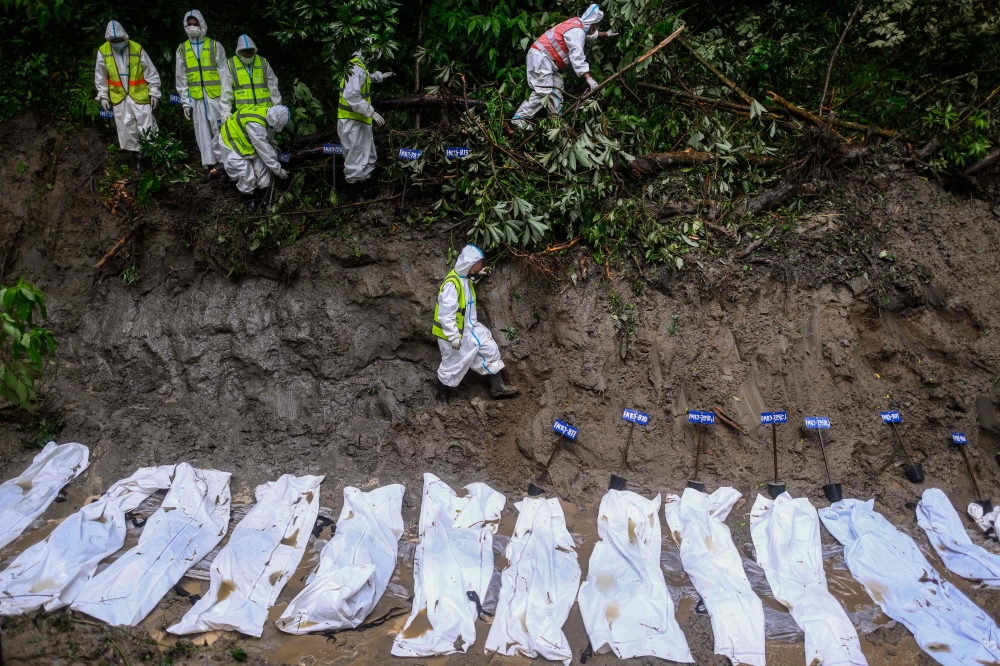
Following the Himalayan flood on August 26, 2026, two nations approached the information dissemination differently, impacting public perception of the disaster that claimed over 1,400 lives. The catastrophic surge of water, mud, and debris, triggered by a glacial mountain collapse on the China-Nepal border, left more than 5,650 people missing, including numerous foreigners.
Both China and Nepal actively pursued the removal of false posts about the flood. However, Beijing took additional measures to suppress eyewitness video footage and penalize individuals questioning official figures, resulting in an extensive information crackdown that rights groups view as part of a common trend.
Information disseminated by Chinese state media during the flood offered minimal insight into the missing individuals' relatives and emphasized the recovery efforts of emergency workers in Tibet, where foreign journalists face restricted access. Conversely, Nepal pressured social media platforms and news outlets to eliminate fabricated visuals, some of which were debunked by AFP fact-checkers.
Nonetheless, Kathmandu regularly shared updates on death tolls via social media, and families of victims readily provided direct commentary both online and offline. Umesh Shrestha, chair of the independent regulatory body Press Council Nepal, explained that the council had requested over 100 social media accounts to remove content, most of which complied. "Things can spread very quickly," Shrestha noted.
In response to the disaster, Nepal coincided with the one-year anniversary of anti-corruption protests that led to the previous government's downfall. China penalized 10 individuals accused of spreading falsehoods online, including some who claimed the actual death toll was higher than officially reported. Both nations have actively targeted fabricated posts, but they have also taken action against those sharing genuine footage.
Nepali authorities have engaged in discussions with Meta and TikTok to expedite the removal of AI-generated content, graphic images, and fraudulent aid schemes. Both platforms compensate AFP for fact-checking posts that may contain false information.
AFP fact-checkers have debunked numerous claims about the floods in multiple languages. One video falsely claiming to depict the glacial and mountain collapse causing the flooding, posted on Facebook and X, was filmed in Alaska’s Columbia Glacier days prior. Another AI-generated video displaying water breaching a riverbank and flooding streets garnered tens of thousands of interactions.
Rabi Raj Baral, a Nepali investigative journalist and member of the Press Council Nepal, stated that while public panic is common during disasters, both Nepal and China have not only tackled fabrications but have also targeted posts containing genuine footage. Chinese state media coverage of search operations dominated social media platforms such as Douyin and Weibo, omitting names of missing individuals and displaying limited footage of families' reactions.
AFP fact-checkers discovered that misinformation surrounding the floods is scarce on Chinese platforms, though conspiracy theories have emerged internationally. Accusations include China lying about the death toll and blaming its dam construction projects for the disaster, despite scientific evidence suggesting the glacial collapse in Nepal was the primary cause.
Critics abroad also point to the fact that the majority of the dead and missing reported by both governments are in Nepal. Rescuers have recovered 1,369 bodies in Nepal, while approximately 5,132 people remain missing, according to the disaster agency. In China, the toll stands at 43 dead and 519 missing, as reported by state media.
The significant discrepancy in numbers may be attributed to the geographical and scale factors of the disaster; the glacial mountain collapse occurred in downstream Nepal, sending a powerful wave of debris that devastated China's high-altitude border post in the tightly restricted Tibetan region, before causing destruction across Nepal.
The bodies on the Chinese side may have been washed downstream but are likely buried in a thick layer of mud and debris, making recovery improbable. Aleksandra Bielakowska, an advocacy manager for Reporters Without Borders (RSF) based in Taipei, stated that Beijing's restrictions have fostered an "atmosphere of mistrust." In contrast, Celia Mercier, head of RSF's South Asia Desk, observed that Nepal had primarily treated misinformation as an issue within an otherwise relatively open information environment.
Written by urgent.news from Malay Mail's reporting — not their text. Machine-written — may contain errors; check the original before relying on it.