Man hid inside giant Roman storage jar 1,600 years ago and never came out
In a remarkable excavation at Deultum, Bulgaria, archaeologists uncovered the remains of a young man entombed within a sizable storage jar. The evidence indicates he sought refuge there during a devastating attack, likely after the flames had already engulfed the area. His plight, frozen in time as the jar was later rebuilt over, provides a poignant glimpse into the terror and desperation of…
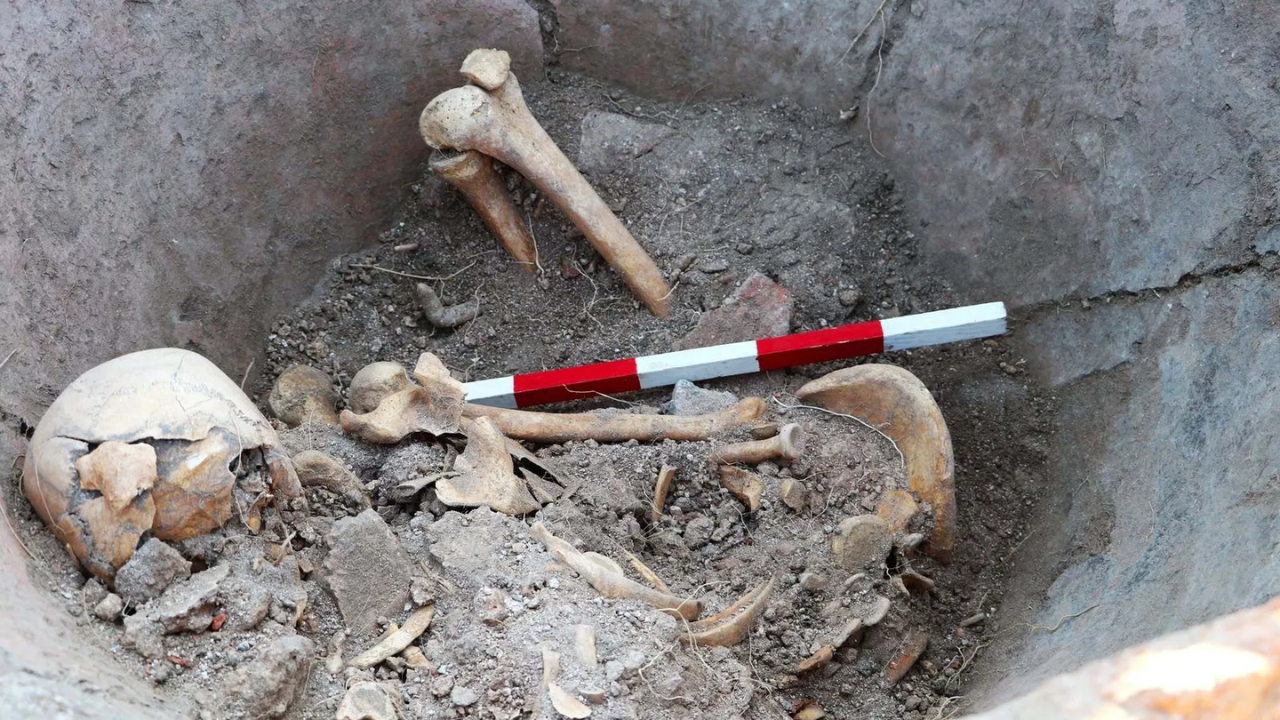
In A.D. 400, a desperate young man sought refuge by climbing inside a massive Roman storage jar during a violent attack in the ancient Bulgarian city of Deultum. This remarkable survival story has been uncovered by archaeologists after more than 1,600 years. The young man's remains were found inside a dolium, a large ceramic vessel used to store commodities like wine and olive oil.
Archaeologists discovered the jar at the bottom of a Late Roman turret, which formed part of the city's western gate. The jar's contents are remarkably well-preserved, with ash and charcoal indicating that the man sought shelter after the fire had already spread through the structure. Signs of a fierce battle were also present, with broken bricks, roof tiles, and burned animal bones scattered around the area.
Two iron knives and a belt were found alongside the man's remains, suggesting that he may have been prepared for self-defense. However, there is no evidence to suggest that he was a Roman soldier. His final resting place remained hidden for centuries as the inhabitants later leveled the damaged remains and built a new, higher floor over the ruins.
The man's body was preserved inside the jar, providing archaeologists with a rare glimpse into the chaos of an ancient attack.
Written by urgent.news from Times of India's reporting — not their text. Machine-written — may contain errors; check the original before relying on it.