Internal splits threaten to slow Brics’ progress as bloc looks back on 20 years of growth
Leaders from some of the world’s largest emerging economies are gathering in New Delhi this weekend for a summit marking the 20th anniversary of Brics, a fast-expanding group of developing nations. Chinese President Xi Jinping, along with his Russian and Iranian counterparts Vladimir Putin and Masoud Pezeshkian, are among those meeting in the Indian capital for one of the group’s most closely…
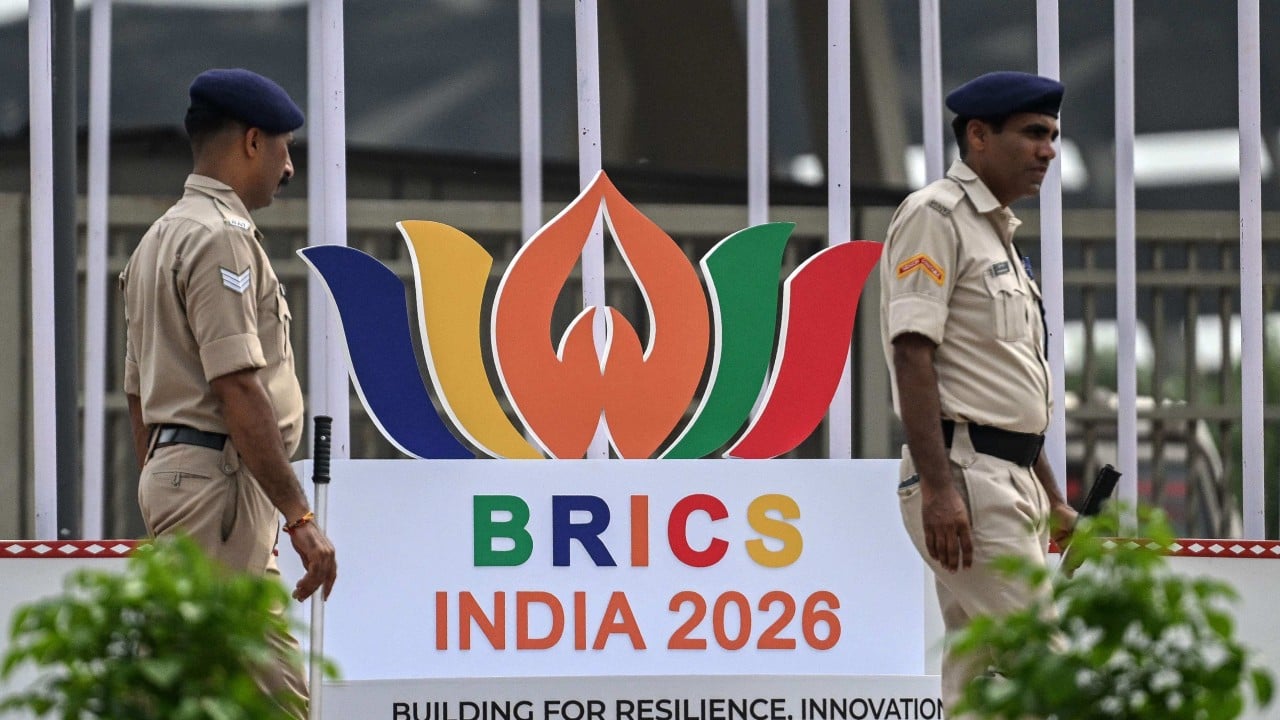
Leaders from the world's largest emerging economies convened in New Delhi this weekend to mark the 20th anniversary of Brics, a bloc of developing nations that has grown in both influence and stature. Chinese President Xi Jinping, alongside Russian counterpart Vladimir Putin and Iranian counterpart Masoud Pezeshkian, were among the key figures attending this gathering, which has become one of the group's most anticipated events in recent years.
While Brics has achieved notable milestones over the past two decades, the bloc now faces significant internal challenges that may impede its progress. Internal splits on key issues such as relations with the United States and internal decision-making processes have become more pronounced, slowing the bloc's development.
Initially formed in 2006 by Brazil, Russia, India and China, Brics expanded to include South Africa in 2009, becoming Bric. In 2010, Egypt, Ethiopia, Iran, Saudi Arabia and the United Arab Emirates joined, officially changing the name to Brics. Since then, Indonesia, Egypt, Ethiopia, Iran, Saudi Arabia and the United Arab Emirates have also joined, while 10 other nations hold associate memberships.
Despite its growth, Brics has been viewed as an attempt to create an alternative international order, challenging the dominance of Western-led institutions such as the International Monetary Fund and World Bank. Lin Minwang, vice-dean at Fudan University's Institute of International Studies, highlighted the group's achievements, including the establishment of the New Development Bank, which finances infrastructure and development projects for member states.
Qian Feng, a senior research fellow at Tsinghua University's National Strategy Institute, emphasized that Brics now represents over 40% of the world's population and GDP, thereby establishing a new multilateral paradigm. The bloc has also expanded its scope to encompass issues such as counterterrorism, cybersecurity, innovation and artificial intelligence.
However, observers agree that the expansion of Brics has brought more competing voices, making it difficult to reach consensus on critical issues. Jiang Shixue, a distinguished professor at Hangzhou Normal University, noted that the 11 members cannot always speak with one voice on various matters. He suggested that strengthening political consensus among members is the only way to overcome these challenges.
Internal divisions within Brics have also hindered its progress. Jiang Shixue pointed to the lack of consensus among members on the bloc's development direction, particularly in light of the strategic competition between China and the United States. Despite not openly challenging the US, some member countries remain skeptical about Brics' approach.
Qian Feng acknowledged that Brics is experiencing growing pains, with practical outcomes often lagging behind proposed initiatives. The bloc's attempts to reduce the US dollar's dominance by settling more transactions in local currencies have only succeeded in 20% of intraregional deals. This de-dollarization effort has also faced criticism from the United States, which has threatened 100% tariffs if Brics creates a rival currency.
Organizational issues within Brics, such as the absence of a permanent secretariat, have also contributed to its stagnation. Qian Feng highlighted that the lack of a permanent secretariat leaves the bloc heavily reliant on the coordination capacity of the country holding the rotating chair. The recent summit in New Delhi is particularly significant given the current global turmoil, with observers urging Brics to continue supporting multilateralism and opposing bloc confrontations.
Written by urgent.news from Reuters Business via SCMP's reporting — not their text. Machine-written — may contain errors; check the original before relying on it.