How did hundreds of refugees end up on Durban’s streets outside Home Affairs?
Hundreds of refugees have lived outside Durban Home Affairs for months. Here’s how they ended up there, what happened next and why the standoff remains unresolved.
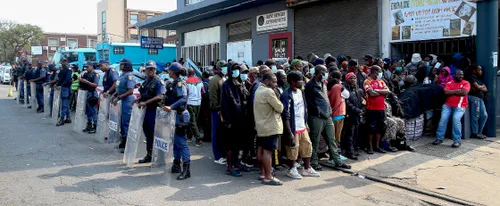
Hundreds of refugees and asylum seekers have been living on the streets outside the Department of Home Affairs' Refugee Reception Centre on Che Guevara Road in Durban for months. The group primarily consists of people from the Democratic Republic of the Congo (DRC), Burundi, and Rwanda. Their presence outside the government office has sparked a debate over immigration, documentation, safety, and the government's responsibility towards refugees and asylum seekers.
The situation escalated in May due to rising anti-illegal immigration sentiment in South Africa, with anti-immigration activists pushing for foreign nationals to leave the country by June 30. Activist Nkosikhona "Phakel umthakathi" Ndabandaba even called on these individuals to leave the country.
Members of the refugee group began leaving their homes and communities after facing threats, intimidation, and attacks linked to anti-immigrant mobilisation. Some sought police assistance and initially sought refuge around Durban Central Police Station before being moved to the Home Affairs office on May 21 for immigration-status verification.
The verification process, conducted by the eThekwini Municipality, found that only three individuals did not have valid documentation out of 457 people. Those with documentation were encouraged to return to their communities, but the refugees were hesitant due to safety concerns. Despite attempts to find temporary accommodation, the refugees decided to remain outside Home Affairs, fearing further violence or intimidation upon returning to their former communities.
The refugees have received humanitarian assistance from civil society organisations, including support for vulnerable individuals such as women, children, and those with chronic illnesses. However, the dispute intensified on June 30 when anti-illegal immigration groups organized demonstrations in Durban and other cities, calling for the refugees to leave the country.
The National Campaign Against Xenophobia, backed by over 130 organisations, expressed concern over the displacement of refugees and asylum seekers in Durban due to vigilante groups. They argued that people should not be forced to choose between returning to potentially unsafe areas and living on the streets without basic necessities.
Despite the June 30 deadline, the anti-illegal immigration mobilisation continued in August and September. March and March, a xenophobic group, planned protests every Thursday until undocumented foreign nationals left the country. The group's involvement in the dispute added further tension, as they called for the evacuation of the site and argued that undocumented foreign nationals should be expelled.
The refugees and their supporters accused anti-migrant groups of contributing to the circumstances that forced them onto the streets. On September 3, March and March staged a clean-up operation, leading to clashes with police and refugees, resulting in injuries and accusations of responsibility for the violence. KwaZulu-Natal Premier Thami Ntuli announced that processing for transfer to the Lindela Repatriation Centre in Gauteng would begin on Monday or Tuesday, despite the refugees' reluctance to return to potentially unsafe communities.
Written by urgent.news from IOL's reporting — not their text. Machine-written — may contain errors; check the original before relying on it.