Ghana at it again: Turning school placement into NDC–NPP politics
It has become a familiar ritual in Ghana. The moment Senior High School (SHS) placement results are released and some children fail to secure their preferred schools, the national conversation quickly moves away from education and into partisan politics. NDC supporters blame the NPP, NPP supporters blame the NDC. Parents blame the government, and government […]
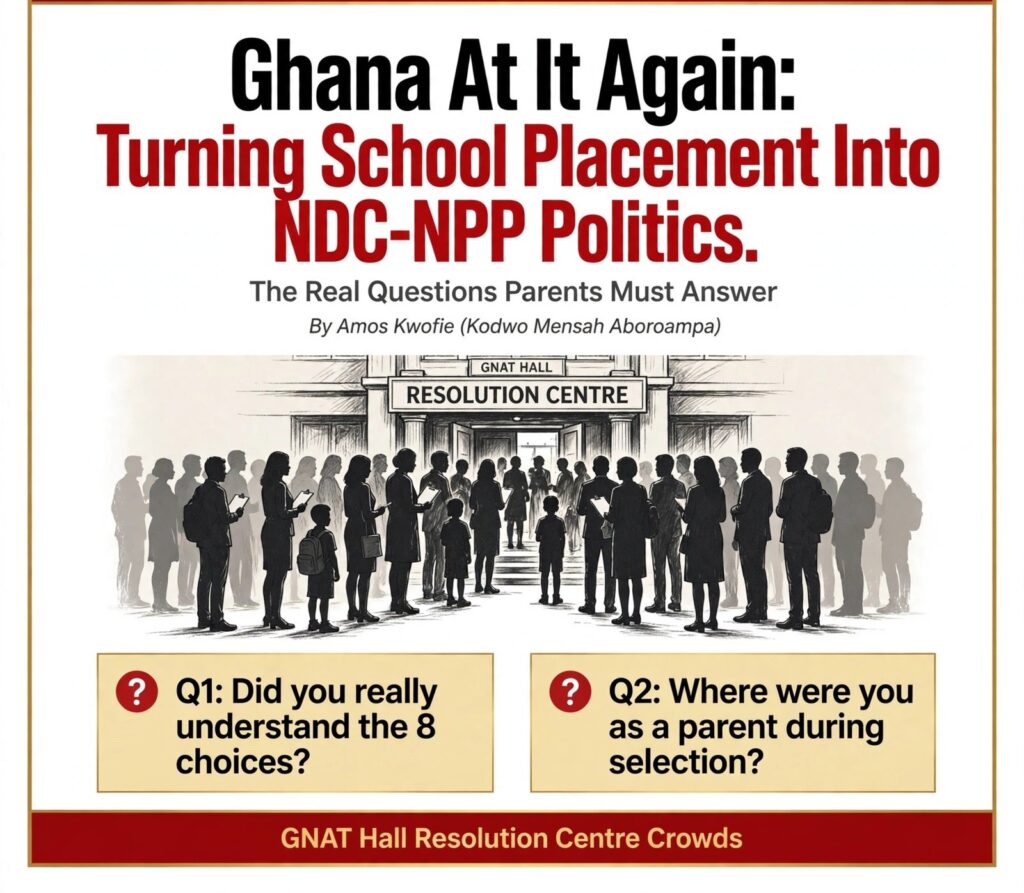
Ghana is once again grappling with the contentious issue of school placement for Senior High School students. When results reveal that some children did not secure their desired schools, the debate quickly devolves into partisan politics between the NDC and NPP parties. Parents and officials alike often lay blame on the government or the system, leaving the actual child with a simple question: "Where am I going to school?"
This year, the CSSPS Resolution Centre at GNAT Hall in Accra witnessed long queues and lengthy stays as parents and students sought solutions to placement problems. These issues include school choices, unsuccessful placements, and changes between boarding and day status. Some parents have called for additional resolution centers and more personnel to handle the surging demand.
However, it is important to recognize that not every placement disappointment is a clear case of political manipulation. The real conversation should extend beyond NDC versus NPP. School placement is fundamentally a problem of matching demand with limited capacity; popular schools simply cannot accommodate every child who desires admission.
The question should not merely be about whether a child achieved their first choice. Rather, the more pertinent inquiries are how the choices were made, whether the parent comprehended the choices, and if the information was clear.
One of the most uncomfortable questions for parents is whether they fully understood the eight choices they submitted. The current CSSPS guidance allows candidates to arrange eight choices in order of preference, with specific limits on Category A, B, and C schools, as well as boarding selections within these categories. Parents must take responsibility for examining the schools, programs, residence types, and categories of their child's choices.
Simply listing prestigious schools like PRESEC, Achimota, or Wesley Girls does not guarantee admission.
Another critical question parents must ask themselves is whether they provided adequate guidance and oversight throughout the selection process. Parents should have been involved before the child submitted their choices, not just after receiving the placement result. The official CSSPS system includes a choice-confirmation stage where candidates can review and edit their selections before final confirmation.
This opportunity should not be overlooked; parents should sit down with their children to check codes, schools, programs, boarding or day status, and order of preference before confirming.
While it is essential to hold parents accountable for taking an active role in the placement process, we must also recognize that the government and CSSPS share responsibility. The communication surrounding school selection must be improved to ensure that ordinary parents can understand the system. The repeated appearances of parents at resolution centers with similar questions indicate a need for better communication.
The scenes at GNAT Hall underscore the urgency of addressing these concerns and ensuring that every child has the opportunity to learn, develop, and thrive in a suitable educational environment.
Written by urgent.news from Adom Online's reporting — not their text. Machine-written — may contain errors; check the original before relying on it.