Geotrip im Karst: Škocjanske jame: Eine Reise durch Sloweniens Unterwelt
Versteinerte Riesen, Drachenbabys und eine der größten unterirdischen Schluchten der Welt: Die Höhlen von Škocjan gehören zu den Naturwundern Europas. Ein Besuch führt tief ins Herz der Erde.
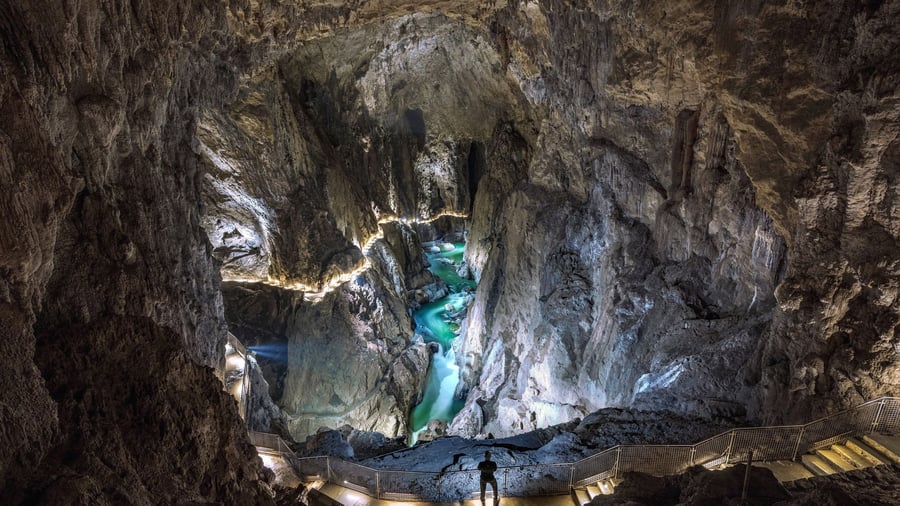
Entering the darkness, a narrow tunnel winds its way underground. The echo of footsteps reverberates off the walls, raindrops glisten on the ceiling. Constantly, the temperature drops to just twelve degrees all year round. "Welcome to the caves of Škocjan!" Marija Fajdiga greets us as we finally step into the gigantic stalagmite cave at the end of the artificially created tunnel.
She is a tour guide at the Škocjanske jame Regional Park, located in western Slovenia amidst one of the world's most significant karst landscapes. Geological terms like "karst" and "dolines" have their origins here. Rain and weathering processes have carved a complex network of caves in the soluble limestone that characterizes the region, including the impressive Škocjan caves.
The cave system stretches over six kilometers, though not the longest in Slovenia – the Postojna caves boast a whopping 24 kilometers. Yet, the Škocjan caves' ethereal stalagmite landscape has fascinated tourists, artists, and scientists for centuries and has played a crucial role in understanding Earth's history. Škocjan caves are the only ones in Slovenia to have been inscribed on the UNESCO World Heritage List – an honor bestowed upon few caves worldwide.
It feels like entering a foreign world. Stalactites hang in bizarre shapes from the cavern ceiling, some long and wide, others as thin as spaghetti. "Sometimes stalactites even fall from the ceiling," Marija tells us. "But that happens very rarely. The last time was about 20 years ago." A centimeter every 100 years From the ground, stalagmites grow upwards in just as bizarre forms.
Some stalagmites resemble waterfalls, mushrooms, or even animals. Standing 15 meters tall, "the giant" is not only one of the largest stalagmites in the cave but also looks like it has been turned into stone from some fable. Marija points out a particularly long stalactite that nearly grazes its upward-growing counterpart: "Those two stalagmites will eventually grow together.
It will take some time, though. It will take over 100 years for a stalagmite to grow a centimeter." The diverse limestone formations dazzle with their colorful glory: shimmering white, rust red, bright orange, moss green, deep black, and earthy brown. Water with minerals like iron or copper, along with plant components, deposits these colors within the stone.
The cave system attracts researchers from around the globe: a multitude of extraordinary karst phenomena form over millions of years due to various geological processes and continue to change. Škocjan is a paradise for earth scientists. Blind cave dwellers Despite how foreign this world may seem to us, it offers a home to numerous animal species, including some rare and endangered ones.
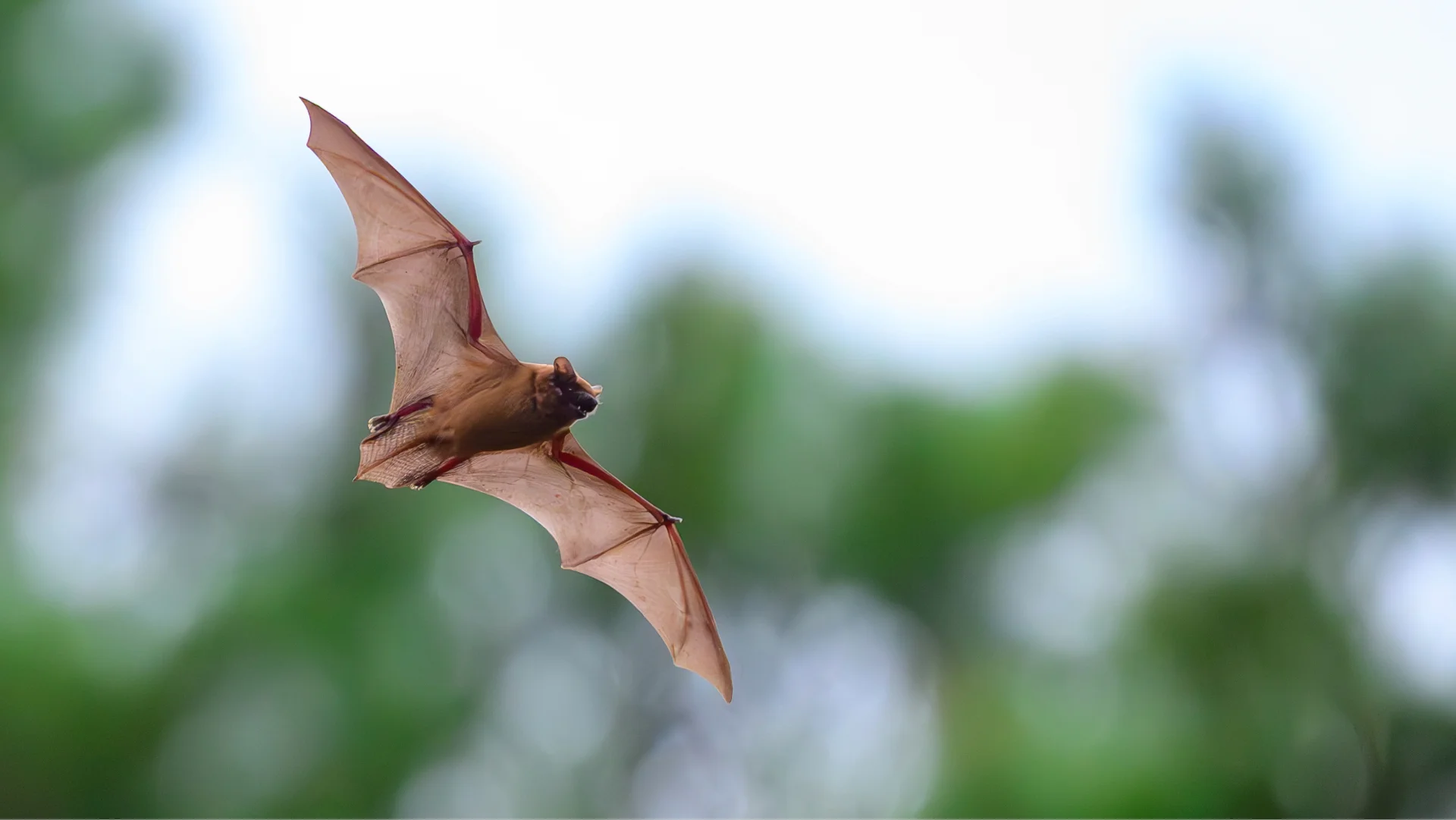
At the bottom, where darkness reigns and food is scarce, one must be a true survivor. The most famous cave inhabitant is the Slovenian national symbol, the Grottenolm, whose serpentine body has earned it the nickname "dragon baby" in Slovenian folklore. It adorns the coat of arms of the city of Postojna and can be admired live in its caves under strict protection measures.
Marija continues guiding us through the Škocjan caves. Even before we catch sight of the next natural spectacle, we can hear a noise growing louder with each step. We stand at the edge of a canyon, over a hundred meters deep in places. Below, the powerful waters of the Reka River tumble, spraying their way through the canyon. We are in one of the world's largest known underground river canyons.
Despite their massive size, the canyon ends in a relatively small gap. This becomes a problem in heavy rain. "The immense water masses cannot flow fast enough, causing the cave to flood," Marija explains. During the strongest flooding, the water level rose by 132 meters. Traces of the flooding are still visible on the rock face today.
Over the canyon, a long, narrow bridge stretches, reminiscent of the scene in "The Lord of the Rings" where Gandalf fights a Balrog in the mines of Moria. Stamped below the rock, directly above the river, is a steel-rope secured passage. "We also offer climbing tours that run directly over the Reka," Marija reports. "But that's only for real adrenaline junkies."
Even high up on the rock, we find safety lines for climbers. Long before the cave was accessible to visitors, researchers scaled the steep walls hand over hand, ever deeper into the cave's unknown heart, secured only by ropes. Finally, we reach the exit of the cave. It's time to return to the surface, where bright daylight briefly obscures our vision.
Marija bids us farewell as we explore the Škocjanske jame Regional Park on our own. From here, it's almost hard to believe that an entirely different world lies beneath our feet.
Written by urgent.news from Handelsblatt's reporting — not their text. Machine-written — may contain errors; check the original before relying on it.