BRICS leaders discuss future of global economy
At the Business Forum, heads of state and business representatives discussed trade expansion, investment, new supply chains, and technological cooperation The post BRICS leaders discuss future of global economy appeared first on KBC Digital .
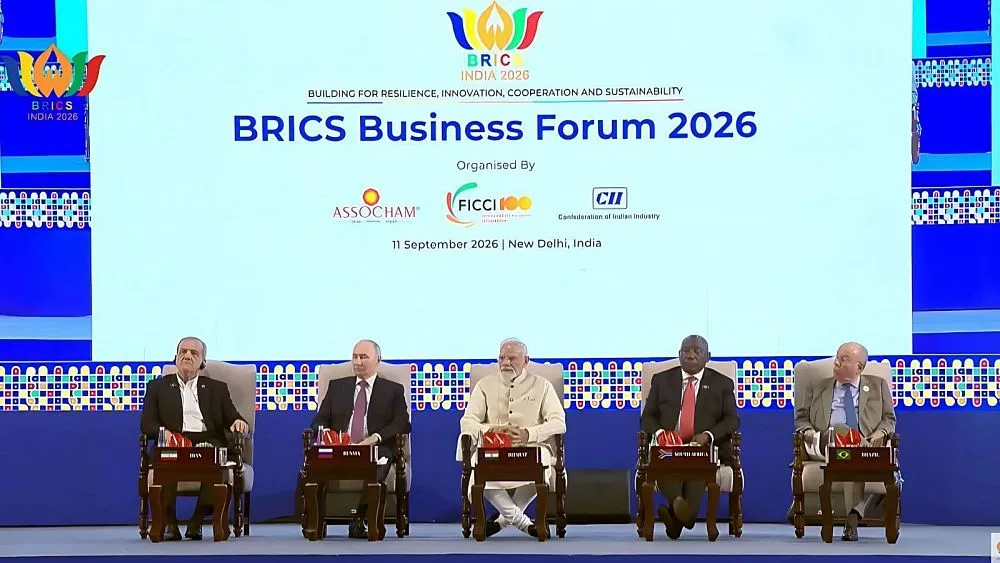
BRICS leaders convened in New Delhi for a Business Forum ahead of the summit, focusing on reshaping global development and boosting member states' economies. Brazil's Foreign Minister Mauro Vieira emphasized the growing significance of the Global South, noting that low- and middle-income countries' share in global GDP increased from 20% in 1960 to over 50% in recent years.
He highlighted Brazil's commitment to economic openness and diversification of partnerships, with over a third of Brazil's foreign trade originating from BRICS member countries. In 2024, Brazil enacted its most comprehensive tax reform, and in 2025, it became the world's third-largest recipient of foreign direct investment, attracting more than US$77 billion. The forum saw participation from more than 15 major Brazilian companies.
Iranian President Masoud Pezeshkian stressed the importance of transforming member countries' capabilities into a network of trade links, investment cooperation, and joint financing. He advocated for deepening trade infrastructure integration, particularly through digitalization, customs procedure unification, and reducing regulatory barriers.
Pezeshkian proposed enhancing cooperation in standardization to transition from a raw material exchange market to a production chain and joint industrial production network. He also advocated for expanding the use of national currencies in mutual trade and establishing mechanisms to manage currency risks. Iran proposed creating a joint BRICS reinsurance company with a US$10 billion initial capital to provide insurance coverage for risks associated with major infrastructure and energy projects.
South African President Cyril Ramaphosa emphasized the need to develop production links between BRICS economies, moving beyond supplying raw materials to adding value to local products. He called for investment in manufacturing, processing, and the creation of value-added products. Ramaphosa urged companies to invest in industrial technologies, energy systems, infrastructure, and logistics, building local expertise alongside market access.
Russian President Vladimir Putin stressed that strong economic partnership and reliable business ties are crucial for international relations, citing the group's contribution to global GDP and economic growth. He emphasized the importance of strengthening 'business diplomacy' mechanisms to facilitate easier partner connections, payments, and investments for companies and entrepreneurs.
Indian Prime Minister Narendra Modi pledged to reduce trade barriers and create new business opportunities during India's BRICS Chairmanship, focusing on agriculture, healthcare, skills development, and smart energy grids.
Written by urgent.news from KBC's reporting — not their text. Machine-written — may contain errors; check the original before relying on it.