AI Says: Why Is Modak Lord Ganesha’s Favourite Sweet?
Legend of Anasuya's Feast According to Hindu mythology, Lord Shiva, Goddess Parvati, and young Ganesha visited the hermitage of Sage Atri and his wife, Anasuya. Anasuya served feast after feast, but Ganesha's immense appetite remained unappeased. Finally, she served a small, sweet dumpling—the modak. Upon eating a single modak, Ganesha burped with satisfaction, signaling he was completely full,…
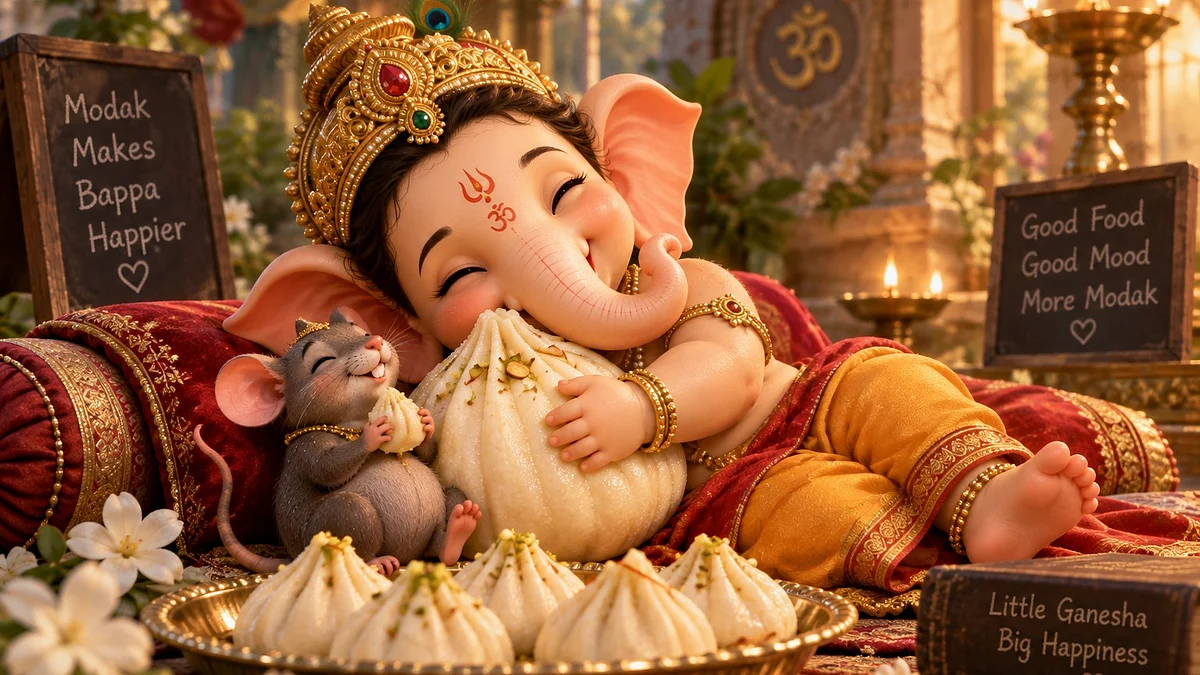
According to Hindu mythology, Lord Shiva, Goddess Parvati, and the young Ganesha journeyed to the hermitage of Sage Atri and his wife, Anasuya. Despite Anasuya's efforts to satisfy Ganesha's insatiable appetite with numerous feasts, it was only after she served a small, sweet dumpling—modak—that Ganesha's hunger was satisfied. Upon eating just one modak, Ganesha expressed his contentment through a burp, which also appeased Lord Shiva.
The modak holds significant spiritual meaning; etymologically, "Moda" signifies joy, bliss, or happiness, while "Ka" signifies a small part or piece. Spiritually, the modak symbolizes spiritual wisdom (Gyana), with its pointed top representing the focused pursuit of higher knowledge and the outer shell hiding the sweet inner filling, which represents the hidden bliss of self-realization.
Another popular legend recounts that after Ganesha broke his tusk to write the epic Mahabharata or during his battle with Parashurama, he found it difficult to chew hard foods. Consequently, soft, steamed sweet dumplings, known as Ukadiche Modak, became his preferred and effortless delicacy.
Written by urgent.news from Free Press Journal's reporting — not their text. Machine-written — may contain errors; check the original before relying on it.