Tokenized Stocks vs Real Stocks vs Stock Futures: Wall Street Without Walls and Know What You Own
Compare real stocks, tokenized stocks and stock futures by ownership, rights, pricing, trading hours and exit paths.
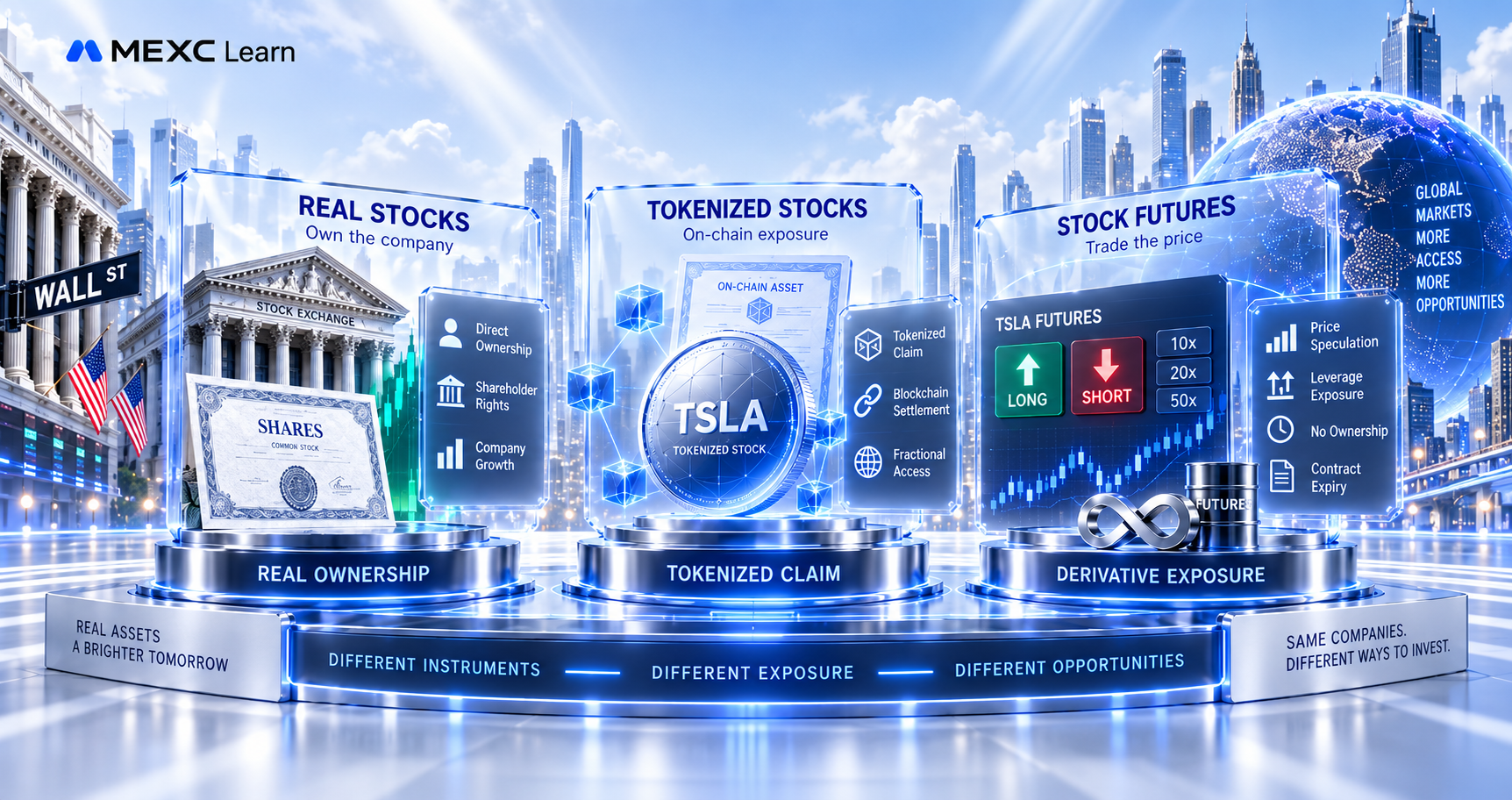
In September 2026, AMC Entertainment CEO Adam Aron publicly opposed Robinhood offering a stock token associated with AMC without the company's consent. The controversy sparked a debate over the fundamental question of what a buyer actually owns when a product carries the name of a public company. Robinhood's current Stock Tokens make this distinction clear: they are tokenized debt securities issued by Robinhood Assets (Jersey) Limited.
These tokens are backed 1:1 by the corresponding underlying equity, but the holder does not possess legal or beneficial rights in the issuer of that security.
As crypto-native platforms lower barriers between digital-asset markets and Wall Street, the ticker alone provides less information than it used to. This guide aims to clarify the differences between RealStocks, Tokenized Stocks, and Stock Futures, which can reference the same company but are distinct instruments.
RealStocks represent actual shares held through a brokerage chain. Tokenized Stocks are claims defined by a token issuer's terms, with their own market, issuer, backing, custody, redemption, and pricing mechanisms connecting to the underlying stock. Stock Futures provide derivative exposure with margin and direct long or short positioning, focusing on capital and execution flexibility rather than shareholder ownership. A single company can be represented by four or more structures on one platform.
The Access, Fee, Time, Capital, and Direction Walls describe frictions in reaching a market, but they do not address the legal or economic boundaries of the product once inside. Lowering these walls necessitates greater awareness of the product structures. The Access Wall involves one-account access, USDT-based participation, extended schedules, smaller units, and products supporting both long and short exposure. The Fee Wall, Time Wall, Capital Wall, and Direction Wall are impacted by lowering these barriers.
Once frictions are reduced, multiple instruments tied to the same company can be accessed through the same interface. However, each instrument has different legal claims, obligors, trading venues, price anchors, settlement rules, corporate-action treatment, and failure modes. Understanding the five boundaries separating the company from the instrument is crucial.
These boundaries include legal claim, obligor or counterparty, price anchor, corporate-action treatment, and exit path. This guide covers each of these boundaries for RealStocks, Tokenized Stocks, and Stock Futures, providing a checklist for understanding what one actually owns when purchasing a particular instrument.
Written by urgent.news from HackerNoon's reporting — not their text. Machine-written — may contain errors; check the original before relying on it.