The sun may once have swallowed a super-Earth planet and could still be hiding the evidence
The sun may have swallowed a super-Earth planet in its early history, and our star may still be hiding the evidence, new research suggests.
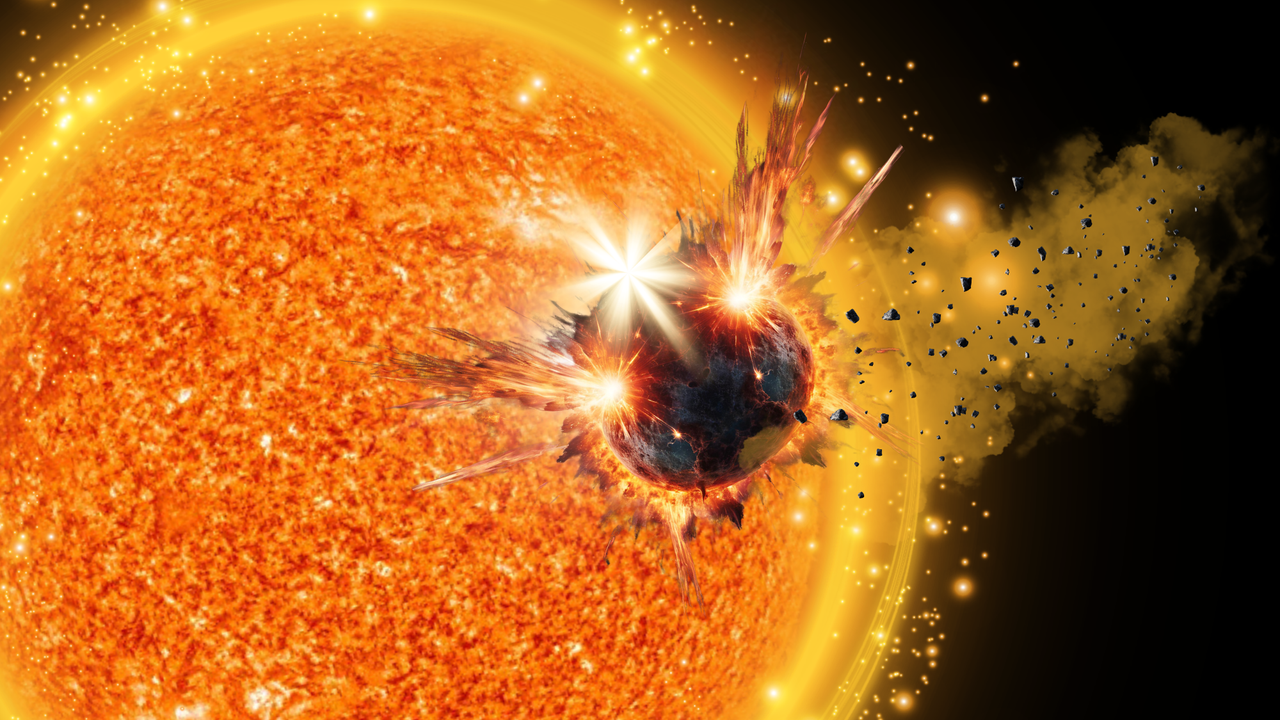
The sun, our planet's life-giving star, may have once consumed a super-Earth planet billions of years ago, according to new research. This theory suggests that the sun could still be hiding the chemical evidence of this cosmic cannibalism within its interior. Super-Earths, which are common in other planetary systems, are believed to be absent in our solar system.
The researchers propose that a planet several times more massive than Earth may have fallen into the young sun, leaving a lasting chemical imprint deep inside it. This planetary engulfment may help explain differences between observations of the sun and predictions from models of stellar evolution, such as the depth of the sun's convection zone and the sound-speed structure just below it.
The sun's depleted lithium abundance could also be a result of this event. By modeling the sun's evolution and comparing the results with observations of its interior, the researchers found that the ingestion of a super-Earth could account for these discrepancies. The team suggests that if the predicted chemical and structural signature of planetary engulfment still exists within the sun, it could potentially be detected in the future.
Written by urgent.news from Space.com's reporting — not their text. Machine-written — may contain errors; check the original before relying on it.