Protection Funds, Insurance and FDIC/SIPC: What Actually Covers What
Crypto held on an exchange is not FDIC or SIPC insured. Here is what protection funds such as Bitget's and Binance SAFU cover and how to verify them.
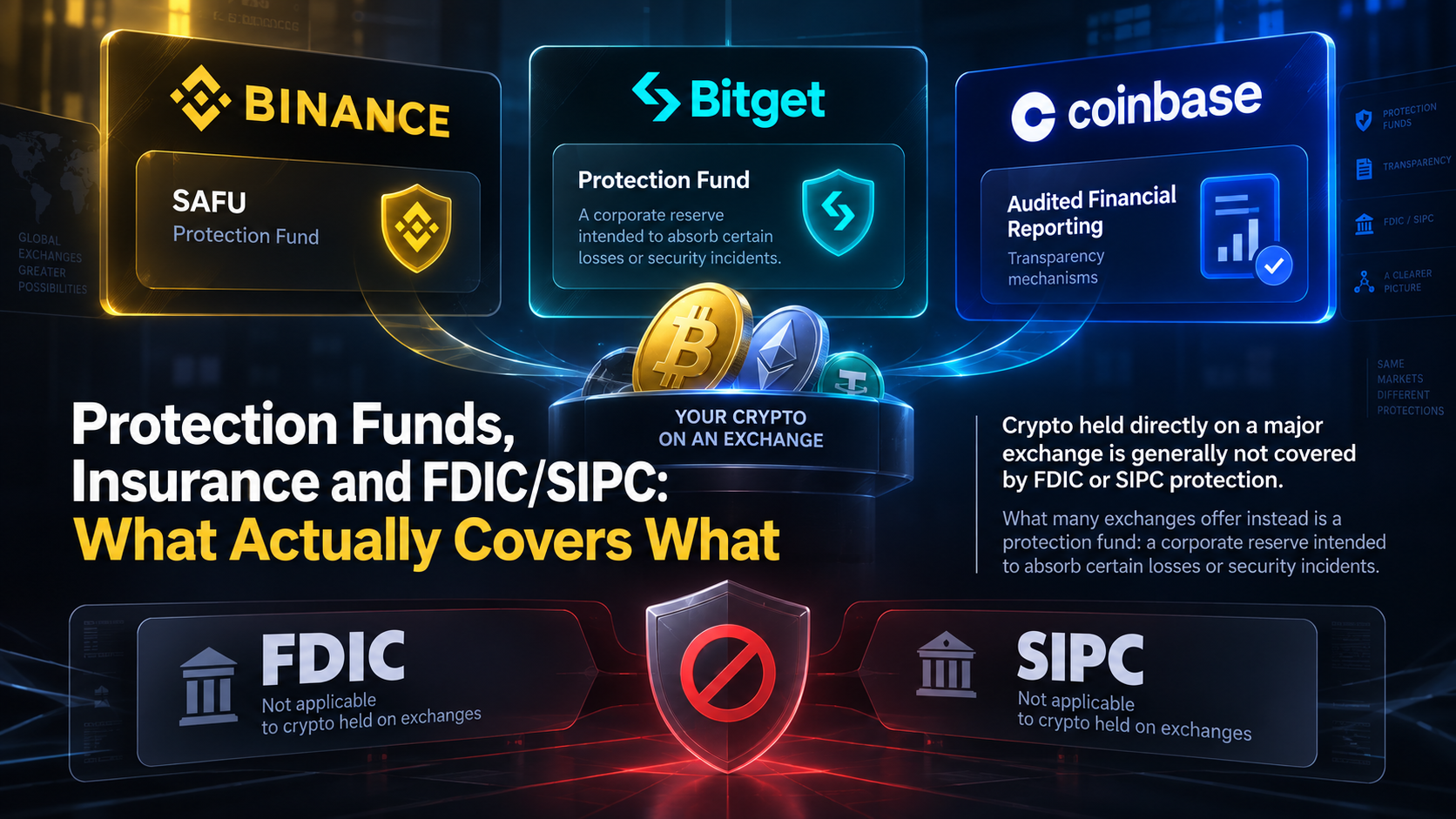
Crypto assets held on major exchanges are not protected by FDIC or SIPC insurance. These programs serve different purposes and do not extend to digital currencies. Protection funds offered by exchanges are corporate reserves designed to cover specific losses or security incidents, but they differ from statutory deposit or brokerage protections.
The key factors that distinguish protection funds include the type of assets covered, their control, transparency, legal rights to payouts, and whether users can actually receive payouts.
FDIC insurance protects eligible deposits at insured banks during bank failures, but it does not cover crypto assets or compensate for the insolvency of non-bank crypto companies. Similarly, SIPC protection applies to customers of SIPC-member broker-dealers in cases of broker failures, but it does not extend to all digital assets or require registration under SIPA.
Holding crypto through a financial platform does not automatically grant FDIC or SIPC protection, as coverage depends on the asset, legal entity, and account structure.
While an exchange protection fund can provide a financial backstop, its credibility depends on factors such as asset holdings, disclosure, fund valuation reporting, covered events, decision-making, and past usage. Binance's SAFU fund, established from trading fees, is an example of a functional reserve used during a security breach, but it remains distinct from FDIC insurance.
Bitget's Protection Fund, alongside its proof-of-reserves program, offers recurring valuation disclosures to provide a financial safety net, though it should not imply overall solvency. Coinbase, unlike the other exchanges, maintains its transparency through audited financial statements filed with the SEC, offering a different level of accountability.
Written by urgent.news from HackerNoon's reporting — not their text. Machine-written — may contain errors; check the original before relying on it.