Indigenous knowledge x tech in the search for a tiny Amazon monkey
How do you search for the world’s smallest monkey? Earlier this year, Nicolás Schuldt Durán took on this task after he was approached by members of an Indigenous community in Ecuador. Ever since, he’s been tapping into the knowledge of the Siekopai people and combining it with passive acoustic monitoring technology to look for pygmy […]
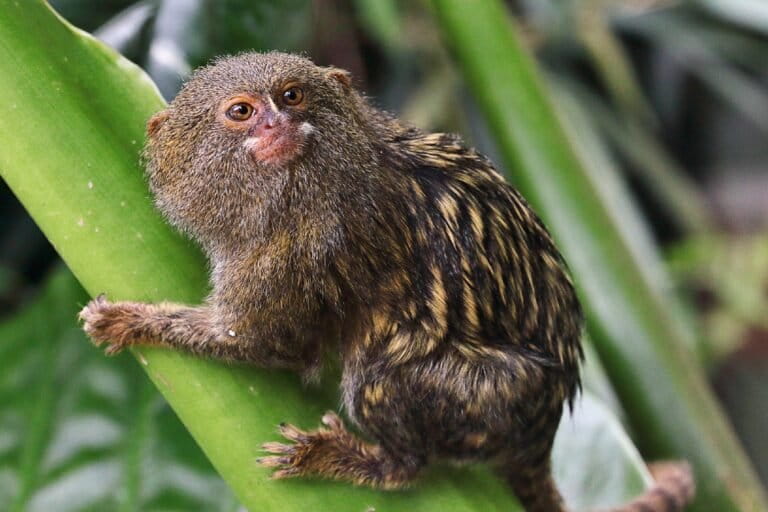
Searching for the world's smallest monkey, the pygmy marmoset, presents unique challenges. Nicolás Schuldt Durán, a conservation technology advocate, is currently leading this endeavor in collaboration with the Siekopai Indigenous community in Ecuador. The Siekopai people have been setting up camera traps and monitoring territorial boundaries to detect poachers and loggers, and Durán is adding passive acoustic monitoring technology to this mix.
Pygmy marmosets, locally known as leoncillo, are vulnerable to extinction due to illegal pet trade and deforestation. Despite their tiny size, adults weigh only 140-150 grams, roughly the weight of a small apple. Native to the western Amazon Basin, these primates are known for their high-pitched calls, including ultrasonic whistles, used for communication among one another.
The challenge lies in the fact that pygmy marmosets reside high up in trees and their calls are often too high-pitched for human ears, making them difficult to locate. Durán's innovative approach combines traditional Indigenous knowledge with modern technology, aiming to overcome these hurdles. Nonetheless, finding the elusive species remains an ongoing task.
Written by urgent.news from Mongabay's reporting — not their text. Machine-written — may contain errors; check the original before relying on it.