Dynatrace and Arize AI push observability from detection toward action
Enterprise observability is entering a new phase as artificial intelligence changes both the applications companies need to monitor and the way operations teams respond when something goes wrong. Traditional observability platforms were built around deterministic software and telemetry, such as logs, metrics and traces. But AI applications and agents behave differently, producing outputs that can…
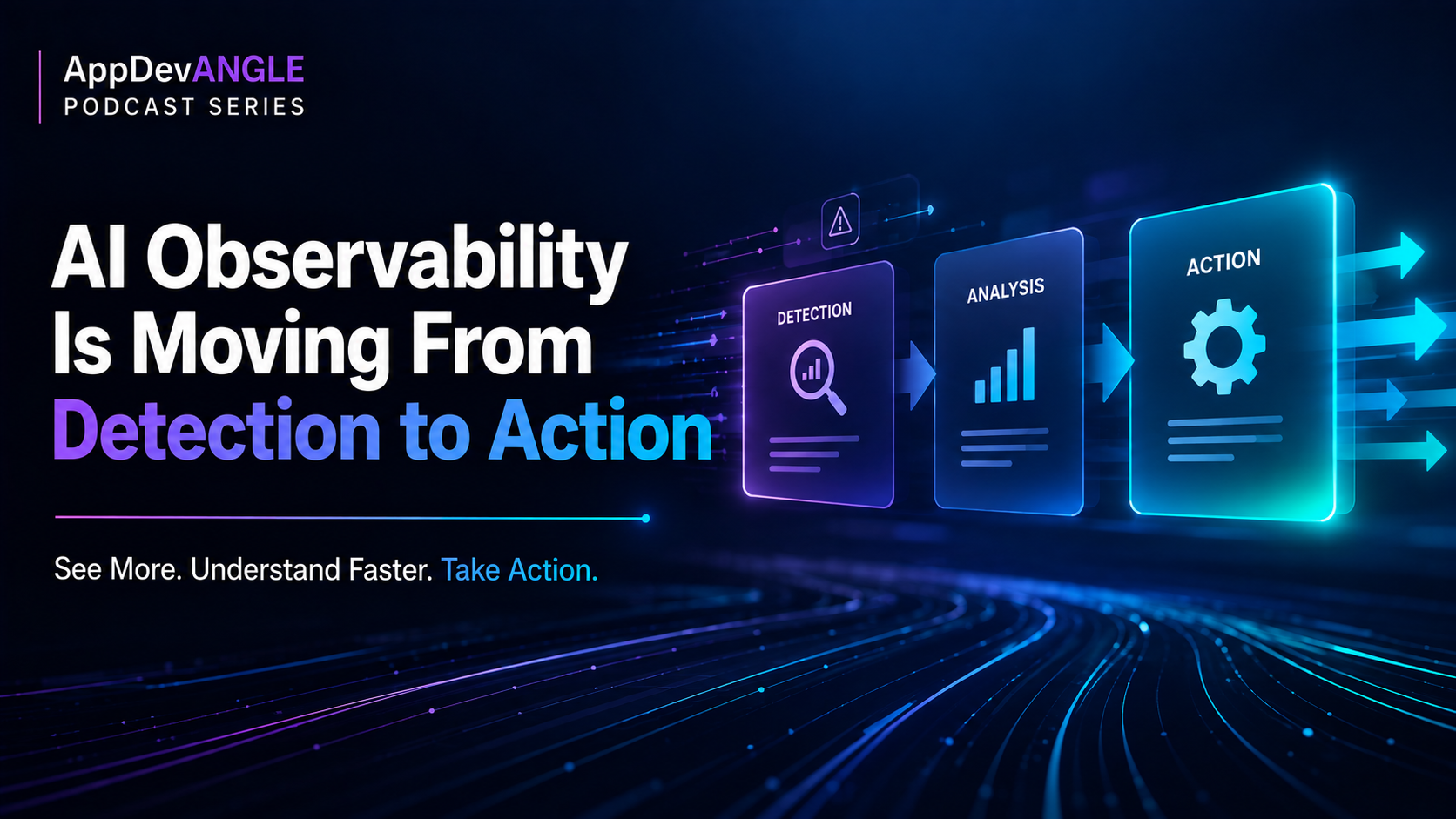
The landscape of enterprise observability is undergoing a transformation as artificial intelligence reshapes the applications that companies monitor and the ways operations teams respond to issues. While traditional observability platforms were designed for deterministic software and telemetry, such as logs, metrics, and traces, AI applications and agents exhibit unpredictable behavior, producing varied outputs even when provided with similar inputs.
At the same time, enterprises now expect observability platforms to offer more context for humans and AI agents to diagnose, remediate, and potentially act on problems. This shift is driving Dynatrace's acquisition of Arize AI, which brings AI observability, evaluation, and agent monitoring capabilities into Dynatrace's application observability platform.
In the latest episode of theCUBE Research's AppDevANGLE podcast, Paul Nashawaty spoke with Steve Tack, Dynatrace's chief product officer, and Aparna Dhinakaran, Arize AI's co-founder and chief product officer, about the convergence of application and AI observability and its implications for enterprise operations. Tack highlighted the significant change brought about by AI, noting that it introduces new problems and domains to the observability space.
One of the key challenges is that AI-powered applications, especially those featuring large language models and autonomous agents, exhibit nondeterministic behavior, making troubleshooting more difficult. Therefore, observability must extend beyond simply determining if an application is available or if infrastructure is operating within expected thresholds.
Teams must now understand whether an AI system generated the expected response and whether the quality of that response met expectations. Arize AI's platform addresses this challenge by providing tools for tracing, evaluating, and improving AI applications and agents. With over 4,000 enterprise customers utilizing its open-source Phoenix platform, Arize offers a managed environment, Arize AX, for teams operating AI systems at scale.
For Dynatrace, integrating these capabilities into its platform expands observability into the application layer, which is becoming increasingly crucial as enterprises transition AI projects from experimentation to production. AI applications do not operate in isolation; they interact with APIs, databases, cloud infrastructure, and other enterprise systems.
This interconnectivity creates troubleshooting complexities, as the AI behavior under investigation may only be one component of a larger software stack. Arize's customers increasingly demanded stronger connections between AI telemetry and traditional application and production telemetry. Conversely, Dynatrace customers sought deeper AI observability and evaluation capabilities.
By combining these environments, developers, site reliability engineers, platform teams, AI engineers, and data scientists can gain a unified view of the application stack. This shared context can also help tackle the issue of tool sprawl, which arises when organizations use multiple observability tools, leading to increased complexity.
Combining application and AI observability offers a more comprehensive system-level view, fostering a system mindset and enabling teams to take action. The evolution of observability may not be solely about what platforms monitor but rather who or what consumes the information. Traditional observability has primarily focused on engineers examining dashboards, responding to alerts, and manually troubleshooting incidents.
However, AI agents introduce the possibility of a new operational model, where telemetry becomes context that software agents themselves can utilize. Observability is shifting from being a tool for humans to look at dashboards and metrics to becoming a source of actionable insights for agents. This transformation implies that accuracy and context become paramount, as autonomous operations rely on the trustworthiness of the information fed into decision-making processes.
Dynatrace has been progressing in this direction through its AI and automation strategy, including Dynatrace Intelligence and its BlueBox AI offering for agentic development and SRE workflows. Arize AI further enhances this approach by providing deeper evaluation and observability around AI.
Written by urgent.news from SiliconANGLE's reporting — not their text. Machine-written — may contain errors; check the original before relying on it.