BRICS flags unilateral tariffs, trade barriers as global risks
BRICS finance ministers voiced serious concerns over unilateral trade measures. Higher tariffs and non-tariff barriers are distorting global trade and adding risks. The global economic outlook remains under pressure from geopolitical tensions. Trade fragmentation and protectionism also contribute to economic instability. Policy uncertainty and financial vulnerabilities add to the global economic…
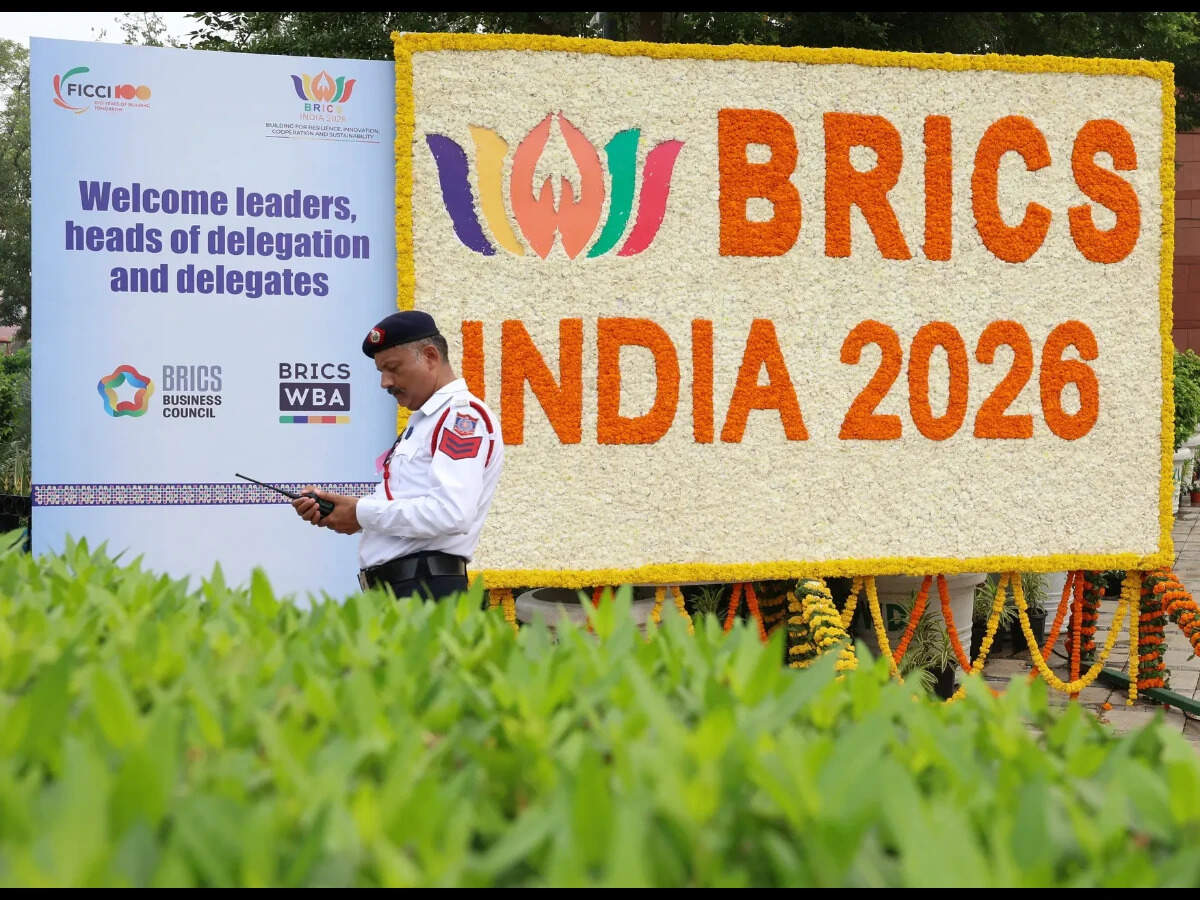
The BRICS Finance Ministers and Central Bank Governors (FMCBG) expressed apprehension over the "unilateral imposition" of tariffs and non-tariff measures that distort trade, stating these actions are inconsistent with World Trade Organisation (WTO) rules. They reaffirmed their commitment to an "open, transparent, inclusive, non-discriminatory, and rules-based" multilateral trading system with the WTO at its core.
The FMCBG highlighted the pressures these measures impose on Emerging Markets and Developing Economies (EMDEs), which are most affected by such unilateral actions. While the statement did not single out any country, it pointed out that the United States is actively involved in imposing extraordinary tariffs on its trade partners.
The FMCBG appreciated the efforts of the BRICS Payment Task Force (BPTF) in exploring "pragmatic solutions" for efficient cross-border payment mechanisms, including the study of cross-border interoperability of payment and messaging channels and discussions on promoting trade settlements and investments using BRICS local currencies.
They encouraged the task force to continue its work toward facilitating practical solutions for cross-border payments among BRICS nations, which should be fast, low-cost, more accessible, efficient, transparent, and safe. The joint statement also acknowledged the establishment of a BRICS Task Force on Growth and Development by India, using its chairmanship, to address shared growth and development challenges relevant to BRICS and other emerging markets and developing economies.
The Task Force operates under two workstreams: Resilience, Innovation and Cooperation, and Sustainability.
Written by urgent.news from The Hindu's reporting — not their text. Machine-written — may contain errors; check the original before relying on it.
This story
This is one outlet's version. Read the fullest account.