Mercury may have shrunk much more than we thought, new study hints
Mercury may be shrinking much faster than we thought — and that could reveal new clues about its violent origins.
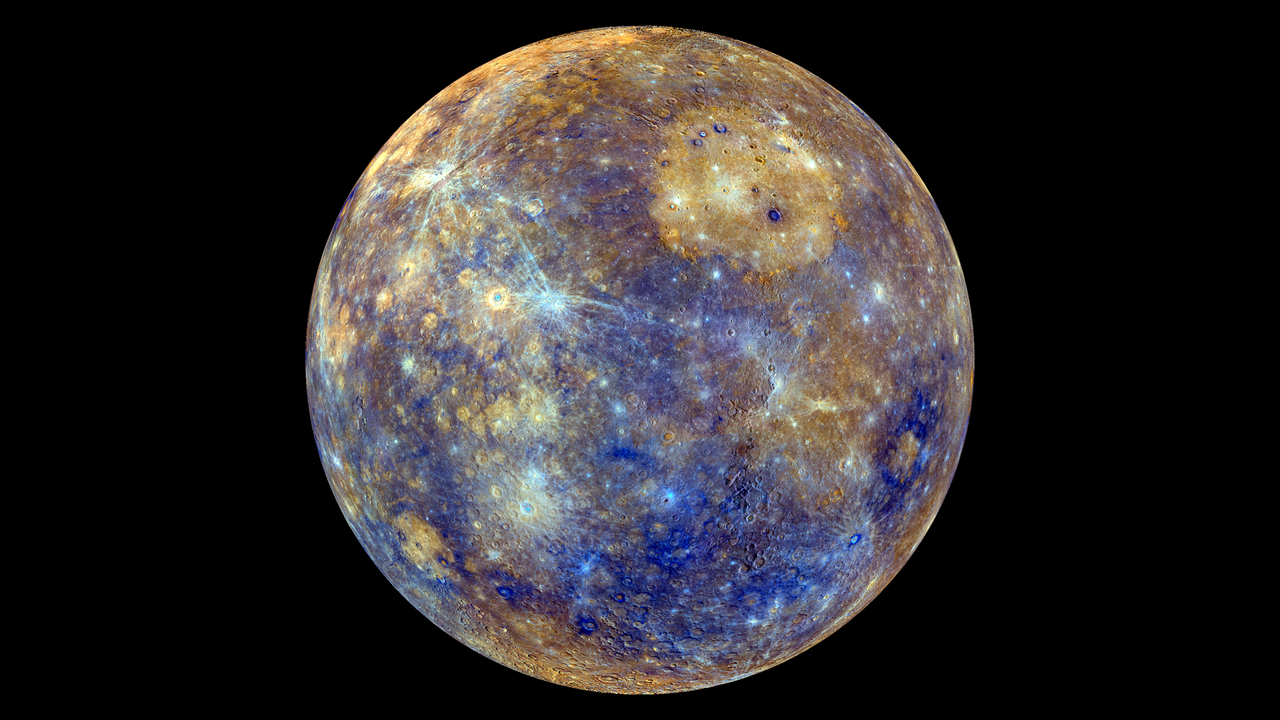
New research indicates Mercury may have contracted more than previously estimated during its evolution. According to a study published in the journal Geophysical Research Letters, the planet's diameter could have shrunk by 10% to 30%, reducing its total size by nearly 12 miles (19 km). This discrepancy in size is crucial for understanding Mercury's history, as the amount of contraction serves as an indicator of the extent of cooling, a key factor in estimating the planet's evolution.
Dr. Gaku Nishiyama, a planetary scientist from the German Aerospace Center, explained that this information helps to compare Mercury's evolution to models and thus provides insight into its formation scenario. More shrinkage could imply a larger metal core and fewer light elements like silicon, potentially revealing more about the composition of our solar system's innermost planet.
Observations from NASA's MESSENGER spacecraft, which orbited Mercury from 2011 to 2015, enabled the researchers to build new maps of the planet's contraction. The team compared two sets of maps, using data from MESSENGER, to chart contraction features and estimate the roughness of Mercury's surface. However, the study notes that impact craters on the planet's surface have been obscuring evidence of shrinkage due to their ability to generate surface changes and debris, making ancient geology difficult to discern.
Future data from the European Space Agency's BepiColombo spacecraft, which began its arrival sequence at Mercury earlier this month, may provide higher-resolution imagery and further refine these measurements.
Written by urgent.news from Live Science's reporting — not their text. Machine-written — may contain errors; check the original before relying on it.