J-50 designers reveal leapfrog tech for China’s next-gen stealth fighters
China’s next-generation combat aircraft will be able to fly by themselves if a pilot loses consciousness, navigate without satellite signals and operate in self-reorganising large drone formations. That is the plan laid out by researchers from the Shenyang Aircraft Design & Research Institute, a top Chinese military aircraft design organisation, in a paper last month. The institute is associated…
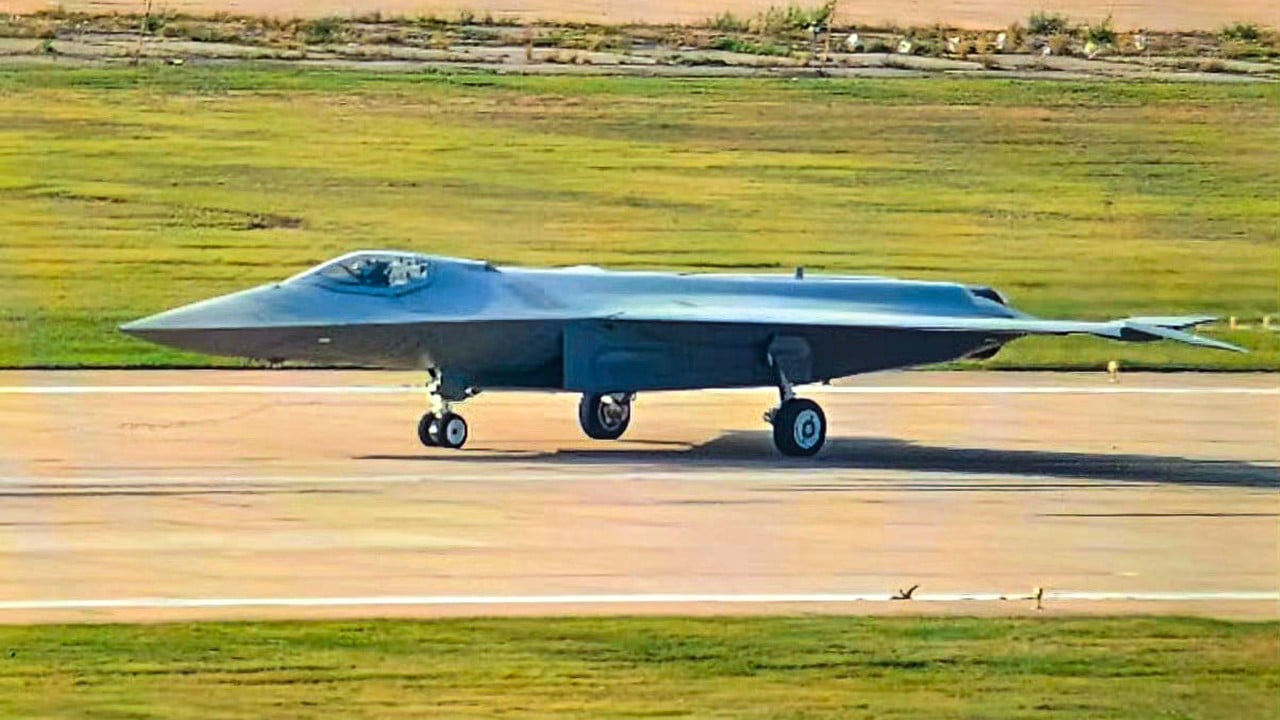
Researchers from the Shenyang Aircraft Design & Research Institute unveiled ambitious plans for China’s next-generation stealth fighters, dubbed the J-50. Their paper, published in Aircraft Design, outlines a leapfrog transformation aimed at elevating air combat capabilities. The institute, part of the state-owned Aviation Industry Corporation of China, is also developing the J-36 fighter, another potential candidate for China’s next-generation sixth-generation combat aircraft.
The J-50 and J-36 are viewed as rivals to the US Air Force’s sixth-generation fighter program, the F-47. The lead researcher, chief flight-control designer Zhang Dong, and his team detailed a future where pilots could delegate control during extreme situations, utilize quantum navigation technologies, and coordinate with reconfigurable wingman drones in self-reorganising formations.
The institute’s proposed system represents a fundamental restructuring of flight-control systems, transitioning from closed, centralized platforms to core enablers of collaborative engagement, intelligent manoeuvre, and mission effectiveness. This represents the shift from the "energy manoeuvrability" era, where victory depended on physical prowess, to the "information manoeuvrability" era, where detecting, tracking, and attacking adversaries before being detected became crucial.
The next phase, "cognitive manoeuvrability," involves artificial intelligence, autonomous systems, and distributed networking, positioning combat as a system-level contest involving manned-unmanned formations.
Written by urgent.news from South China Morning Post's reporting — not their text. Machine-written — may contain errors; check the original before relying on it.
This story
This is one outlet's version. Read the fullest account.