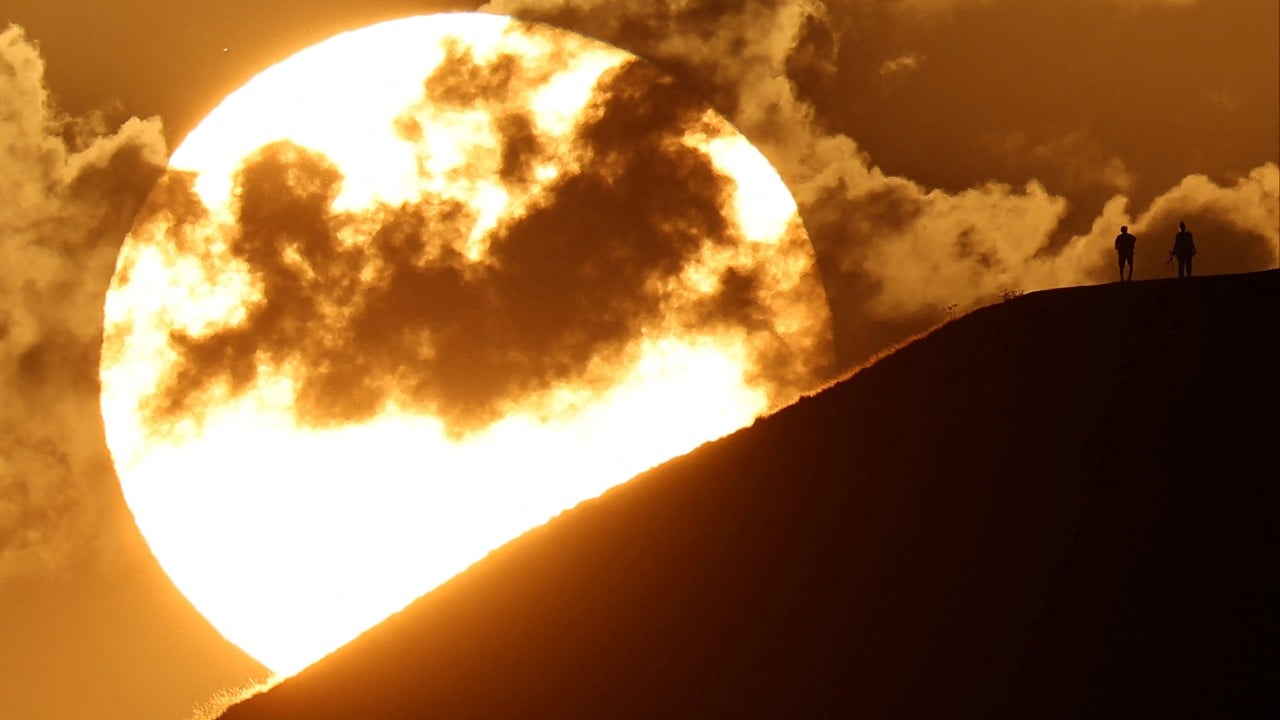
Global heat stuck on high. Scientists say August was Earth's hottest month they've measured.
WASHINGTON — Earth cooked to its hottest month on record in August, blowing far past a key climate threshold, due to the dangerous double whammy of human-caused climate change and a supersized El Nino, according to the European climate service Copernicus. August's sizzle also helped push the globe and the United States to swelter through the hottest Northern Hemisphere summer scientists have…

August marked the hottest month on record for Earth, surpassing a critical climate threshold, according to the European climate service Copernicus. The excessive heat was a result of both human-induced climate change and a massive El Nino event. During August, the globe and the United States experienced their warmest summer scientists have measured.
The average temperature for the month was 62.53 degrees Fahrenheit (16.96 degrees Celsius), which was just one-hundredth of a degree Celsius higher than the previous global record set in July 2023. However, since the uncertainty level is also one-hundredth of a degree Celsius, the August average is considered a tie with the previous record.
Samantha Burgess, strategic climate lead for Copernicus, stated that it was time to stop being surprised that our warming planet continues to get warmer, as this trend has been predicted by scientists for decades. Texas A&M University climate scientist Andrew Dessler emphasized that it is clear we will keep breaking heat records, but the question remains whether we will take action to address this growing crisis.
Written by urgent.news from The Korea Times's reporting — not their text. Machine-written — may contain errors; check the original before relying on it.
This story
This is one outlet's version. Read the fullest account.
- Global heat stuck on high. Scientists say August was Earth's hottest month they've measured. koreatimes.co.kr
- Global heat stuck on high. Scientists say August was Earth's hottest month they've measured. phys.org
- Scientists say August was Earth's hottest month they've measured npr.org
- August was world’s joint hottest month on record: Scientists qatar-tribune.com
- August 2026 ties for hottest month ever recorded scientificamerican.com
- Global heat stuck on high. Scientists say August was Earth’s hottest month they’ve measured. winnipegfreepress.com
- Scientists warmed Minnesota trees by 3.4°C; they adapted to most of the heat timesofindia.indiatimes.com