GitHub availability report: August 2026
In August, we experienced five incidents that resulted in degraded performance across GitHub services. The post GitHub availability report: August 2026 appeared first on The GitHub Blog .
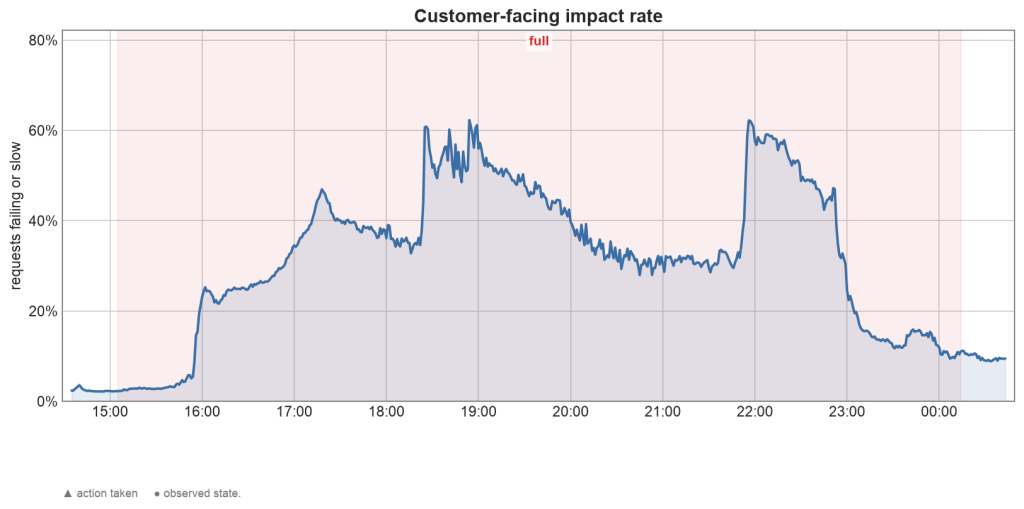
In August 2026, GitHub faced significant challenges with availability that affected various services and generated notable impact on customers. This wire account delves into the events, impact summary, root cause, response, and ongoing improvements made by GitHub during this period.
During August 2026, GitHub experienced a challenging month for availability, as detailed in a subsequent blog post. The company was actively investing in architectural improvements and transitioning to Azure to enhance capacity. Despite these efforts, incidents occurred, highlighting the inherent risks in such large-scale platforms.
On August 11, GitHub successfully ran a production MySQL primary from Azure for the first time, with minimal client-observed write impact. Two more primaries followed on August 27, with additional primaries scheduled. Additionally, traffic to migrated services peaked at 60.4%, while reads from GitHub's monolith reached 64.3% in Azure, including 54% for Git reads. GitHub Actions gained extra capacity, and work on long-term isolation continued.
One of the major incidents centered around GitHub Actions, impacting 74 organizations with failures ranging from workflow start to queueing and API errors. The incident began with a routine deployment to an internal actions service that processes incoming events. The deployment, although not at fault, reduced capacity in one site, pushing the remaining sites past their limits as traffic shifted.
This led to service mesh sidecars experiencing CPU throttling and out-of-memory restarts, cascading into cache, DNS, and API errors across multiple clusters.
The core services recovered, but a latent bug in the job-assignment path caused runners to retry revoked jobs, creating a self-amplifying backlog. A routine deployment triggered the incident, exhausting available headroom and overwhelming the service mesh and remaining pods. Recovery was slower due to the bug, exacerbating the backlog.
GitHub responded promptly to the incident. They quickly rolled back the deployment to confirm it wasn't the root cause. As the service mesh and pods saturated, the failures cascaded across multiple clusters, leading to widespread impact. To mitigate the issue, GitHub initiated automated high-impact incident detection, combining customer-support signals with service telemetry.
API monitoring was recalibrated and validated, improving signal quality and detection capabilities. The next month's work will focus on moving database primaries, migrating services to Azure, adding automation around capacity management, and extending dependency-failure handling across the pull request experience.
In conclusion, August 2026 was a pivotal month for GitHub, marked by significant availability challenges that required swift response and strategic investments. The lessons learned from these incidents will guide future improvements, emphasizing availability, capacity, and continuous feature enhancements.
Written by urgent.news from GitHub Blog's reporting — not their text. Machine-written — may contain errors; check the original before relying on it.