Exquisite 66-million-year-old bird feather preserved in dinosaur dropping
A dinosaur, possibly a young Tyrannosaurus rex, excreted a bird 66 million years ago, and one of its feathers is exquisitely preserved in the fossilised dropping
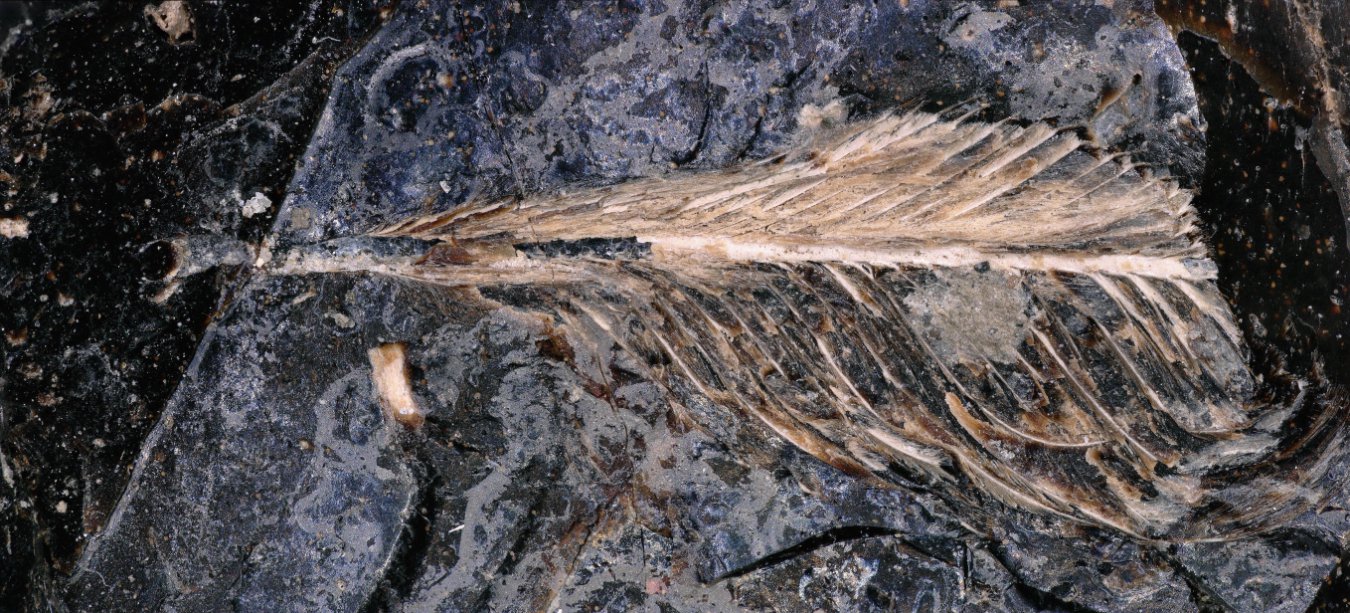
In 2016, a remarkable discovery was made in northeast Montana's Hell Creek Formation by David DeMar, Jr. While collecting fish fossils, he stumbled upon a broken coprolite, or fossilized droppings, containing a remarkably well-preserved feather. This feather belonged to a bird that had been eaten and partially excreted by a dinosaur 66 million years ago. This find represents the best-preserved feathers ever recovered by scientists from Mesozoic Era deposits, pushing the evolution of feathers back by 10 million years.
Jingmai O'Connor, at the Field Museum in Chicago, described the feather as "like a feather you could pick up off the ground." The feather was discovered alongside two leg-bone fragments, measuring 18 and 12 millimeters in length, which were attributed to hesperornithiformes, a group of flightless, short-winged diving birds similar to modern loons and grebes. Both of the feather samples exhibited water-repellent structures and lightweight, spongy cores, similar to those found in modern pelicans and other birds.
This discovery provides valuable insight into why only birds survived the post-asteroid mass extinction event. The feathered bird, belonging to the hesperornithiformes group, possessed a mix of primitive and modern plumage, making it more adaptable to the changing environment. The combination of advanced wing and tail feathers for diving and less advanced body feathers, which were poorer insulators, may have made these birds more vulnerable to the harsh conditions that followed the asteroid impact.
These findings shed light on the feather evolution in non-modern birds and their role in the survival of modern birds.
Written by urgent.news from New Scientist's reporting — not their text. Machine-written — may contain errors; check the original before relying on it.


