What to look for when comparing shredders for sale
Choosing a paper shredder involves more than comparing sheet capacity. Consider your workload, the sensitivity of your documents, the machine’s runtime, security level and features before deciding which model suits your home or office.
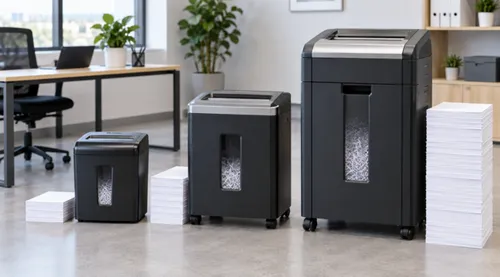
Selecting a paper shredder entails more consideration than one might assume. A compact model could suffice for a few pages at a time, yet it may swiftly grow tiresome when confronted with a substantial stack of documents to destroy. The optimal choice hinges on the extent of shredding required, the nature of the documents, and the frequency of usage.
Begin by estimating the volume of paper shredded daily. This provides a more accurate starting point when comparing shredders available for purchase, as a machine intended for occasional use may struggle under heavy office demand. If a single individual is disposing of documents one at a time, a personal shredder is typically adequate.
In a work environment where multiple individuals share the machine, a larger bin, a motor engineered for frequent use, and a prolonged operational time become essential factors. Businesses handling bulk archives or extensive batches of documents may find a heavy-duty or industrial shredder more suitable. Matching the purchase to workload is crucial.
An undersized device results in frequent interruptions, increased cooling periods, and a higher likelihood of paper jams. Paper containing sensitive information necessitates a different level of shredding compared to routine office notes. Strip-cut shredders slice paper into wider strips, fitting well for less confidential paperwork; however, cross-cut shredders generate smaller pieces, rendering them suitable for documents encompassing personal data.
Micro-cut models yield even tinier pieces, ideal for the utmost confidential material. While the quantity of sheets a shredder can process simultaneously often draws attention, its duty cycle, encompassing its operational duration before necessitating a cooldown, can be equally significant. Some diminutive machines can accommodate a stack of paper but only function for a few minutes before requiring a cooling interval.
This could be inconsequential if the shredder is employed once or twice daily; however, in a bustling shared office, these pauses become increasingly bothersome. When evaluating shredders for sale, compare each machine's operational duration, cooling requirements, and recommended daily capacity. A high sheet capacity does not inherently imply suitability for regular use.
Attention to minor details is crucial here. A bigger waste bin diminishes the need to empty it frequently. Automatic feed functionality conserves time by allowing the loading of a stack of documents and resuming work without manual page feeding. Jam prevention and overload protection are advantageous features for a machine utilized by several individuals.
Quiet operation may be important in an open-plan office setting. Automatic oiling proves beneficial for machines subjected to frequent use. It is vital to ascertain whether the machine can manage staples or paper clips still attached to documents, as well as other materials like cards. Before finalizing a shredder decision, align the machine's specifications with the volume of paper your office demands to shred.
There is no point in investing in a heavy-duty model if it will only be utilized a few times weekly. A smaller shredder may prove equally frustrating if multiple individuals utilize it daily. The objective is to find a machine capable of comfortably managing the workload.
Written by urgent.news from IOL's reporting — not their text. Machine-written — may contain errors; check the original before relying on it.