‘We Don’t Have Decades’: Why $500 Million Won’t Break China’s Grip on Batteries
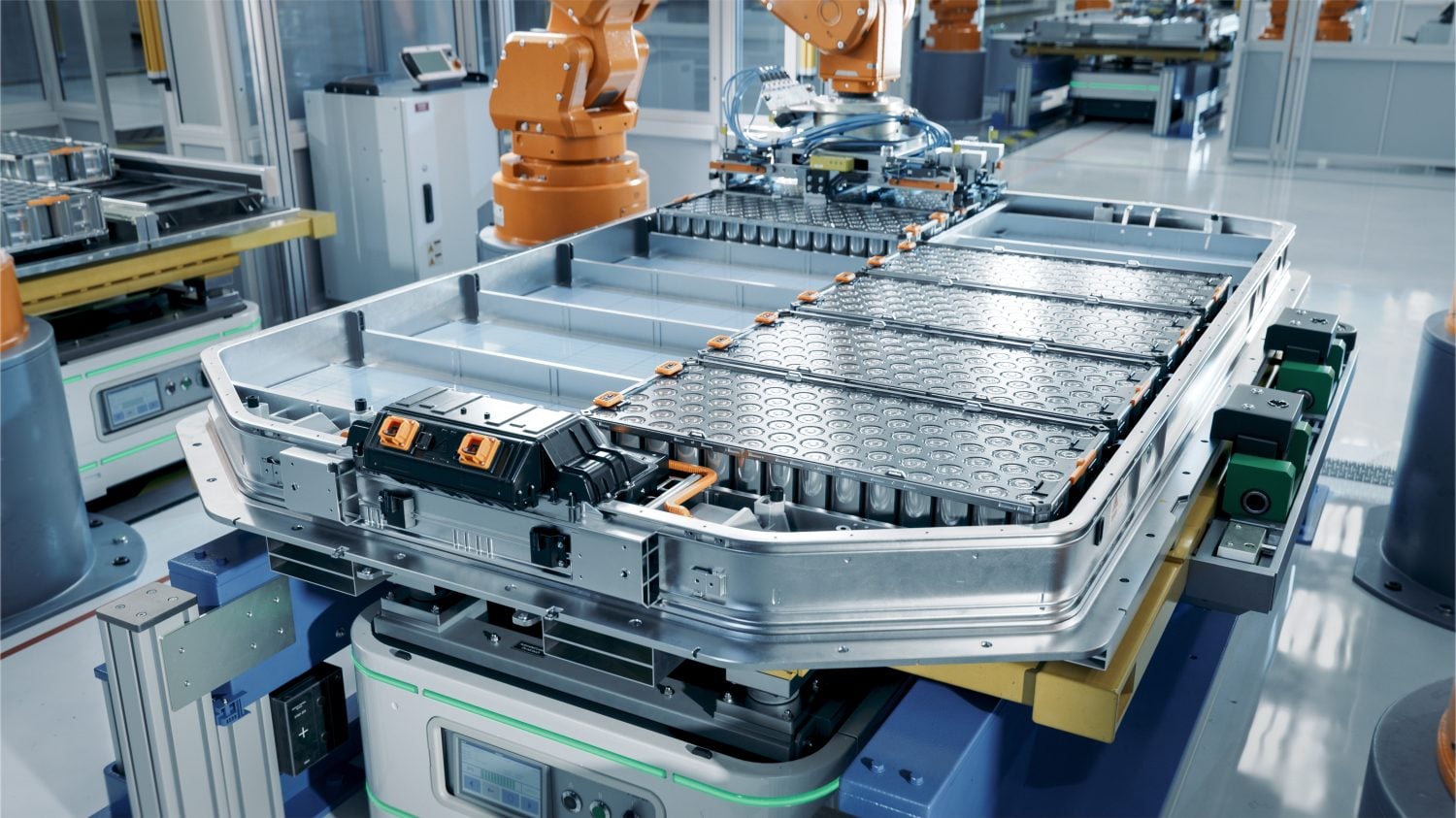
The Department of Energy is distributing $500 million across seven US battery companies, but experts assert that overcoming China's battery dominance will require decades and hundreds of billions of dollars instead of the measly $500 million. In the past 19 months, 24 billion in US battery projects were abandoned due to policy volatility between administrations eroding capital commitments.
US EV sales plummeted 36% after purchase credits expired, yet Kent Masters reports that stationary storage demand is soaring 45% year-over-year through May. Our analysts analyzed the entire stock market and revealed the ten best stocks to buy right now, but Albemarle (NYSE:ALB), the largest domestic lithium producer, did not make the list.
A CNBC segment highlighted the $500 million investment, and industry experts admitted that catching up will take decades and tens, if not hundreds of billions of dollars. China's battery dominance is evident as they produce 85% of the world's cathode active material and over 90% of anode active material in 2025, while also holding 80% of global battery cells and 70% of the world's electric vehicles.
The cost disparity between Chinese and Western battery packs is apparent, with Chinese battery pack prices being lower than North American and European counterparts, and this gap has only widened since 2022. Albemarle's Q2 realized lithium price of $19.53/kg LCE is market-set, and its buyers compete with Chinese converters. The Department of Energy's funds target midstream processing, the stage that transforms raw materials into battery-grade material.
Raef Sully, whose company received a $100 million federal grant for a Great Salt Lake lithium project, explained that the award covers approximately one-third of phase one capital. Sully stated that his process produces battery-grade lithium carbonate or hydroxide at the extraction point, bypassing the crucial processing step that China has a monopoly on today.
Albemarle is also tackling this bottleneck with its direct lithium extraction (DLE) pilot at the Salar de Atacama. The company reported over 3,000 operating hours with recovery rates exceeding 90%, compared to 30% to 40% for conventional ponds. The most alarming figure from the CNBC segment is the number of canceled US battery projects, totaling 24 billion.
A key industry expert emphasized that a stable policy environment free from frequent changes between administrations is the most critical factor for successful industrial policy. Albemarle has adjusted accordingly by placing its Kemerton Train 1 into care and maintenance, reducing full-year capex to approximately 500 million, and retiring 1.3 billion in debt.
The CEO succession plan further emphasizes the company's strategic shift towards a longer, more unpredictable cycle. The ultimate challenge, according to an industry expert, is demand, as every link in the supply chain depends on someone purchasing the finished product. US EV sales dropped 36% year-over-year in Q4 2025 after federal purchase credits expired, indicating that supply-side grants cannot rectify demand issues.
Stationary storage is the potential solution, as roughly 15% of global battery demand in 2025 came from energy storage, with Albemarle predicting that stationary storage will make up about 30% of global lithium market demand in 2026.
Written by urgent.news from Yahoo Finance's reporting — not their text. Machine-written — may contain errors; check the original before relying on it.