The Uprising Review: Andrew Garfield Revolts Against English Tyranny as the Inspiration for Robin Hood
Read our review of The Uprising, the historical drama starring Andrew Garfield as a peasant rebel and proto-Robin Hood defying English tyranny in a gritty fight for freedom.
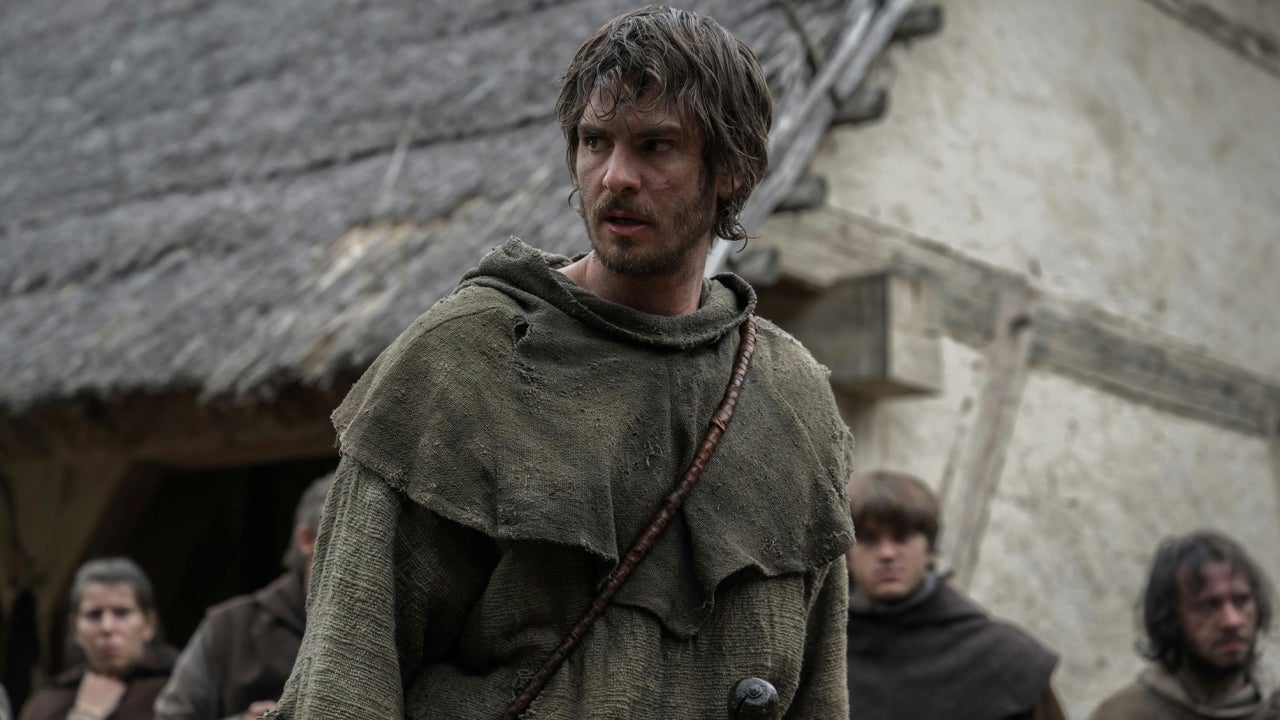
The Uprising, directed by Paul Greengrass, is a visceral and kinetic film that chronicles the 1381 Peasants' Revolt in England. The movie, anchored by Andrew Garfield's moving performance, portrays a farmer who helps ignite a rebellion seeking to improve the lives of common folk. However, the film struggles to balance the big picture events with smaller-scale, focused docudramas.
Ploughman, Garfield's protagonist, works tirelessly to eke out a living on his small farm, which belongs to a local lord. His small farm is also the resting place of his late wife and two children, leaving him with little left. The film depicts a time when the people are gripped by immense grief due to the Black Death, their pain fueling both their fury at the powers-that-be and their hope that God can miraculously deliver them from their misery.
Problems at home and wars abroad force the government to enact heavy new taxes, which gut the commoners. The collection methods are brutal and dehumanizing, sparking a rebellion led by Cosmo Jarvis' brawny ex-soldier Wat Tyler and Jamie Bell's fiery renegade priest John Ball. The peasants march towards London not to overthrow King Richard II, but to petition him for sweeping reforms.
However, the resulting bloodshed makes you doubt your sympathy for the underdogs. Shot in the cinéma vérité style, the film immerses viewers in the grimy, miserable life of medieval serfdom, achieving the you-are-there effect. Yet, Greengrass repeatedly pulls the viewer out of this realism with jarring digital aerial shots. The cast is uniformly solid, with well-acted characters brought to life by British character actors.
However, the King, portrayed by Woody Norman, is bedeviled by nightmares and utterly petrified with piety, ultimately taking charge with brutal efficiency. The film depicts the bureaucracy that keeps the engine of oppression operating, particularly the paperwork that can expose the rebels' identities or serve as their ticket to a better life.
While the final act maintains tension with unique set-pieces, Greengrass' breathlessly-paced film ultimately loses its footing, straining to turn history on its head with a Braveheart-worthy happy ending.
Written by urgent.news from IGN's reporting — not their text. Machine-written — may contain errors; check the original before relying on it.