Test Creation Was Never the Bottleneck
Something specific happened to software delivery in the past two years. The 2026 survey data is unusually clear about what it was. Sonar’s 2026 State of Code Developer Survey found that AI-generated or AI-assisted code accounted for 42% of code committed by respondents, with developers projecting that share to reach 65% by 2027. GitLab’s 2026 […]
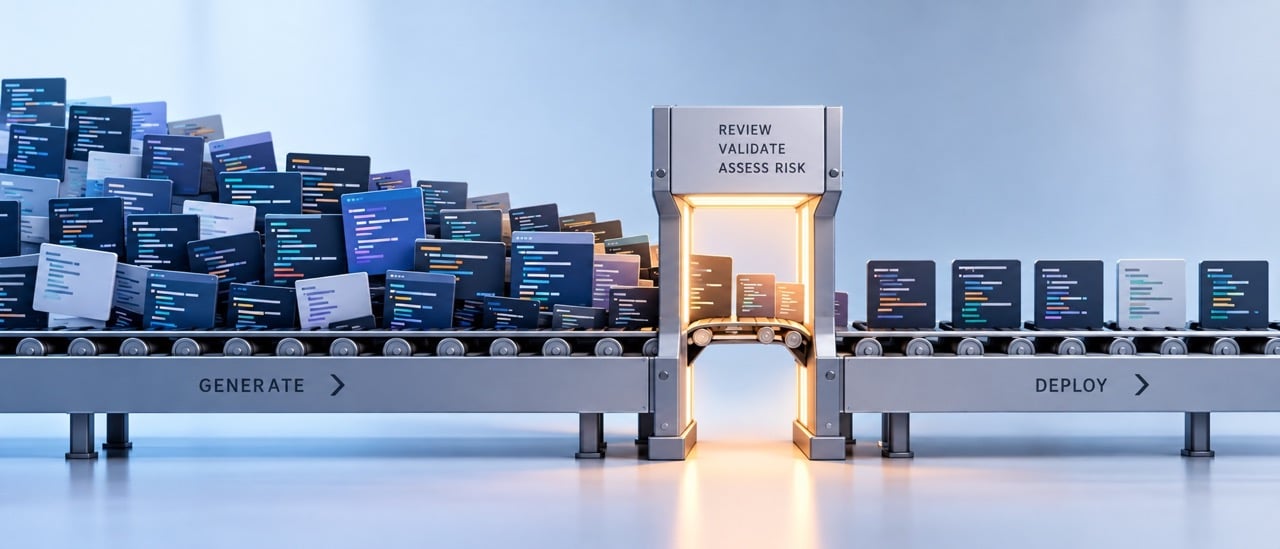
The past two years have seen a significant shift in software delivery, with AI-generated or assisted code making up 42% of committed code, and predicted to reach 65% by 2027. A Harris Poll survey of 1,528 developers and technology buyers found that 85% believe AI has moved the bottleneck from writing code to reviewing and validating it.
While AI adoption in testing organizations stands at 76.8%, with 69.6% using it for test case creation and 59.6% for script maintenance, risk identification remains at a lower 19.9%. Writing test cases was once a tedious process that didn't usually gate a release; instead, deciding what is worth testing and which findings matter has become the true gating factor.
While 96% of developers do not fully trust AI-generated code, 48% still verify it before committing. The volume of AI-generated code needing review has increased, with 38% reporting that reviewing it takes more effort than code written by a colleague. While 87% believe they could identify AI-generated code in an incident within 24 hours, only 34% of organizations within incidents could make this call.
The real divide lies in knowing whether a team can trace AI-generated code and those that only discover it during a postmortem. Despite tooling improvements, a human decision still needs to be made about what to block and tolerate, as no tool can make these judgment calls. The World Quality Report indicates that while generative AI adoption in quality engineering is growing, only 15% of organizations have scaled it enterprise-wide, compared to 43% still experimenting.
Verification capacity is a staffing decision before it becomes a tooling one. Organizations that handle this transition well will be the ones that staffed for the expensive, judgment-based part of quality.
Written by urgent.news from DevOps.com's reporting — not their text. Machine-written — may contain errors; check the original before relying on it.