Summer wanes but railfreight stays hot
Freight on U.S. railroads staged a late summer surge led by grain and metallic ores. The post Summer wanes but railfreight stays hot appeared first on FreightWaves .
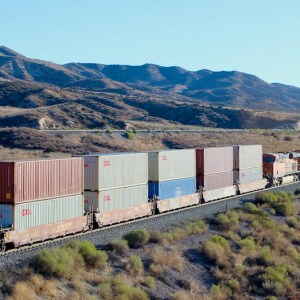
As summer's warmth recedes, U.S. railroads report a robust surge in freight volumes, maintaining their momentum into the autumn months. The Association of American Railroads (AAR) disclosed that the week of September 5th saw a remarkable 13.8% increase in overall freight traffic, with 533,545 carloads and intermodal units moving across the rails. Carload freight experienced a 8.9% climb to 234,397 units, while intermodal volume surged 18% y/y to reach 299,148 containers and trailers.
A noteworthy trend emerged among the diverse array of commodities transported by rail. Nine out of ten carload groups demonstrated year-over-year growth, with metallic ores and metals leading the charge at 26.6%, followed by grain at 24.1%, and farm products (excluding grain and food) at 15.3%. Conversely, coal experienced a modest decline of 5.8%.
In the first 35 weeks of 2026, U.S. railroads collectively reported a cumulative volume of 7,986,328 carloads, marking a 2.8% increase, and 9,904,325 intermodal units, a 4.2% rise y/y. This trend translated into a total combined U.S. traffic of 17,890,653 carloads and intermodal units, up 3.6% year-over-year. North American railroads, encompassing the reporting entities from the U.S., Canada, and Mexico, contributed to the growing momentum, with nine reporting railroads transporting 341,432 carloads, a 8.7% increase y/y, and 386,079 intermodal units, up 15.9%.
The impressive rail freight performance extends beyond U.S. borders, as the nine reporting U.S., Canadian, and Mexican railroads collectively transported 727,511 carloads and intermodal units during the week, representing a 12.4% year-over-year improvement and a 3.3% increase in total combined traffic for the year-to-date, compared to 2025. As the summer days fade, the resilience and growth of rail freight underscore its pivotal role in the nation's transportation infrastructure.
Written by urgent.news from FreightWaves's reporting — not their text. Machine-written — may contain errors; check the original before relying on it.