Racing against the clock: why one in three donated corneas is wasted
Better storage chemistry, faster hospital protocols, and a database that shows, in real time, exactly which cornea is about to run out of time, who needs it and where, can go a long way towards addressing the under-utilisation of donated corneas
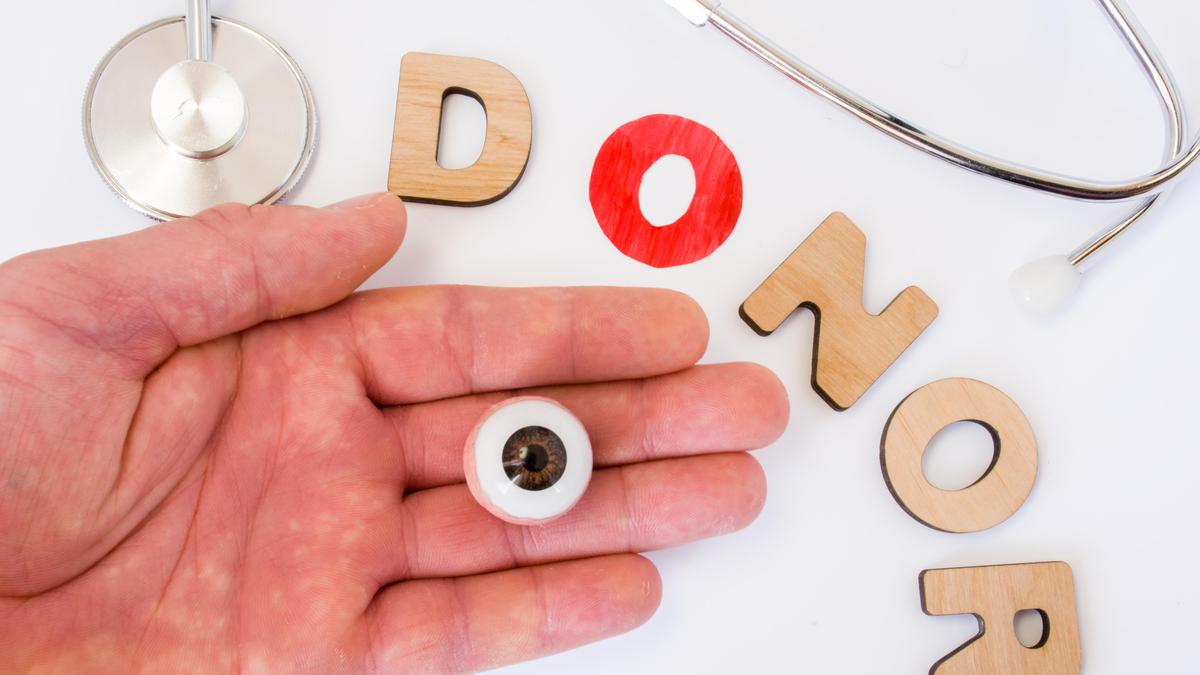
In India, 51,249 corneas were donated in 2024-25, but only a quarter of the necessary 1,00,000 corneas were utilized annually. The low utilisation rate, at 50% at best, results in only 25,000 to 30,000 transplants performed. Various factors contribute to this issue, including inadequate testing and processing, improper harvesting and storage, and the decline in endothelial cell density due to aging donors. However, the most critical issue is the timing and logistics of cornea retrieval.
A crucial factor is the six-hour window between death and cornea retrieval, which can vary depending on weather conditions. Once corneas are in storage, the clock starts ticking, and most Indian eye banks use the McCarey-Kaufman (MK) medium for preservation, which allows tissue to remain usable for about 72 hours. Some eye banks employ newer intermediate media like Optisol-GS or Cornisol, extending this window to between 10 and 14 days.
Researchers at the Dr. Rajendra Prasad Centre for Ophthalmic Sciences at AIIMS Delhi, along with engineers from IIT Delhi, are experimenting with a bioengineered graft to recycle discarded donor corneas. These corneas, which do not meet transplant standards due to low cell counts or minor damage, can have their living cells removed and be transformed into a reusable structural scaffold for patients with surface-level corneal damage.
While the trials are still in their early stages, this could potentially allow more donated corneas to be used.
Despite these advancements, the clock still runs out, and the tissue must be discarded. Extending the storage life of corneas is a crucial step, and eye banks should transition from using the MK medium to intermediate media and eventually to organ-culture storage. This would buy valuable time to find the right recipient. Implementing a national, real-time inventory linking every eye bank directly to surgeons in 50 cities could help offer a cornea about to expire to a waiting list before discarding it.
To ensure fresher corneal tissue survives testing and transplantation better, efforts should focus on reducing the time between death, retrieval, and preservation.
Hospital Cornea Retrieval Programmes, where hospitals notify eye banks of deaths and trained counsellors approach grieving families, can help reduce this time factor. Expanding this model to more hospitals, rather than relying solely on voluntary home collections during Eye Donation Fortnight, will increase corneal utilisation rates.
Quality assurance (QA) programmes at eye banks will also aid in reducing the discard rate, even as the volume of donated corneas increases. A study showed that with improved donor acquisition processes and better tissue recovery due to effective compliance with QA programmes, the discard rate decreased from around 40% to 30%. Addressing the donation aspect through awareness and educating the public on the benefits of organ donation is essential, but equally important is improving the delivery system through better storage chemistry, faster hospital protocols, and a real-time database that identifies corneas nearing expiration, the recipients needing them, and their locations.
Written by urgent.news from The Hindu - Sci-Tech's reporting — not their text. Machine-written — may contain errors; check the original before relying on it.
This story
This is one outlet's version. Read the fullest account.