Neuromechanical models deepen our understanding of animal motor control
Thanks to recent progress in physics-based simulators and robotics, it has never been easier for neuroscientists to use neuromechanical modeling to test hypotheses about animal movement.
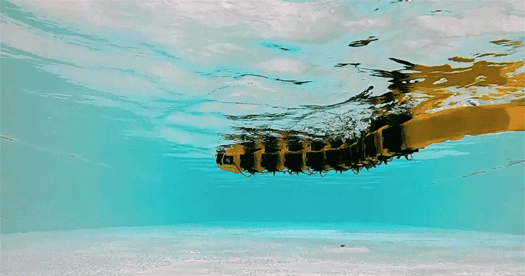
Neuromechanical modeling has become an invaluable tool for neuroscientists studying animal movement, thanks to advancements in physics-based simulators and robotics. By integrating neural circuits, the musculoskeletal system, and the environment, these models allow researchers to test hypotheses about animal behavior in a controlled setting.
The renowned physicist Richard Feynman's famous quote, "What I cannot create, I do not understand," underscores the importance of creating models to deepen our understanding of the nervous system's role in controlling the body. Early work in cybernetics and robotics, such as W. Grey Walter's tortoise robots, laid the groundwork for Braitenberg "vehicles," which demonstrated how behaviors could emerge from sensorimotor circuits in virtual agents.
The 1990s saw Örjan Ekeberg and Sten Grillner develop a neuromechanical simulation of the lamprey, one of the first complete simulations of animal motor behavior. Since then, numerous landmark studies have utilized neuromechanical models to demonstrate the sufficiency of proposed biological mechanisms, including how bees avoid obstacles and regulate speed, and how crickets navigate using sound.
In my research, we have shown that incorporating slow limb oscillatory circuits into a fast axial swimming network can explain gait transitions in salamanders. These models offer several advantages over animal experiments, being repeatable, cost-effective, and allowing for the manipulation of variables that would be challenging to measure in actual animals.
While simulations are generally faster, cheaper, and more accessible, building physical robots can provide real-world physics, which is crucial when body-environment interactions are difficult to simulate numerically.
Written by urgent.news from The Transmitter's reporting — not their text. Machine-written — may contain errors; check the original before relying on it.