‘Long live Chairman Mao’: Supporters pay respects to founder of Communist China
Fifty years after his death, diehard fans of the Chinese Communist leader Mao Zedong lined up Wednesday in his hometown to pay homage, holding portraits, flags and huge floral tributes. Chairman Mao, the founder of the People’s Republic, died on September 9, 1976, and his life and legacy was being commemorated fervently this week by […]
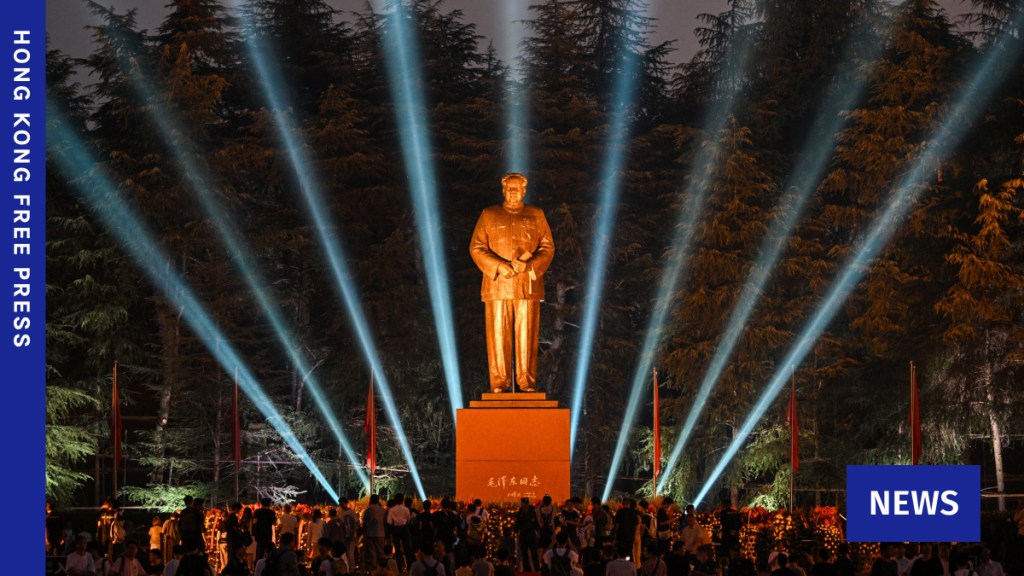
Fifty years after his demise, ardent supporters of the Chinese Communist leader Mao Zedong flocked to his hometown on September 8, 2026, to pay their respects. The ceremony took place at the Bronze Statue Square in Shaoshan, located in central Hunan province, right before the 50th anniversary of Mao's death on September 9, 1976. Photo: Hector Retamal/AFP.
Chairman Mao, the revered founder of the People's Republic, passed away on September 9, 1976. His life and enduring legacy have been the focus of fervent commemorations in recent days by those who still regard him as a visionary leader. As China wrestles with a slowing economy, a growing nostalgia for Mao's egalitarian ideals is evident, yet his radical policies are also blamed by historians for mass starvation and millions of deaths.
Tourists, primarily university students, left chrysanthemum wreaths, bottles of Chinese alcohol, and cigarettes at the base of a 10-meter-tall bronze statue of Mao situated in the central square of Shaoshan. Hundreds of visitors meticulously followed organized queues to bow with solemnity and observe a brief period of silence, while others posed for photographs in front of the imposing statue. Watchful police ensured that visitors did not linger for too long.
Deng, a 28-year-old tourist, told AFP that Mao's spirit had profoundly influenced him and that he bore him great respect. "Today, I felt compelled to come here for his commemoration, as such an occasion only presents itself once every fifty years," he explained.
The night before, an estimated 1,000 passionate admirers, some dressed in the short, tunic-style suits famously donned by Mao, gathered for an emotional ceremony at the statue. They held relics of a bygone era, including old portraits of the leader and copies of the "Little Red Book," a collection of his quotations which once dominated Chinese society. The group repeatedly chanted "Long live Chairman Mao!" some raised their fists in the air and sang revolutionary songs.
Mao's influence can still be seen throughout Shaoshan, which had been transformed into a global tourist destination following state media's promotion of the site as a spot for "red tourism." Visitors swarmed the remote hometown, where Mao was born in December 1893. The village has become the focal point for the Beijing government's decades-long strategy to attract tourists enamored with China's communist history to key landmarks.
Busloads of visitors arrived at Mao's childhood home, where he was born in December 1893. The location served as a reminder of his humble beginnings, with a sign stating that he had assisted in cultivating the nearby rice paddies when he was young. One visitor, Jing Shiming, 63, from Shanghai, expressed the importance of remembering those who made sacrifices to build the present-day China.
"Never forget the people who dug the well from which we drink," Jing told AFP, visiting from Shanghai. "Mao and leaders from his generation transformed China from a backward and impoverished country into the prosperous and strong nation it is today."
Although Mao's legacy is not without controversy, the fervent adoration displayed by supporters during this week's commemoration serves as a testament to the lasting impact of his leadership.
Written by urgent.news from Hong Kong Free Press's reporting — not their text. Machine-written — may contain errors; check the original before relying on it.
This story
This is one outlet's version. Read the fullest account.