Iran reignites Strait of Hormuz fight as US tightens squeeze
Iran appears ready to fight back against growing U.S. leverage in the Strait of Hormuz, and the threat of renewed war is causing oil prices to rise even as more ships are making it through the vital waterway with the help of the U.S. Navy. The Trump administration has worked to open passageways through the...
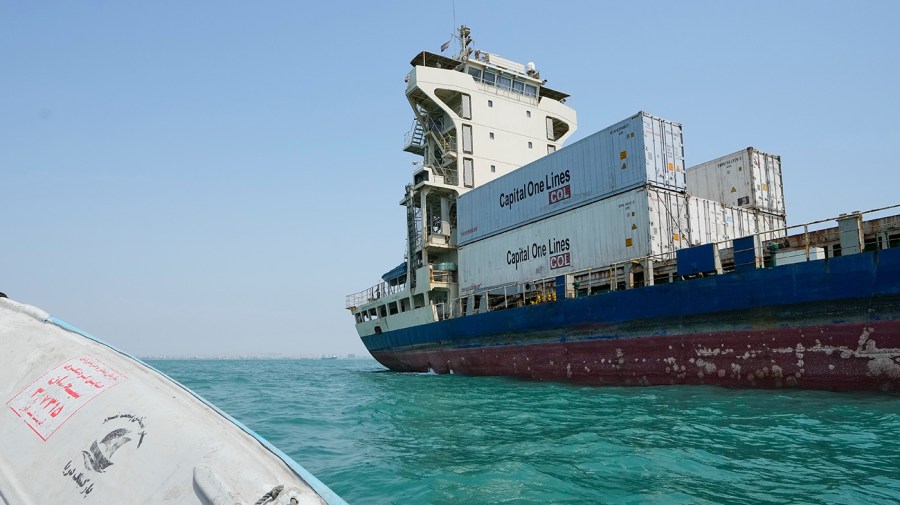
Tehran announced on Wednesday that Iranian forces had attacked over a dozen ships attempting to pass through the Strait of Hormuz, expanding a no-go zone beyond the strategic waterway it has blocked for months. This escalation led to oil prices surpassing $100 per barrel again, as Iran restricts the vital energy route and the United States pressures a counter-blockade of Iranian ports.
Iran's Revolutionary Guards claimed to have targeted two U.S. vessels, eight oil tankers, and ten non-compliant ships in the Strait of Hormuz. The United Kingdom Maritime Trade Operations reported that several vessels in the Gulf of Oman and Gulf faced disabling fire as part of ongoing military activity. Iran also extended its prohibited zone to include parts of the Gulf of Oman and the Arabian Sea.
The Guards stated that vessels entering these areas without coordination would face sanctions. In response to the attacks on its oil tankers, Iran's Guards struck a U.S. military base in Jordan, while Jordan's army shot down 18 missiles fired at its kingdom. Iran's foreign ministry condemned the attacks on Iranian oil tankers as a threat to regional and international peace and security, while the U.S. military said it was responding to an Iranian attack against an American warship, a second incident in less than a week.
Iran's Guards suggested that a war could end if Washington met Iran's demands, including withdrawing from Lebanon, ending the blockade of Yemen, releasing $24 billion in Iran's frozen assets, and refraining from interfering in Iran's nuclear and missile capabilities. President Donald Trump suggested the war would conclude after the mid-term U.S. elections in November, citing Iran's desperation to affect the vote.
However, U.S. officials privately warned that the war could continue through the remaining two years of Trump's term. The International Atomic Energy Agency (IAEA) board of governors voted to refer Iran to the UN Security Council over its nuclear "non-compliance," a move seen as additional pressure on Tehran. Israel's Prime Minister Benjamin Netanyahu claimed Iran was close to collapse, while U.S. Secretary of State Marco Rubio stated that the U.S. would continue to destroy Iranian oil tankers in retaliation for any further attacks on U.S. naval ships.
Written by urgent.news from Malay Mail's reporting — not their text. Machine-written — may contain errors; check the original before relying on it.
This story
This is one outlet's version. Read the fullest account.
- Iran to designate restricted maritime zone near Strait of Hormuz middleeasteye.net
- Iran war drives oil prices to $100 per barrel as Tehran strikes ships al-monitor.com
- Iran-US war escalates with attacks on 10 ships near Strait of Hormuz thevibes.com
- ‘Satan fish’: The US drone sub captured by Iran in the Strait of Hormuz theage.com.au
- ‘Satan fish’: The US drone sub captured by Iran in the Strait of Hormuz smh.com.au
- Seven ships transit Strait of Hormuz, down from previous day english.ajel.sa
- Iran strikes ships, widens maritime no-go zone beyond Hormuz malaymail.com
- Iran says ‘prohibited zone’ near Hormuz to cover parts of Gulf of Oman and beyond freemalaysiatoday.com