Insilico’s co-CEO hopes ‘we might have a chance to stop biological aging’ after promising results from its fibrosis drug trial
Drugmakers hope they can ease Asia's healthcare burden by tackling aging at its source, and one says it now has early evidence it's possible.
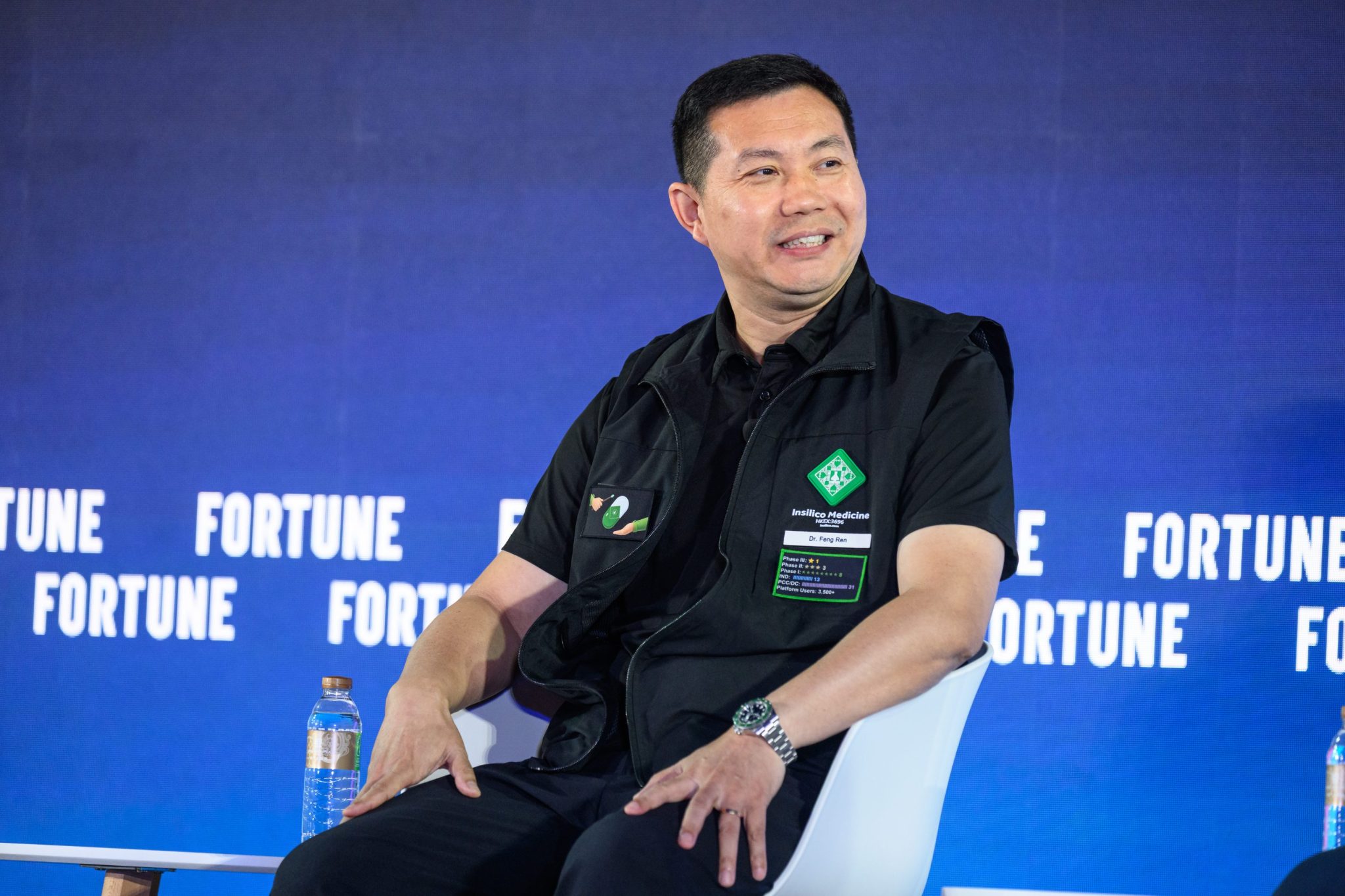
In a few years, children born today could see their average life expectancy exceed 100 years, according to healthcare executives speaking at the Fortune Leaders Forum in Macau on September 8. However, the challenge lies in making these new medical technologies accessible and affordable to millions, especially as people live longer.
Kelvin Loh, group chief healthcare officer at insurer AIA, highlighted that in the Asia-Pacific region, one in four individuals will be over 60 by 2050, up from about one in seven currently. This demographic shift will put additional strain on healthcare systems due to the rising prevalence of chronic conditions. AI drugmakers are focusing on addressing aging to alleviate this burden, and Insilico Medicine, an AI drug discovery startup, recently reported promising early results from its fibrosis drug trial.
Feng Ren, co-CEO and head of drug research and development at Insilico Medicine, expressed optimism about the potential to halt biological aging. On September 7, Insilico announced that patients receiving its experimental fibrosis drug showed a decline in their predicted biological age, averaging three years, with one measure indicating up to a six-year reduction.
While shares surged by 11% following the announcement, Kelvin Loh remained cautious. He emphasized that while extending life is probable, curing aging is not guaranteed, but extending life is certain.
Medicine is already transforming terminal diagnoses into manageable conditions, with cancer no longer being a death sentence for many. Stage 4 lung cancer patients, for instance, who once had a six-month prognosis, can now live for a decade or more, effectively transforming it into a chronic disease. This progress has spurred discussions about shifting the focus to "healthspan," the period during which individuals remain in good health.
Keith Choy, president of Asia-Pacific at consumer health company Haleon, stressed that the goal should not merely be to live longer but to live healthier. He suggested that wearable health technology and AI could revolutionize healthcare in the near future, envisioning a scenario where everyone in China's population of 1.4 billion could have a personal doctor within five to ten years.
Written by urgent.news from Fortune's reporting — not their text. Machine-written — may contain errors; check the original before relying on it.