How Trump’s signature bill could make arts education in the US even more expensive
Many experts are worried that parts of the so-called One Big Beautiful Act could seriously stymie access to art schools
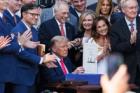
On July 4, 2025, President Donald Trump signed the One Big Beautiful Bill Act (H.R. 1) into law. Arts higher education experts fear the legislation will negatively impact their field. The bill, known as the Working Families Tax Cut Act, alters federal student financial support. Graduate and professional PLUS loans have been eliminated, while direct loans now have caps on federal funding, disadvantaging students who do not pursue professional degree programs.
The bill's most significant alteration is an earnings-based accountability framework that determines program eligibility for financial aid. Critics argue this one-size-fits-all approach fails to consider the unique value of arts education. Lee Ann Scotto Adams, director of the Strategic National Arts Alumni Project, asserts that the system does not work for artists, designers, and musicians, who often find it hard to translate their skills into measurable earnings.
The bill's effects will become apparent in July 2026, when the PLUS loans scheme is canceled, and loan caps are introduced. By July 2027, the earnings test will be enforced. Preliminary estimates reveal that 17.7% of graphic communications, 12% of film, video, and photographic arts, and 11% of music bachelor's degree programs would fail the test.
Nearly half (44.1%) of fine and studio arts graduate programs would also fail. These estimates indicate a concerning trend, particularly for associate degrees, where 79.4% of film, video, and photographic arts programs and 73.8% of fine and studio arts programs would fail. The Department of Education uses local high school graduates' median earnings as a benchmark, which may not accurately represent career outcomes for arts graduates.
The bill's true intentions and motivations remain unclear, but economists warn that the policy could deter talented artists due to financial constraints.
Written by urgent.news from The Art Newspaper's reporting — not their text. Machine-written — may contain errors; check the original before relying on it.