Grundnahrungsmittel: Klimawandel und Schädlinge: Resistente Kartoffeln gesucht
Hitze und Schädlinge aus wärmeren Ländern stellen Kartoffelzüchter vor vielfältige Probleme. Im Süden gibt es schon Ertragseinbußen. Züchter suchen nach neuen Sorten, doch das dauert.
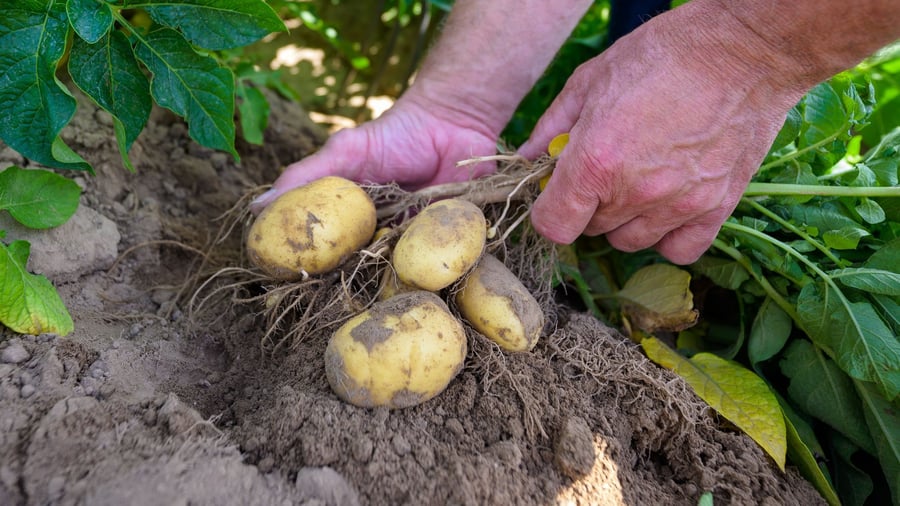
Extreme heat and the invasion of the emerald ash borer beetle from warmer climates are causing significant challenges for potato farmers. "Climate change is a persistent issue, we need to find varieties that can withstand extremes," says Jörg Renatus, business director of Europlant Pflanzenzucht GmbH in Lüneburg, one of Europe's largest potato breeders.
One of the toughest challenges is developing drought and stress-resistant varieties. The process typically takes ten years. The Jelly variety has been developed to withstand heat, but more varieties are needed. Other modern varieties like Glorietta, Belana, and Regina have thinner skins and better storage properties. The emerald ash borer beetle, which transmits the Stolbur plant disease and low sugar content syndrome (SBC), poses a major problem.
"In the Palatinate, it has caused major damage, potatoes become soft and raisin-like, that's a medium-sized disaster," explains Renatus. Other crops like onions and sugar beets are also affected. Northern Germany and Schleswig-Holstein have so far been spared. "The northward climate shift is one of the reasons why breeding is so important," Renatus notes.
The emerald ash borer beetle, reducing pesticide use, and economically viable cultivation systems are currently in focus at "PotatoEurope 2026" in Springe near Hanover. Demonstrations will also feature current trial results and practical solutions for potato and sugar beet cultivation. "PotatoEurope" is one of the most important trade fairs for European potato cultivation and is being held together with the "SugarBeet" Expo, which focuses on professional sugar beet cultivation.
A key focus is the impact of the emerald ash borer beetle. The pest has already been detected on farmland near the border with Saxony-Anhalt. Yield and quality losses for many operations pose economic challenges. Various herbicide strategies are also presented, including combinations of chemical and mechanical methods. Robust and less disease-prone potato and sugar beet varieties are also demonstrated as contributing to reducing pesticide use.
Written by urgent.news from Handelsblatt's reporting — not their text. Machine-written — may contain errors; check the original before relying on it.