Goodram PX700 2TB SSD Review — High-end punch on a budget core
The Goodram PX700 matches good all-around performance with high power-efficiency in a cool-running package. It performs mostly like a premium drive, although pricing remains a concern.
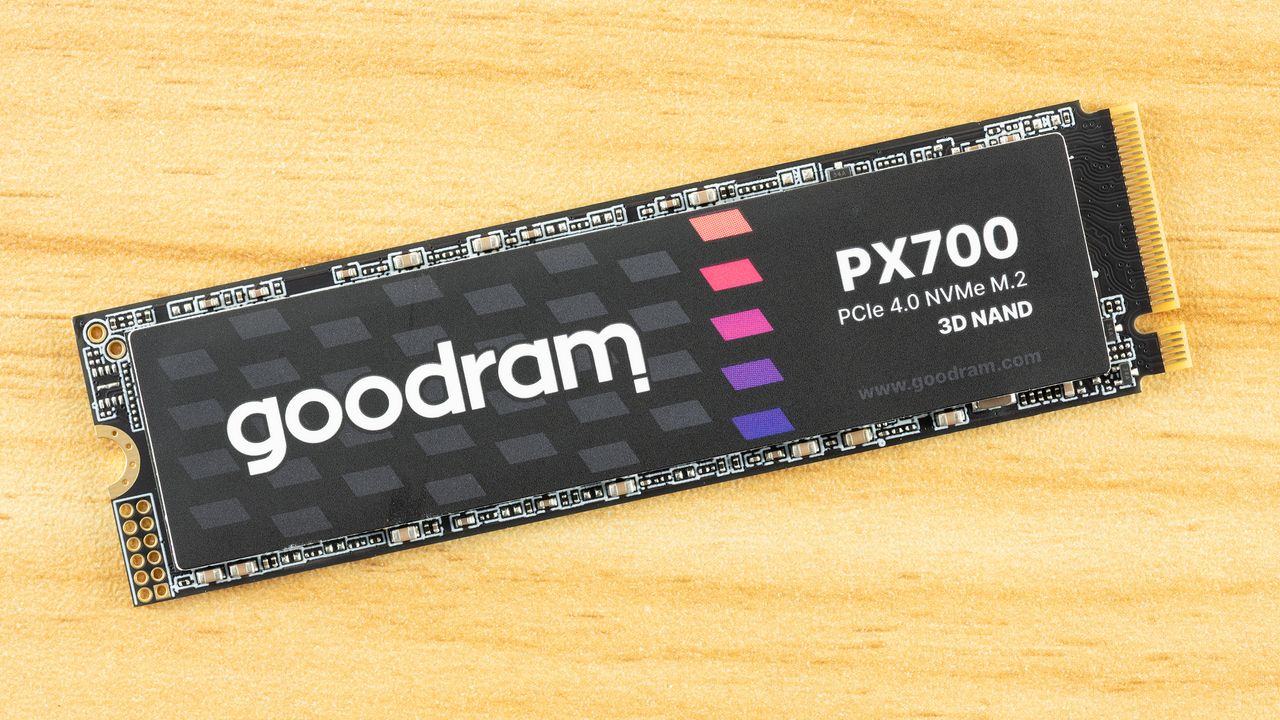
The Goodram PX700 is a budget PCIe 4.0 SSD that offers excellent performance, great power efficiency, and a single-sided package that runs cool. Although it may not be the first model that comes to mind in this segment, our testing revealed that it performed better than expected for a solid drive that often goes unnoticed. Goodram is not a new or unknown company, even though their "good RAM" moniker may seem obvious.
They are a memory assembler with a rich history in the EU, which makes them more approachable compared to the numerous new names appearing on AliExpress and Amazon.
The company's TBW figure confirms that this is not an ultra-budget drive, but the performance is impressive considering the competitive pricing. The Goodram PX700 comes in three capacities, 1TB, 2TB, and 4TB, all priced at $346, $418, and unknown, respectively. The drive is a full-fledged Gen 4 with sequential read and write speeds of up to 7,400 MB/s and 6,500 MB/s, respectively, and up to 1 million random read and write IOPS at 4TB.
Random write performance is slightly lower at 820K IOPS, but it still delivers impressive results for everyday tasks, gaming, and productivity workflows.
One of the notable advantages of the Goodram PX700 is its power efficiency. It runs cool enough that you probably don't need to worry about cooling, but this feature makes it compatible with a wider range of systems. The drive is assembled in Poland, which adds to its European appeal. The controller used in the Goodram PX700 is the Maxio MAP1602, a four-channel, DRAM-less part that has been a budget champion in the SSD market.
Overall, the Goodram PX700 offers a great storage experience at a reasonable price point, making it an excellent pick for any device that requires high-performance storage.
Written by urgent.news from Tom's Hardware's reporting — not their text. Machine-written — may contain errors; check the original before relying on it.