Ghana’s silent crisis: Why clean water and toilets are still a luxury for millions
Twenty-one Ghanaians die every day from problems a working tap and a safe toilet could prevent Ghana loses about 21 people a day — nearly 7,635 in 2019 alone — to preventable illnesses caused by unsafe water, poor sanitation and inadequate hygiene, editors and journalists were told at a WASH roundtable in Accra this week. […]
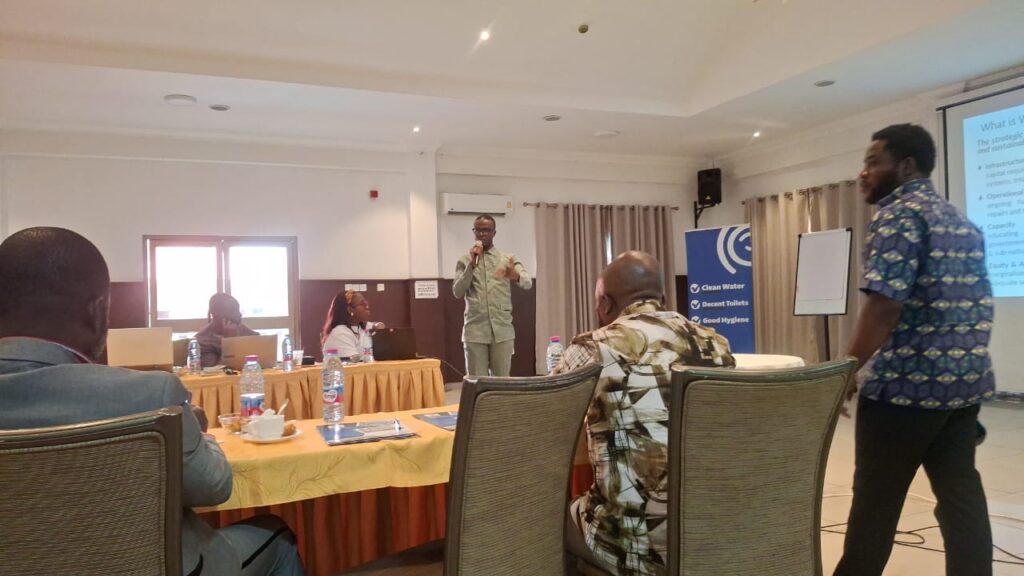
Every day, twenty-one Ghanaians lose their lives to illnesses that could have been prevented with clean water and proper sanitation. In 2019 alone, nearly 7,635 people died due to contaminated water, poor toilets, and inadequate hygiene practices. At a recent WASH roundtable in Accra, officials from WaterAid Ghana shared alarming statistics about the country's water and sanitation crisis, emphasizing the urgent need for action to address the problem.
Head of Strategy, Policy and Campaigns at WaterAid Ghana, Ibrahim Musah, emphasized that WASH should not be seen as a technical afterthought but as a foundation for national development. Inadequate water, sanitation, and hygiene services have severe consequences for health, wealth, and dignity, with the deficits disproportionately affecting certain groups based on geography, gender, income, and education.
The presentation highlighted how improved sanitation can reduce diarrhoea cases by 25 percent and clean drinking water by up to 75 percent, while better hand hygiene can cut diarrhoea rates by around 30 percent. However, progress on key indicators, such as open defecation, has been slow. Despite 20.1 percent of households practicing open defecation in 2000, the number of households without toilets has actually increased from around 700,000 in 2000 to 1.5 million in 2021, as Ghana's population has grown.
While Ghana is not short of water, the country's water resources are unevenly distributed across regions. Groundwater currently accounts for just 5 percent of the average annual recharge in most basins, suggesting potential for expansion if investment and infrastructure are put in place. Unfortunately, the country's water supply faces several threats, including pollution from illegal small-scale mining (galamsey), which contaminates major water bodies like the Pra River, and climate change, which is causing seawater intrusion into coastal groundwater, damaging WASH infrastructure, and even contributing to domestic violence due to resource scarcity and displacement.
Achieving universal access to safely managed water, sanitation, and hygiene services would require an estimated US$1.7 billion in annual investments through 2030, with sanitation accounting for about $800 million per year, or 47 percent of the total. Urban water supply, largely managed by Ghana Water Limited, needs an additional $420 million annually to replace aging pipes and expand networks, while rural and community water supply requires $350 million.
Hygiene promotion and sector governance each need $60 million. Despite the scale of the problem, WASH struggles to secure sufficient funding and political attention. World Bank Global Director of Water Practice Saroj Kumar Jha noted that developing countries typically allocate only 1.2 percent of national budgets to WASH, compared to 12 percent for transport and 20 percent for energy.
In Ghana, the sector receives about 1.7 percent of GDP, which WaterAid argues demonstrates a lack of political will to address the issue. The presenters proposed a shift from financing "projects" to financing "systems" to address the crisis. Their recommendations included lifecycle financing to cover maintenance and rehabilitation costs, reducing donor dependence by increasing domestic public funding, operationalizing the National Sanitation Fund and using the existing Sanitation and Pollution Levy to fund fecal sludge treatment, blended finance to de-risk private sector investment, predictable district-level transfers, and explicit climate-resilience financing for drought and flood-proofing, watershed protection, and groundwater recharge.
Written by urgent.news from Adom Online's reporting — not their text. Machine-written — may contain errors; check the original before relying on it.