Gen Z shook Modi in India. Now it’s lifting up a new leader
But over the past year, a remarkable thing has happened: The Gandhi caricature has started crumbling. The process accelerated over the summer as a youth rebellion emerged.
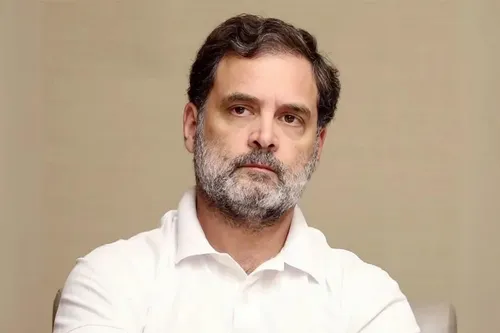
Rahul Gandhi, who has been seen as an ineffectual politician for the Indian National Congress party, has been challenged by the youth in India over the past year. This shift in perception began with a youth rebellion, which was driven by young social media users who initially viewed Gandhi through derisive memes. However, they now regard him as a Gen Z political crush, calling him "bro" or "pookie."
Gandhi's image has evolved with his fashion choices, moving from long kurta pajamas to fitted T-shirts and polo shirts, which project an informal, youthful energy.
The origins of Gandhi's youth outreach can be traced back to the Bharat Jodo Yatra, a five-month march across India that ended in January 2023. During this journey, Gandhi interacted with students, unemployed graduates, and gig workers, which convinced him that young Indians were frustrated by a political establishment that neither understood their economic anxieties nor communicated in their language.
The recent Gen Z uprising has transformed the earlier diagnosis of a disengaged youth into a political opportunity. Gandhi launched the student outreach campaign, "Chhatron Ki Goonj" ("Voice of Students") from Kota, a major hub of India's coaching industry. This campaign aimed to document young Indians' experiences with examination fraud, disappearing jobs, and rising college fees.
In Prayagraj, Gandhi summarized his argument with three Hindi words: dard (pain), data (data), and daulat (wealth), highlighting the concentration of opportunity and power in the economy.
In a recent Congress party meeting, Gandhi agreed to hold student meetings in nearly 800 cities across India. He increasingly invokes his family history, including the sacrifices made by his grandparents, Indira Gandhi, and his father, Rajiv Gandhi, who were imprisoned during the independence struggle and assassinated, respectively.
Gandhi presents his family's history not as a story of inherited power but of sacrifice and loss, attempting to counter Modi's successful attack on the Gandhi surname as evidence of too little suffering.
However, Gandhi's claim faces criticism from young Muslims who question his reluctance to address the persecution of Muslims with the same fervor. A Gandhi aide revealed that the Congress party has adopted a cautious approach due to concerns from an old guard that explicitly defending Muslims could invite accusations of minority appeasement from the BJP. Gandhi has argued for public attention to atrocities against Muslims, but his aides claim he raises this issue within party meetings.
Gandhi's approach differs from Modi's by appealing to young Indians through vulnerability, acknowledging thwarted opportunities, and listening to their concerns. While escaping the propaganda that defined him is not the same as building an opposition capable of confronting Modi's government, Gandhi's test will be to demonstrate to Indians that examination fraud, unemployment, police impunity, and the persecution of dissenters are symptoms of the same institutional decay.
If he succeeds, the generation that exposed a vulnerability in Modi's government might also have produced a viable alternative.
Written by urgent.news from IOL's reporting — not their text. Machine-written — may contain errors; check the original before relying on it.