Dr. Delia Santiago-Materese
From terrestrial animals to experiments in microgravity and Martian clouds, this NASA program scientist’s career path links diverse challenges. Today, she supports a mission to Saturn’s moon Titan, a world teeming with organic molecules that could hold valuable clues about the origin of life. The post Dr. Delia Santiago-Materese appeared first on NASA Science .
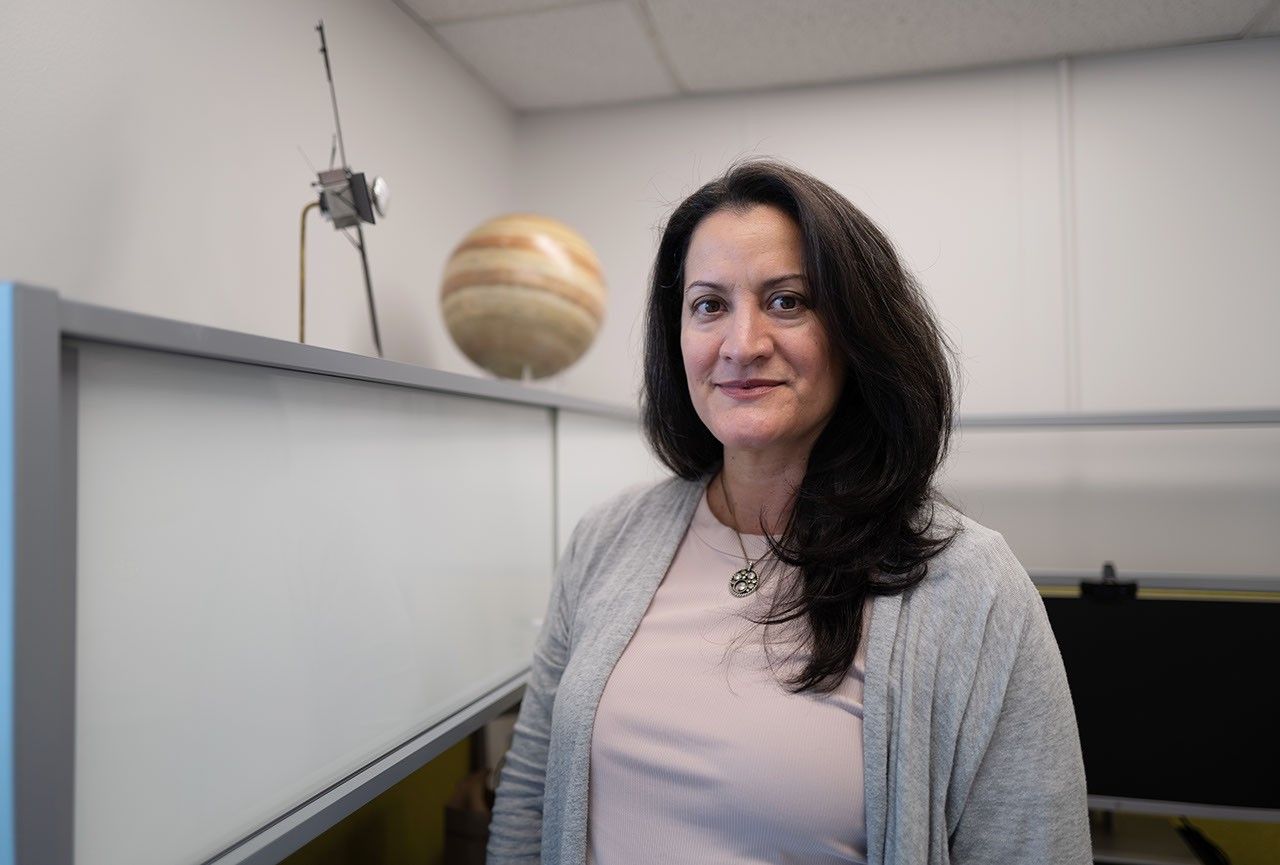
Dr. Delia Santiago-Materese, a Program Scientist at NASA, thrives on complexity and diversity in her career. From terrestrial animals to experiments in microgravity and Martian clouds, her path has linked various challenges. Currently, she supports missions to Saturn's moon Titan, a world rich in organic molecules, offering potential insights into the origin of life.
Dr. Santiago-Materese describes her journey in NASA as "meandering," taking her to low Earth orbit, Martian clouds, and Jupiter's surroundings. Her experiences, all centered around "life," have led her to her current position at NASA Headquarters in Washington, where she oversees the Juno and Dragonfly missions, along with the Discovery program.
This wide range of roles is not by design, but a result of her curiosity-driven approach. Santiago-Materese, born in Spain to a military family, holds Mexican-American and Puerto Rican roots. She spent her childhood summers in San Sebastián, Puerto Rico, and later studied Biological Sciences at Stanford University, located near NASA's Ames Research Center in Silicon Valley.
Her interest in astrobiology, the study of life in the universe, was sparked by an elective course. After completing her studies and an internship at the San Francisco Zoo, she returned to her professor for more astrobiology inquiries, leading her to Lockheed Martin. There, she worked on a project studying the nutrition of food bars for rodents traveling to space aboard the space shuttle.
This diverse background has shaped her approach as a program scientist, focusing on promoting leadership based on kindness and respect, recognizing that every person brings unique contributions.
Written by urgent.news from NASA Science's reporting — not their text. Machine-written — may contain errors; check the original before relying on it.