Commentary: To discuss ministerial salary increases, we need to start by being clear about opportunity costs
When too few capable leaders come forward, what Singapore loses in the long run cannot be easily remedied after the fact, says Christopher Gee from the Institute of Policy Studies.
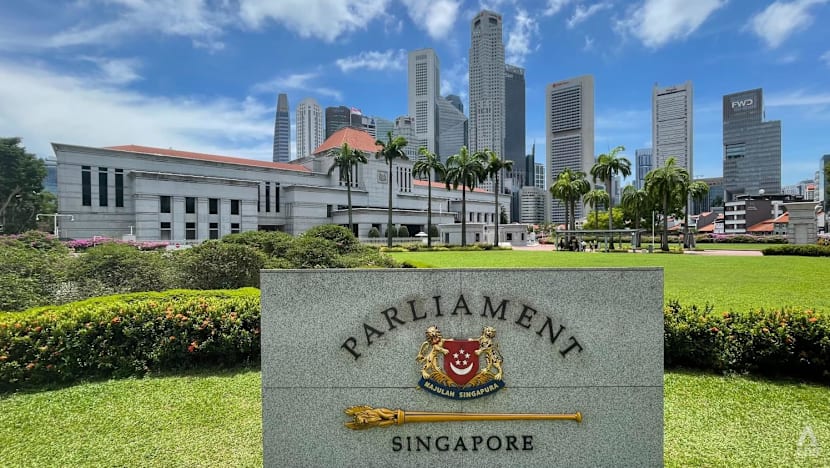
Economists calculate the true cost of a decision by weighing the alternative options forgone, known as opportunity cost. Prime Minister Lawrence Wong and Coordinating Minister for Public Services Chan Chun Sing invoked this concept in Parliament on September 8, 2021, to justify the need for updating ministerial salaries after a 15-year period without adjustment. Both highlighted what a capable individual sacrifices by choosing political office over alternative career paths.
The minimum grade MR4 salary, adjusted to current prices, is approximately S$1.2 million. However, when adjusting for inflation using the Consumer Price Index back to 2011, the adjusted salary represents 14.5% less value than the original S$1.1 million. Over the same period, median Singaporean wages grew by roughly 39% in real terms, according to Ministry of Manpower data.
Prime Minister Wong emphasized that three of his most senior ministers, who would have aged over 70 by the next government term, declined offers to join his team due to salary considerations. He noted that comparable chief executives earn between S$6 million to S$7 million annually, significantly higher than the revised MR4 benchmark of S$1.8 million.
While the pay gap cannot be entirely attributed to salary, the system has tried to bridge the gap by referencing the median income of the top 1,000 earners and applying a 40% discount for the ethos of political service and commitment. However, the adjustment has not narrowed the gap entirely. The move to the S$1.8 million benchmark represents a yearly increase of about 3.6%, which is lower than the 4.3% growth in median wages over the same period.
The salary adjustment narrows the gap without fully closing it. Despite the financial figures, the public may find it difficult to empathize with ministers' high salaries, especially amidst job and wage uncertainties that have left many feeling less secure in their own careers. Both ministerial statements provided extensive arguments for the need for salary adjustments, but they refrained from quantifying the unseen cost of foregone recruitment into political office.
Written by urgent.news from CNA - Singapore's reporting — not their text. Machine-written — may contain errors; check the original before relying on it.
This story
This is one outlet's version. Read the fullest account.