CDD-Ghana pushes for independent authority to regulate political financing
The Centre for Democratic Development (CDD-Ghana) is advocating the establishment of an independent authority to regulate political party and campaign financing in Ghana.
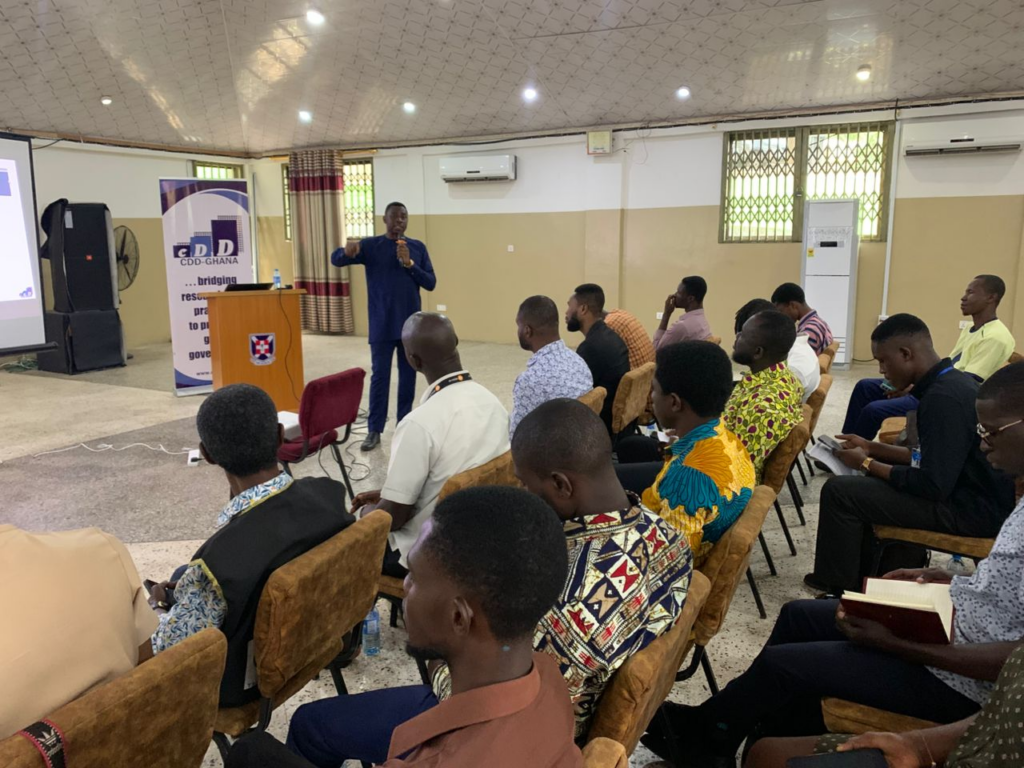
The Centre for Democratic Development (CDD-Ghana) is pushing for an independent authority to oversee political party and campaign financing in Ghana. This move aims to tackle the shortcomings in the current regulatory system and tackle the increasing politicization of money within the country.
Joseph Oti Frimpong, a Programmes Officer at CDD-Ghana, unveiled this proposal during a media workshop in Kumasi. The workshop, sponsored by the British High Commission, presented CDD-Ghana's draft model law on political finance alongside the Government's position paper based on the Constitution Review Commission's recommendations.
The existing legal framework primarily regulates political parties but fails to cover candidates and electoral campaign financing. This gap has resulted in issues such as high campaign expenses, unregulated private funding, insufficient disclosure of political financing, vote-buying, and misuse of state resources.
CDD-Ghana's draft model law suggests creating an Independent Electoral Financing and Enforcement Authority (IEFEA) to manage all aspects of political finance regulation, monitoring, enforcement, audits, and disclosure. This proposed body would have powers to set regulations, conduct investigations and audits, issue subpoenas, enforce fines and sanctions, and refer cases for prosecution.
All campaign transactions would be required to be conducted through designated campaign bank accounts, which would be subject to regular forensic audits. The Authority would also set limits on campaign expenditures for party primaries, by-elections, and general elections, considering factors like geography, population, infrastructure, and the type of election. Financial reports from candidates would detail their campaign receipts and expenditures and would be published online for public scrutiny.
The draft law also proposes restrictions on contributions, bans on anonymous donations above a certain amount, and measures to increase transparency in third-party spending. Some of the major challenges to Ghana's political financing system identified by Mr. Frimpong include the monetization of politics, vote-buying, unregulated financing of candidates, and abuse of state resources.
The Constitution Review Commission has similarly recommended an independent body for regulating political parties and campaigns. The Commission has also suggested restrictions on campaign periods, regulation of campaign receipts and expenditures, external audits of party and candidate funding, and sanctions for misuse of incumbency.
While the Government acknowledges the need for an independent body, it prefers a Political Parties Regulatory Commission (PPRC) to be established through regular legislation. It has also recognized the need for legislation on campaign finance that includes expenditure caps, disclosure thresholds, and enforcement measures. Mr. Frimpong sees this ongoing dialogue as an opportunity for stakeholders to address the regulatory gaps and develop a political financing system that promotes transparency, accountability, and fairness in Ghana's democratic process.
Written by urgent.news from MyJoyOnline Ghana's reporting — not their text. Machine-written — may contain errors; check the original before relying on it.