Bhutan’s frontline against climate chaos: Sleepless monitors guard rivers as glaciers vanish at speed
WANGDUE PHODRANG (Bhutan), Sept 9 — In a humble control room a few hours from Bhutan’s capital, a team works...
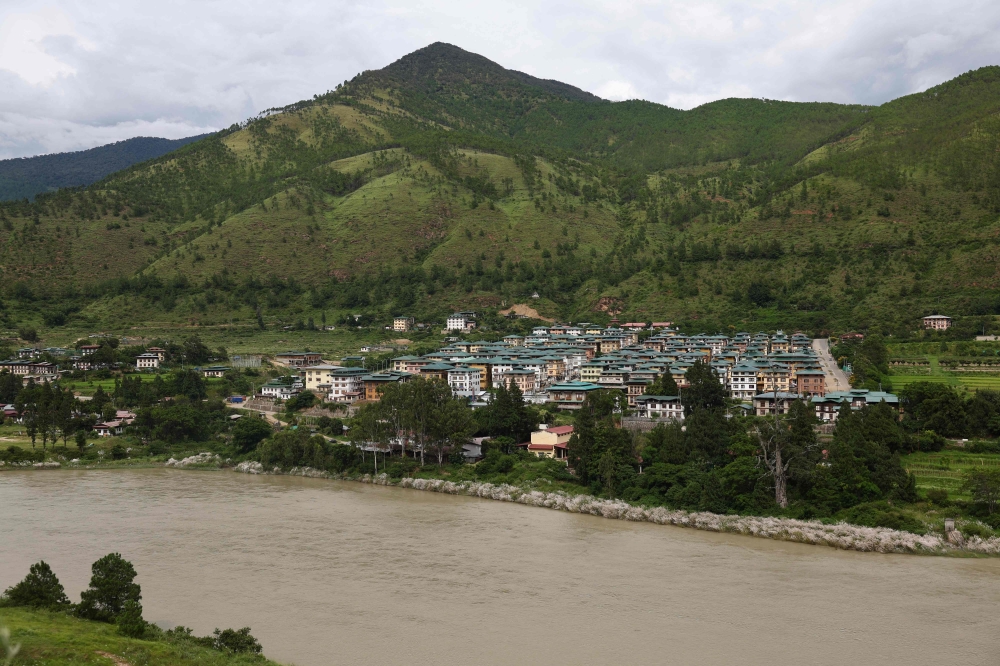
In the remote control room of Bhutan's GLOF emergency warning facility, a dedicated team of monitors works tirelessly, day and night, to safeguard the country from the grave risks posed by its rapidly melting glaciers. The Himalayan nation is home to over 600 glaciers, nestled in the mountain ranges across its northern regions. As climate change accelerates the melting of these ancient ice rivers, they can form glacial lakes held back by fragile debris walls.
When these walls collapse, the lakes burst, unleashing devastating floods downstream, a risk that Bhutan has learned all too well.
In 1994, a glacial lake outburst flood (GLOF) along Bhutan's Punatsangchhu or Sankosh river claimed the lives of 21 people, a sobering reminder of the potential devastation that looms large over the nation. This risk has only amplified in recent years, with Bhutan's leading glaciologist, Karma, lamenting the alarming rate at which the country's glaciers are disappearing. The Thorthormi glacier, for instance, has transformed entirely into a glacial lake, necessitating heightened vigilance from the control room team.
The warning centre, established in 2011 as part of a broader effort to improve monitoring following the 1994 GLOF, deploys a network of sensors to track changes in water levels at glacial lakes and downstream rivers, while also deploying sirens to alert communities to evacuate if necessary. Over 600 glacial lakes are present in Bhutan, with 17 deemed potentially hazardous.
Some of the most dangerous sit at the head of a river feeding into the Punatsangchhu, with four glacial lakes already formed, two separated by a fragile debris dam. In a worst-case scenario, the wall separating these lakes could collapse, discharging an estimated 53 million cubic meters of water downstream.
The recent disaster in neighboring Nepal, caused by a glacier collapse rather than a GLOF, has only heightened the urgency of this mission. Dechen Peldon, a junior engineer at the facility, admits to feeling more alarmed and committed to her role, expressing a heightened sense of vigilance compared to previous years. However, the effectiveness of these measures remains uncertain for many nearby residents.
Pushpa Karki, a cafe owner, admits she is unfamiliar with the siren's warning, despite acknowledging the risks associated with mountain areas prone to floods.
Around 70% of Bhutan's settlements are situated along rivers, and the government is actively working to mitigate this risk upstream. In 2008, a project was initiated to dig and widen a channel from the Thorthormi glacier lake, successfully lowering the lake's level by five meters and reducing the pressure on the debris dam. Nevertheless, continuous melting has filled the lake again, and efforts are now underway to siphon water from it.
Bhutan's leading glaciologist, Karma, expresses profound concern over the rapid retreat of the country's glaciers, which are receding at a rate of 30-35 meters annually for larger glaciers, and 12-16 meters for smaller ones. This professional dismay is compounded by a personal sense of sadness, as the glaciers, once accessible, can no longer be climbed or explored.
Karma emphasizes that Bhutan's frontline experience with climate change is an unfair burden, as the nation both contributes less to global carbon emissions and is committed to maintaining 60% forest cover across its territory. He appeals to the rest of the world to recognize its plight and take responsibility for the consequences of climate change.
Written by urgent.news from Malay Mail's reporting — not their text. Machine-written — may contain errors; check the original before relying on it.