Between Multatuli’s legacy and modern politics
Three decades after documenting life in Lebak, Dutch writer and visual storyteller Arjan Onderdenwijngaard returned to explore how the district has changed, and whether the power structures Multatuli criticized ever truly disappeared.
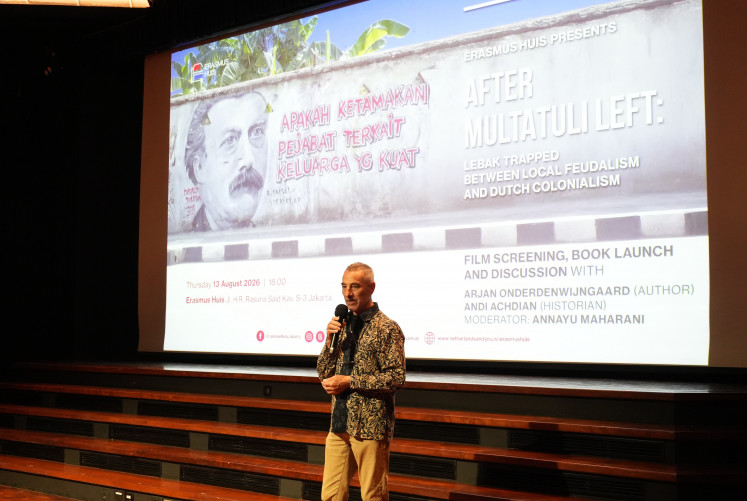
Thirty-two years after Dutch writer and visual storyteller Arjan Onderdenwijngaard filmed life in Badur, a village in Lebak, Banten, he returned to the area in 2019. His purpose was to observe changes in the district and whether the power structures criticized by Multatuli, a Dutch colonial official who wrote Max Havelaar, had truly disappeared.
Onderdenwijngaard's return became the basis for the documentary "After Multatuli Left" directed by Yogi D. Sumule, and for the book "Lebak, Kota Multatuli: Terjebak antara Feodalisme Lokal dan Kolonialisme Belanda," which examines social and cultural transformations in the region. Eduard Douwes Dekker, known by his pen name Multatuli, served as an assistant resident in Lebak during the 1850s.
Dissatisfied with the colonial administration's handling of indigenous people, he resigned and later penned the novel exposing the oppression and corruption of the Cultivation System in the Dutch East Indies. Both the documentary and the book were presented at Erasmus Huis in Jakarta during a recent screening and discussion, featuring Onderdenwijngaard and historian Andi Achdian.
Onderdenwijngaard revisited Badur in 1987 when he first documented the residents' daily lives. In 2019, he returned to find some familiar faces and assess how their lives had evolved. One of the featured individuals, Rasif, had initially lived in a traditional wooden house. After years of hard work, he managed to construct a modest brick home, symbolizing economic progress, according to Onderdenwijngaard during the discussion.
Written by urgent.news from The Jakarta Post's reporting — not their text. Machine-written — may contain errors; check the original before relying on it.