A U-Turn Is Not Always A Sign Of Weakness, Sometimes It Can Be Good Economics Too
The Reserve Bank of India recently gave a small but revealing lesson in economic policymaking. On August 5, Governor Sanjay Malhotra was asked whether the special FCNR(B) scheme, designed to attract foreign currency deposits from non-resident Indians, might be closed before its scheduled September 30 deadline. He said there was no proposal to do so. Nine days later, the RBI abruptly advanced the…
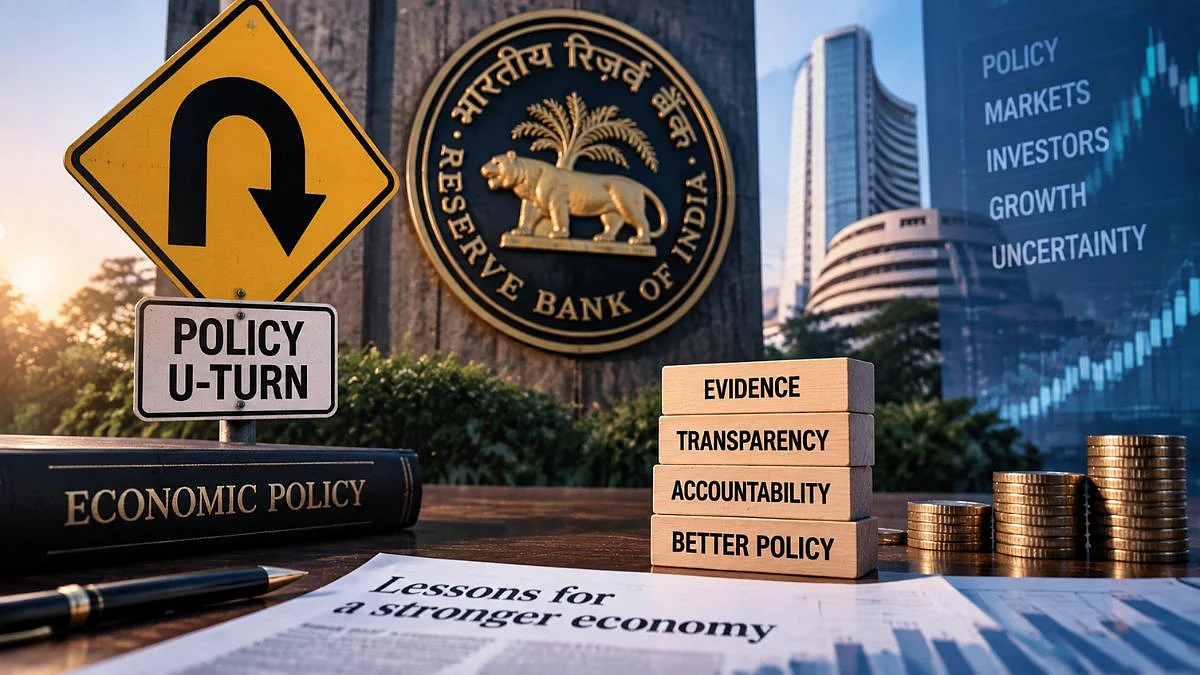
The Reserve Bank of India recently demonstrated a lesson in economic policymaking when it advanced the closing date of the special FCNR(B) scheme from September 30 to August 31. This move may have been driven by strong dollar inflows, mounting subsidy costs, liquidity management challenges, and foreign-exchange liabilities. The question arises as to why a categorical assurance was given when the possibility of an early exit was already being discussed.
Economic policy is often characterized by U-turns, which can either indicate agility and learning or reflect poor preparation, political pressure, or unpredictability. In the case of Donald Trump's tariff policy, the frequent changes have become a tax on investment, making it challenging for firms to manage their supply chains. Similarly, India has its own examples of policy reversals, such as the repeal of the farm reform laws and the ethanol blending program.
The reasons behind policy reversals can vary. Sometimes, politics changes, evidence changes, the original policy was inadequately thought through, or the policy question is poorly framed. The effectiveness of industrial policy, for instance, cannot be universally answered as it depends on various factors such as the industry, instrument, duration, governance arrangements, and conditional support.
Economic behavior is not governed by fixed parameters, and policies change behavior, which in turn alters the environment in which the policy operates. This creates a feedback loop where policies and their outcomes continuously interact. Economic institutions must learn to adapt and revise their views when presented with contrary evidence, as rigid adherence to a particular viewpoint can lead to incorrect conclusions.
Written by urgent.news from Free Press Journal's reporting — not their text. Machine-written — may contain errors; check the original before relying on it.