Why growing seaweed isn’t a climate solution
Some have claimed cultivating seaweed could remove hundreds of millions of tonnes of CO2. But as warming waters kill off kelp, we need to refocus on preserving what we have, a study argues
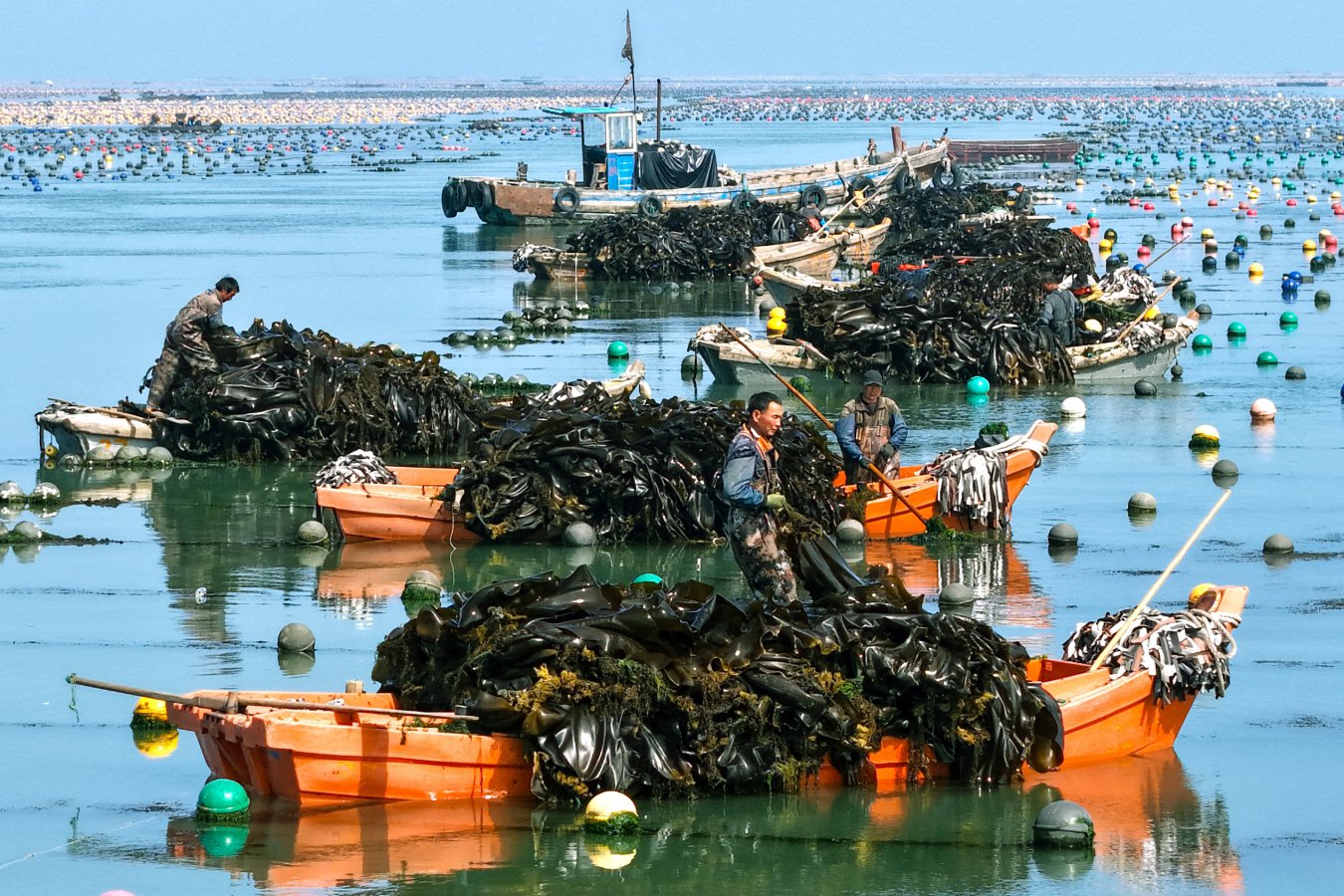
Growing seaweed has been considered a potential solution to climate change due to its ability to absorb carbon dioxide. However, a new study challenges this approach, suggesting that seaweed farming may not be the answer. Seaweeds absorb approximately 3.7 billion tonnes of CO2 annually through photosynthesis, but most of this carbon is released back into the atmosphere as the seaweed decomposes or is consumed.
Only a small fraction of the carbon is sequestered in the deep sea as "blue carbon" for thousands of years. While some studies propose expanding seaweed growth to absorb more CO2, concerns arise that large-scale cultivation could negatively impact phytoplankton, another crucial carbon sink. Moreover, the existing kelp forests, covering around 640,000 square kilometers worldwide, are declining as ocean temperatures rise.
According to the study by Karen Filbee-Dexter and her colleagues, 60% of kelp forests are in decline, and these ecosystems may start emitting more CO2 than they absorb. The researchers emphasize the need to focus on preserving seaweed ecosystems rather than expanding their growth. Although seaweed restoration projects have shown promise for biodiversity, they only draw down around 50,000 tonnes of CO2 per year, while global kelp loss emits an estimated 14 million tonnes annually.
Additionally, the study highlights that seaweed farming now occupies 4,000 square kilometers of ocean but falls short of replacing the yearly kelp forest loss. Moreover, the emissions associated with farming operations, such as boat fuel and plastic lines, result in nine out of 11 seaweed farms emitting more CO2 than they sequester.
Written by urgent.news from New Scientist's reporting — not their text. Machine-written — may contain errors; check the original before relying on it.