Western Dedicated Freight Corridor Fully Operational, Boosting India's Logistics Network
Mumbai: India’s dedicated freight rail network connecting the eastern, northern and western regions is set to become fully operational with Prime Minister Narendra Modi inaugurating three remaining sections of the Western Dedicated Freight Corridor (WDFC) on Tuesday. The three sections — New Sanand-New Makarpura, New Umbergaon-New Saphale and New Saphale-New Jawaharlal Nehru Port Trust (JNPT) —…
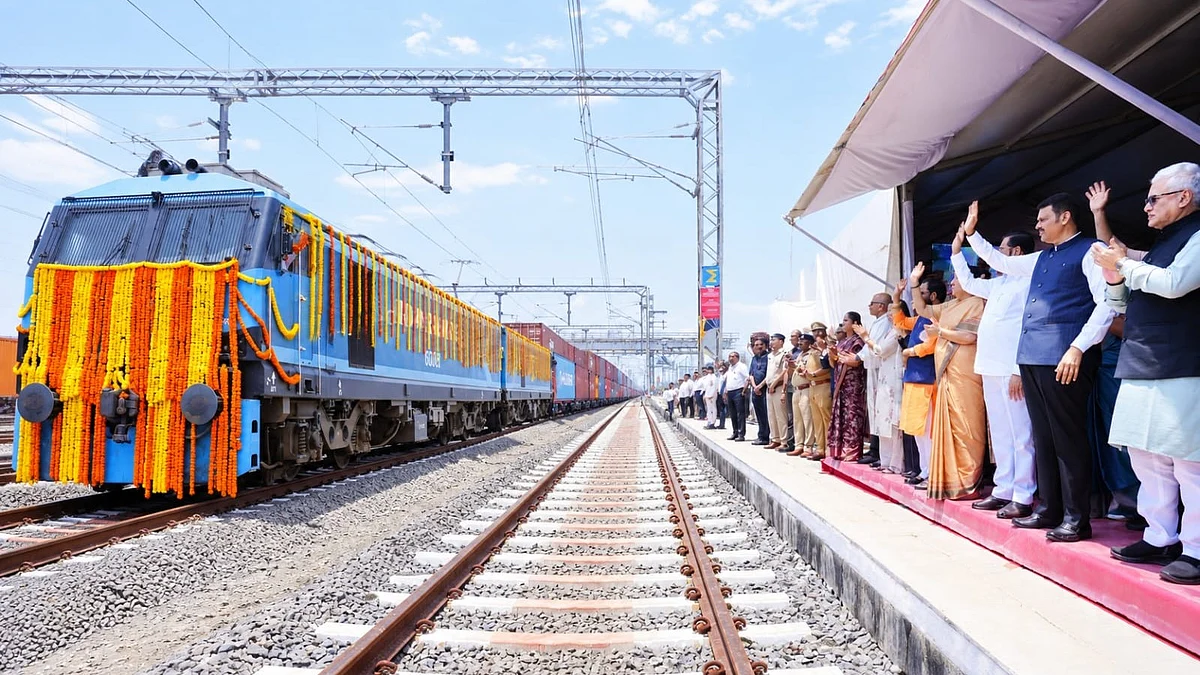
India's Western Dedicated Freight Corridor (WDFC) has become fully operational, with Prime Minister Narendra Modi inaugurating the final three sections of the rail network on Tuesday. The WDFC spans 326 route kilometers and has cost over Rs 20,700 crore to construct. The newly operational sections link JNPT in Navi Mumbai to Dadri in Uttar Pradesh, providing a direct rail connection between the port and the Eastern Dedicated Freight Corridor (EDFC).
Modi called the completion of the eastern and western freight corridors a historic transformation for India's logistics sector. He highlighted that freight trains can now complete a journey that previously took 30 hours by road in just 10 to 12 hours. Additionally, the time required to cover 100 kilometers has been reduced by more than half, leading to fuel savings, lower logistics costs, and environmental benefits.
The improved freight network is expected to benefit farmers by enabling perishable agricultural produce to reach distant markets and mandis faster, reducing delays and improving returns for farmers. Modi emphasized that the dedicated freight corridors would become a backbone of national commerce, with the WDFC connecting JNPT to the country's vast hinterland.
Maharashtra Chief Minister Devendra Fadnavis noted that the commissioning of the WDFC would significantly strengthen the state's logistics capacity by directly connecting JNPT with the country's extensive inland. JNPT handles nearly 55 percent of India's container traffic, and Fadnavis expressed confidence that the port could become India's first facility with a capacity exceeding 10 million TEUs by 2030, thanks to the dedicated freight corridor's expansion.
Written by urgent.news from Free Press Journal's reporting — not their text. Machine-written — may contain errors; check the original before relying on it.