Wastewater Can Take Harmful Algal Blooms from Bad to Worse
By modeling toxic diatoms and coastal processes, scientists have discovered the degree to which nutrients from Southern California’s densely populated coast affect these blooms.
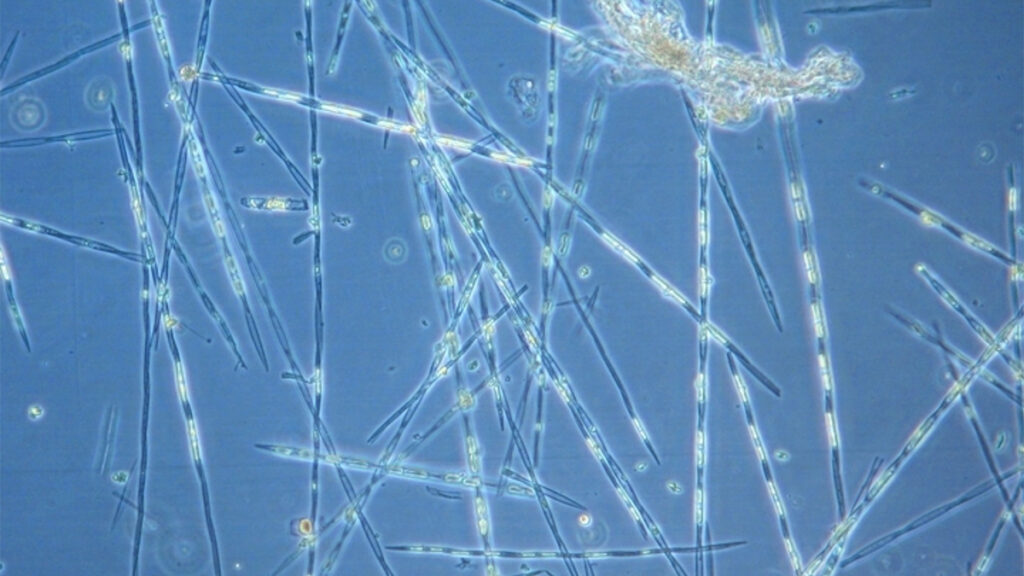
Single-celled algae called Pseudo-nitzschia diatoms may seem insignificant, but they can have a significant impact on the ecosystems they inhabit. Domoic acid, a neurotoxin produced by certain types of Pseudo-nitzschia, can cause severe illness in marine mammals, seabirds, and humans who consume toxin-laden fish and shellfish. Dave Bader, chief operations and education officer at the Marine Mammal Care Center, notes that mass strandings of domoic acid-poisoned California sea lions on Southern California's beaches have become more common in recent years.
These toxic algal blooms, fueled by nitrogen from wastewater runoff, are becoming more frequent and more toxic. Oceanographer Clarissa Anderson from the University of California, San Diego's Scripps Institution of Oceanography explains that while nitrogen from land has increased domoic acid levels within 15 kilometers of the shore by about 25% on average, toxin levels can be more than 50% higher in some areas near major wastewater outfalls.
Anderson and her colleagues used a model to simulate how Pseudo-nitzschia proliferate and produce toxin in Southern California's coastal ocean from 2006 to 2017, incorporating nutrient-laden wastewater and runoff released into the ocean. The model showed that nitrogen from land significantly impacted domoic acid levels near the shore, but toxin levels varied widely depending on the specific location.
While eliminating harmful algal blooms may be challenging, Bader emphasizes that we can mitigate their impact.
Written by urgent.news from Eos's reporting — not their text. Machine-written — may contain errors; check the original before relying on it.