Unlocking Forest Diversity from Above: Fieldwork at Smithsonian’s BiodiversiTREE
Laying groundwork for using airborne remote sensing to better understand the characteristics of forest species diversity. The post Unlocking Forest Diversity from Above: Fieldwork at Smithsonian’s BiodiversiTREE appeared first on NASA Science .
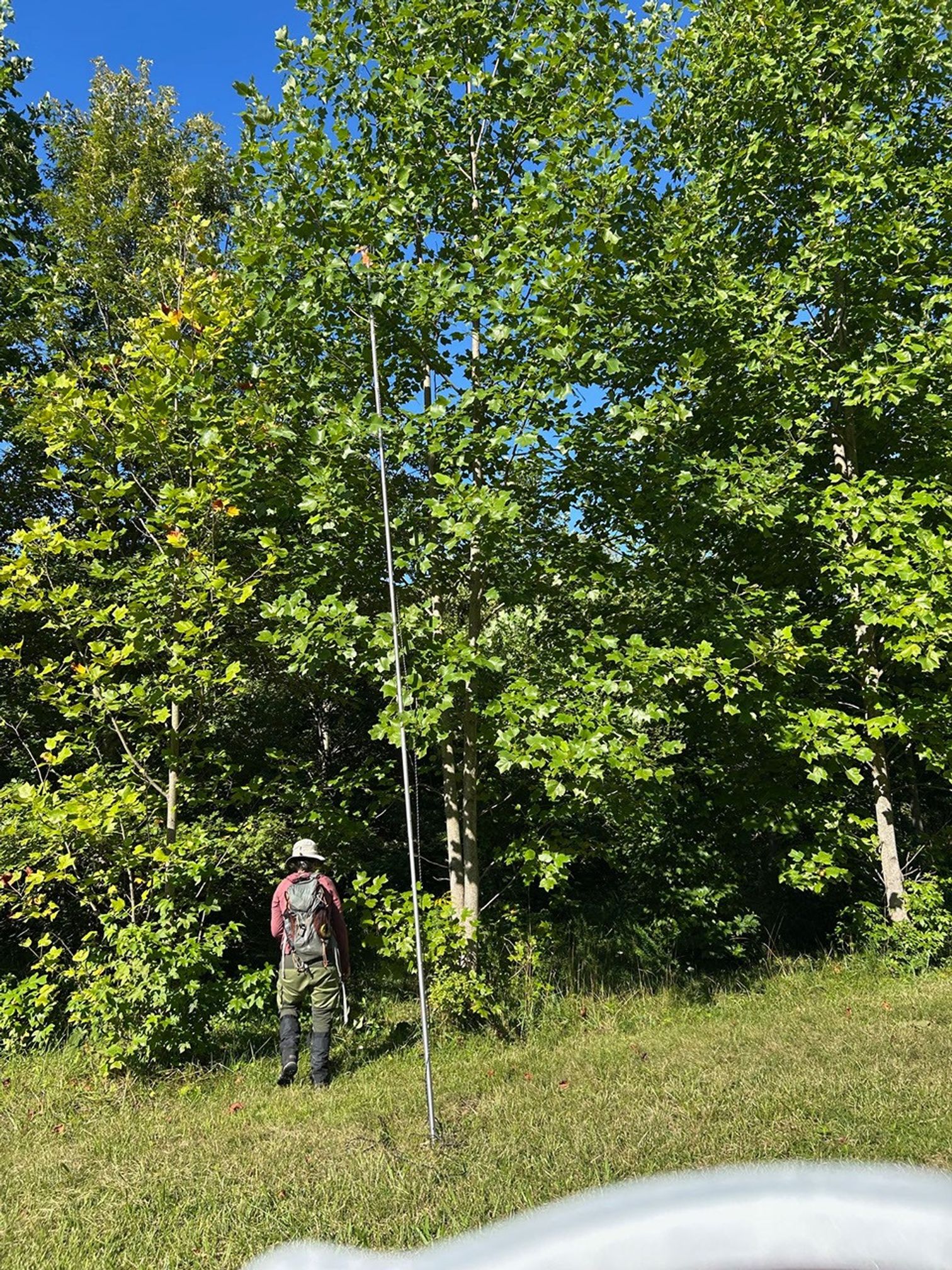
From July 30 to August 5, 2026, a team of scientists from NASA's Goddard Space Flight Center's Biospheric Sciences Laboratory conducted fieldwork at the Smithsonian Environmental Research Center's BiodiversiTREE research site near Edgewater, Maryland. The purpose of this mission was to explore the potential of airborne remote sensing to enhance our understanding of the characteristics of forest species diversity.
The team consisted of eight experts from various fields, including remote sensing, modeling, spectral ecology, forestry, and ecophysiology.
Species diversity plays a crucial role in the productivity and resilience of natural ecosystems, with the number of tree species impacting the overall health of a forest. Identifying and counting individual trees is a laborious process, making remote sensing, which can capture entire forests in a single image, a promising alternative for mapping species diversity and their functional characteristics.
Spectral reflectance, a unique light signature given off by plants, is one of the most promising tools for this purpose. Hyperspectral imagery, which uses hundreds of spectral bands, can distinguish differences among the leaves of different species.
The BiodiversiTREE site, established in 2013 by John Parker, a senior scientist at SERC, features 35-by-35 meter plots planted with either a single native tree species or mixtures of 4 or 12 species. These plots, totaling over 17,000 trees, were designed to evaluate how tree diversity affects reforestation success, as well as to provide a controlled study of remote sensing for forest diversity.
During their fieldwork, the NASA Goddard team focused on analyzing the light reflected from leaves of different tree species using spectrometers. These instruments measured light reflected in hundreds of narrow wavelengths, allowing for the identification of unique "signatures" that distinguish various tree types and how these traits change depending on whether a tree grows alone or in a diverse forest.
Ultimately, the team hopes to use these ground measurements to improve the analysis of forest health using sensors on airplanes and satellites.
Written by urgent.news from NASA Science's reporting — not their text. Machine-written — may contain errors; check the original before relying on it.