The secret to protecting next-gen spacecraft might be eggshells
3D-printed aluminum eggshell arrays filled with water proved more effective at impact resistance.
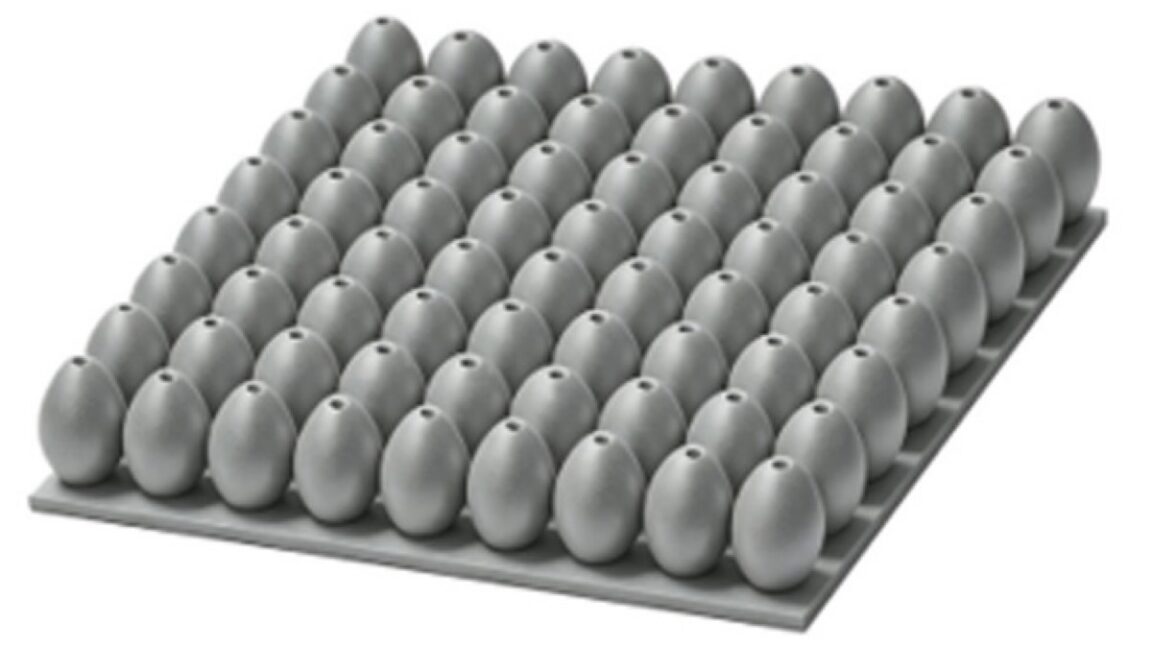
In 2007, a piece of space debris caused a bullet-like hole in the radiator panel of the US space shuttle Endeavor. This incident highlights the growing problem of space debris, which has only worsened with the increasing number of satellite constellations, telescopes, and spacecraft launched into orbit. To tackle this issue, Chinese scientists have developed a new aluminum material inspired by the structure of eggshells, according to a recent study published in the Journal of Applied Physics.
Eggshells have piqued the interest of scientists due to their unique mechanical properties. For example, cracking an egg requires applying force at the center, allowing for a clean break without shattering the entire shell. In 2012, MIT mechanical engineer Pedro Reis co-authored a paper exploring the connection between an egg's ovular shape and its rigidity, a crucial factor in determining the force an object can withstand before cracking.
Reis became intrigued by eggshells after observing a popular physics demonstration where individuals walked on cartons of eggs without breaking them. The secret, he discovered, was to orient the eggs with their narrow tip (the most resistant part) facing upward and then distribute weight evenly across the shell's surface to avoid overloading any single egg.
A force of approximately 5.5 pounds is needed to crack an egg, but this amount can vary depending on the direction and distribution of the force on the shell's surface.
Written by urgent.news from Ars Technica Science's reporting — not their text. Machine-written — may contain errors; check the original before relying on it.
This story
This is one outlet's version. Read the fullest account.
- The secret to protecting next-gen spacecraft might be eggshells arstechnica.com