The Hidden Cost of Flat Logs in AI Agent Development
Flat, uncorrelated logs hide an AI agent's branches, retries, and tool causality. Learn what execution-aware tracing should capture instead.
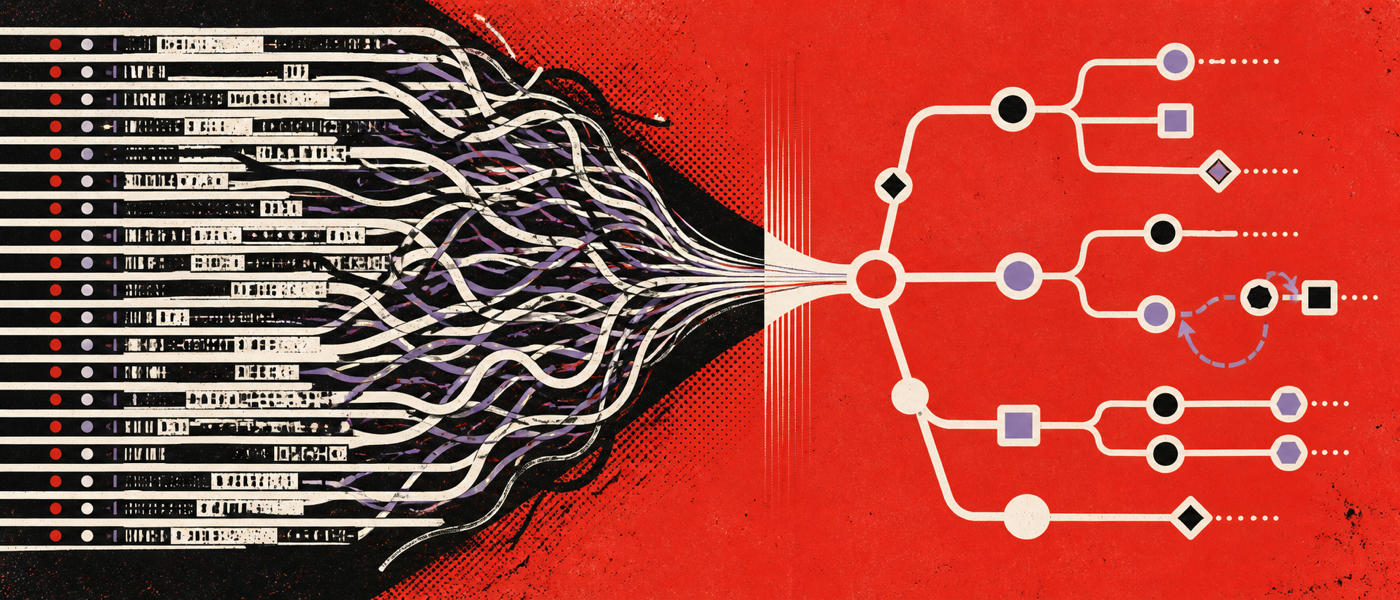
Flat logs offer limited insight into the complex workflows of AI agents. Traditional logging assumes a linear request-response pattern, but AI agents engage in parallel tool calls, retries, handoffs, and state accumulation. This structure resembles a tree or graph rather than a simple chain of events. When a failure occurs in production, a flat log stream shows only the error message, without context on why the tool was invoked, which branch triggered it, or whether it was a retry or initial attempt.
Attempting to decipher thousands of log lines becomes a daunting debugging task. The real challenge lies in representing the agent's workflow accurately. AI agent workflows have a distinct structure: a request may involve multiple model calls, data source retrievals, various tools, retries, parallel work, policy checks, and state accumulation across steps.
A straightforward example could be researching three vendors, comparing pricing, and recommending one. The workflow can be visualized as a tree: vendor-recommendation → research-agent (search each vendor) → analysis-agent (compare pricing, score risks, select shortlist) → reporting-agent (draft recommendation, format response). However, reconstructing this from a flat log is far more challenging.
The linear timestamped stream does not capture the true execution path, which is closer to a tree or graph. Structured observability is crucial. Recording parent-child relationships, step boundaries with start, end, duration, status, type, and stable identifiers, and presenting the data in tree and timeline views can help identify causality, overlapping tasks, and sequence of events.
Each meaningful step should indicate what triggered it, while steps need clear boundaries for duration, status, and type. This approach provides a more comprehensive understanding of the agent's behavior and helps identify bugs that appear successful but still produce incorrect results. While asynchronous context can be managed manually, it requires deliberate preservation of trace and span identifiers across process and service boundaries.
Tools like OpenTelemetry context propagation and Node.js's AsyncLocalStorage can help maintain this context. The key takeaway is not that asynchronous causality is unattainable, but that the runtime must be designed to deliberately preserve it.
Written by urgent.news from HackerNoon's reporting — not their text. Machine-written — may contain errors; check the original before relying on it.