The age of Quantum Computing will soon be upon us: Is Africa ready?
While Africa is still exploring ways of leveraging on the transformative potential of Artificial Intelligence (AI), which is arguably the most disruptive innovation of the modern age, yet another technological revolution is rapidly approaching. Quantum computing, once considered a distant scientific ambition, is advancing at an unprecedented rate and has the potential to reshape economies,…
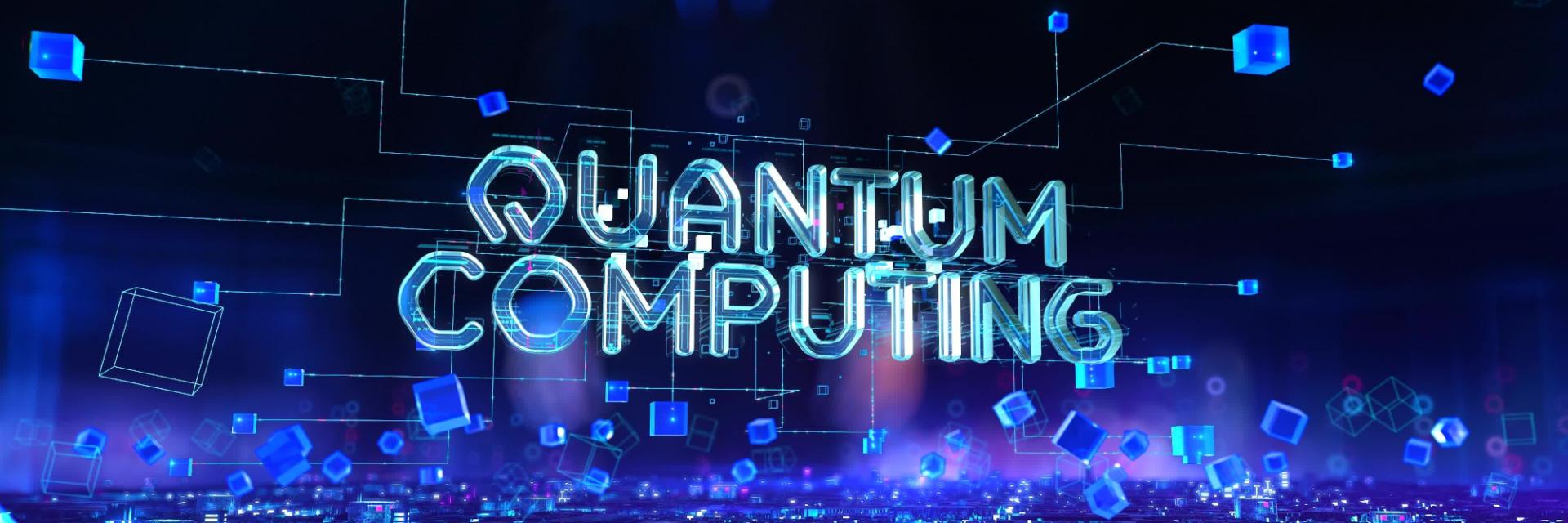
The age of quantum computing is on the horizon, and Africa must now ask whether it is prepared for this transformation. While artificial intelligence (AI) is already reshaping industries and daily life, quantum computing is poised to surpass AI's capabilities in certain areas. Unlike classical computers that use binary bits to process information, quantum computers employ quantum bits (qubits) enabled by phenomena such as superposition and quantum entanglement.
This allows quantum computers to handle vast amounts of data simultaneously, making them powerful tools for solving complex problems in fields like healthcare, drug discovery, agriculture, energy, and cybersecurity.
However, classical and quantum computing are not competing forces but rather work together to address different problems. For instance, AI excels at machine learning, pattern recognition, natural language processing, and decision-making, while quantum computing is instrumental in performing intricate physical simulations and mathematical optimizations.
In 2019, Google's Sycamore quantum processor completed a task in 200 seconds that would take a classical supercomputer 10,000 years, while China's USTC Jiuzhang quantum processor solved a problem in 200 seconds that would take a classical supercomputer 0.6 billion years.
The potential benefits of quantum computing are immense. It could revolutionize healthcare by simulating molecular interactions to develop more effective treatments, optimize crop production through supply chain and input management, accelerate the discovery of energy-efficient materials for batteries, solar panels, and energy storage systems, and enhance cybersecurity by creating quantum-resistant encryption systems.
Yet, quantum computing also poses significant risks. Many current encryption standards were designed to withstand attacks from classical computers, and with sufficiently powerful quantum computers, these systems could become vulnerable. This has led to concerns about "Harvest Now, Decrypt Later" programs, where malicious actors may be collecting and storing encrypted information to unlock it later using quantum computers.
Despite these challenges, countries worldwide are preparing for the quantum era. The United States has invested heavily in quantum research, technology development, and cybersecurity modernization, while China has emerged as a global leader in quantum communications and infrastructure. In 2026, worldwide public sector investment in quantum technology reached an estimated $65.9 billion, with an additional $10 billion in venture capital financing in 2025.
However, Africa has lagged behind, with research and development investment averaging only 0.4% of GDP, compared to the global average of 2%. The continent needs to invest more in research and development to prepare for the quantum revolution and avoid falling further behind in the global technological landscape.
Written by urgent.news from Ghana Business News's reporting — not their text. Machine-written — may contain errors; check the original before relying on it.